

Blog
How to Maximize Trolling Motor Efficiency with a Group 24 Battery

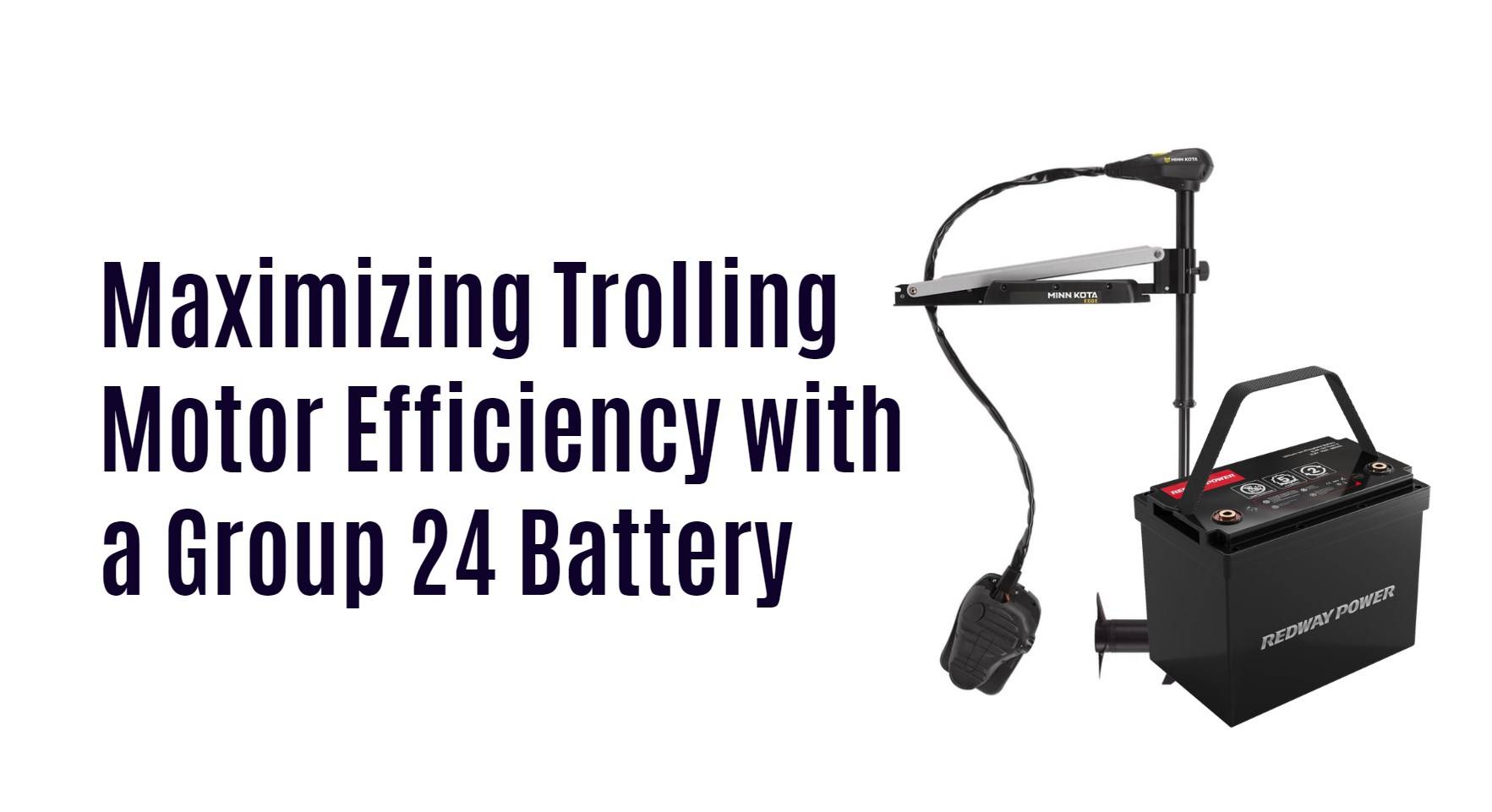
Maximizing the efficiency of your trolling motor with a Group 24 battery involves understanding the battery’s specifications and how they interact with your motor’s power requirements. A Group 24 battery typically provides sufficient power for many small to medium-sized fishing boats, ensuring optimal performance during use.
What is a Group 24 battery?
A Group 24 battery is a specific size classification used in marine and automotive applications, characterized by its dimensions and capacity. Typically, it measures approximately 10.25 inches long, 6.75 inches wide, and 9 inches high. These batteries are commonly used in trolling motors due to their balance of size, weight, and power output, usually offering around 70 to 85 amp-hours (Ah).
| Specification | Measurement |
|---|---|
| Length | 10.25 inches |
| Width | 6.75 inches |
| Height | 9 inches |
| Typical Capacity | 70 – 85 Ah |
How does a Group 24 battery benefit trolling motors?
Using a Group 24 battery in your trolling motor offers several advantages:
- Adequate Power Supply: Provides sufficient amp-hour capacity to run most small to medium-sized motors effectively.
- Compact Size: Its dimensions allow it to fit comfortably in most boat compartments without adding excessive weight.
- Cost-Effectiveness: Generally more affordable than larger batteries while still delivering reliable performance.
These benefits make the Group 24 an ideal choice for many boaters looking for efficiency and reliability.
What factors affect the efficiency of a trolling motor?
Several factors influence the efficiency of a trolling motor:
- Battery Condition: The health and charge level of the battery directly impact performance; older or poorly maintained batteries may not deliver optimal power.
- Motor Size and Thrust: The thrust rating of your motor should match your boat’s size and weight; mismatches can lead to inefficiencies.
- Water Conditions: Rough water or strong currents require more power, reducing overall efficiency.
- Propeller Type: The design and pitch of the propeller can significantly affect how efficiently the motor converts electrical energy into thrust.
Understanding these factors helps in optimizing overall performance.
How can you optimize the performance of your trolling motor with a Group 24 battery?
To maximize your trolling motor’s efficiency using a Group 24 battery, consider these tips:
- Regular Maintenance: Keep terminals clean and ensure connections are tight to minimize resistance.
- Proper Charging: Use an appropriate charger designed for deep-cycle batteries to ensure full charge and longevity.
- Monitor Usage: Be mindful of how long you run the motor at full throttle; extended high-speed operation can drain batteries quickly.
- Weight Management: Reduce excess weight in your boat to improve speed and efficiency, allowing for longer runtimes.
| Optimization Strategy | Description |
|---|---|
| Regular Maintenance | Clean terminals and check connections |
| Proper Charging | Use suitable chargers for deep-cycle batteries |
| Monitor Usage | Avoid prolonged high-speed operation |
| Weight Management | Reduce unnecessary weight in the boat |
Why is amp-hour capacity important for trolling motors?
The amp-hour (Ah) capacity rating indicates how much energy a battery can store and deliver over time. For example:
- A 70Ah battery can theoretically provide 70 amps for one hour or 35 amps for two hours.
Understanding this capacity is crucial because it determines how long your trolling motor can operate before needing a recharge. Selecting an appropriate amp-hour rating ensures that you have enough power for your intended usage without frequent recharging.
| Amp-Hour Rating | Runtime at Various Loads |
|---|---|
| 70 Ah | ~2 hours at 35A load |
| 70 Ah | ~1 hour at 70A load |
| 85 Ah | ~2.5 hours at 35A load |
How should you maintain your trolling motor battery?
Proper maintenance extends the life of your Group 24 battery and ensures optimal performance:
- Regular Charging: Always recharge after use; avoid deep discharges that can damage lead-acid batteries.
- Clean Terminals: Periodically clean terminals to prevent corrosion, which can impede electrical flow.
- Check Water Levels (if applicable): For flooded lead-acid batteries, ensure electrolyte levels are adequate; top off with distilled water if needed.
- Store Properly: If not in use, store in a cool, dry place and periodically check charge levels.
Industrial News
Recent advancements in marine battery technology have focused on improving energy density and reducing weight while enhancing overall performance in applications like trolling motors. Innovations include lithium-ion alternatives that offer longer runtimes and faster charging times compared to traditional lead-acid batteries. As boating enthusiasts seek more efficient solutions, these developments are reshaping energy management on watercraft.
Redway Power Insight
“Maximizing the efficiency of your trolling motor with an appropriate Group 24 battery is essential for both performance and longevity,” states an expert at Redway Power. “Understanding how to maintain your system properly will not only enhance your experience but also ensure that you get the most out of every outing on the water.”
FAQ Section
- How long will my Group 24 battery last on my trolling motor?
- Runtime depends on load; typically, expect around two hours at moderate usage levels.
- Can I use other group sizes with my trolling motor?
- While other sizes may work, it’s best to stick with manufacturer recommendations for optimal performance.
This comprehensive guide provides essential insights into maximizing trolling motor efficiency using a Group 24 battery, ensuring reliable and enjoyable boating experiences.