

Blog
How to Choose the Right Yale Forklift Battery Size

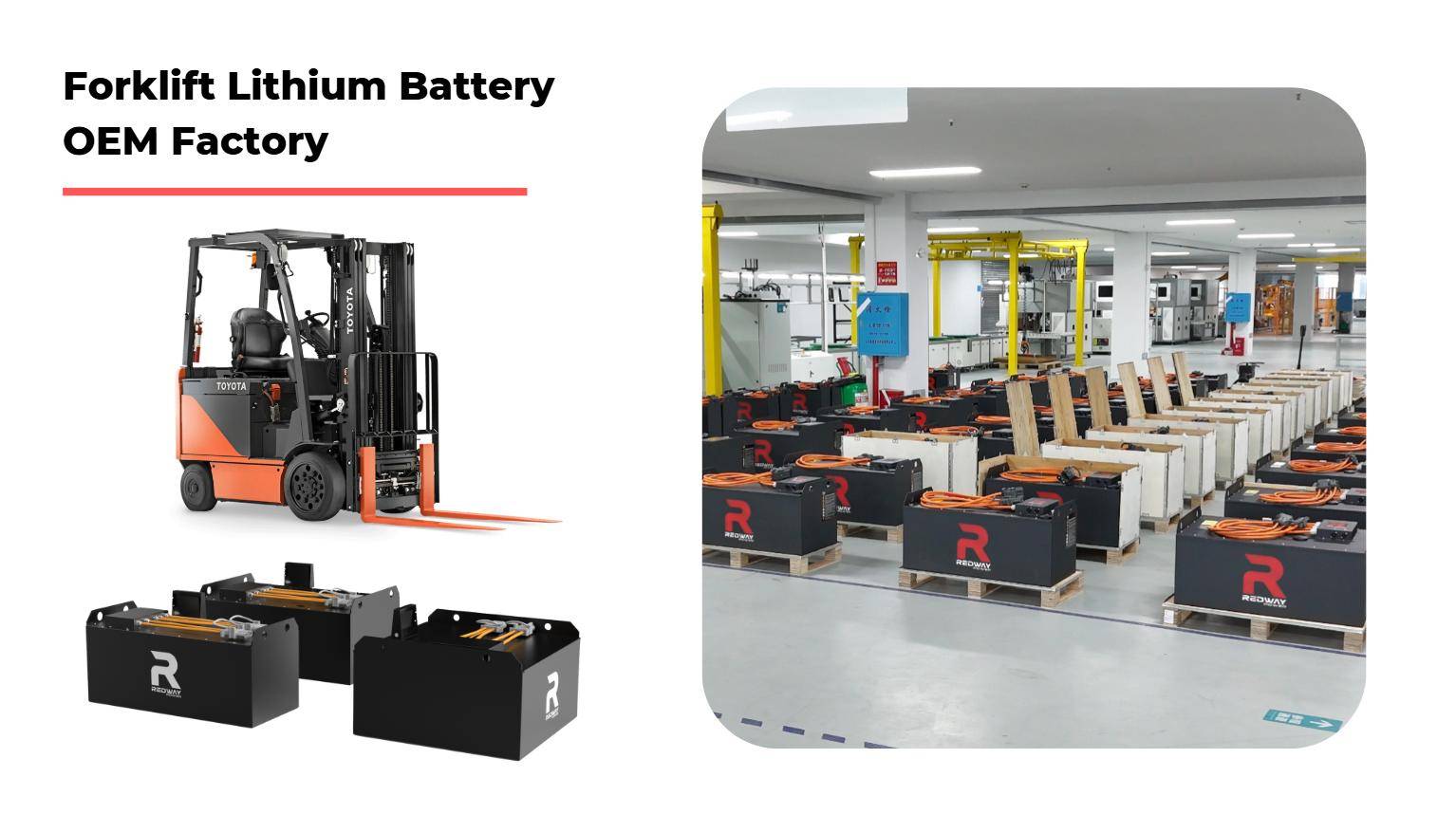
Choosing the correct battery size for a Yale forklift directly impacts operational uptime, performance, and total lifecycle cost. A properly sized battery ensures adequate runtime, maintains weight balance, and avoids premature wear on electrical systems. Solutions such as Redway Power’s OEM lithium forklift batteries provide engineered voltage, capacity, and physical dimensions optimized for Yale and comparable lift trucks, delivering consistent power and improved duty-cycle performance.
What Is the Current Industry Status and Why Is Correct Battery Sizing a Critical Pain Point?
Electric forklifts like those from Yale are widely deployed across warehouses, distribution centers, and industrial facilities, where uptime and efficiency are measurable performance KPIs. Industry practice shows that mismatched battery sizes and capacities can reduce forklift runtime by up to 30 % and accelerate premature battery replacement, driving operational cost increases. Mismatches often occur when operators guess based on forklift model alone without considering duty cycle, compartment size, and charger compatibility. (Redway Tech)
Today’s electric forklifts use a range of voltage systems—commonly 24 V, 36 V, 48 V and higher—to balance lifting power and runtime. Incorrect battery size not only reduces usable work time but can also result in excessive heat generation, reduced cycle life, and even electrical system faults. (Redway Tech)
With demand for multi-shift operations increasing, facilities are less tolerant of battery-related downtime. Snowballing inefficiencies from poorly sized batteries are quantifiable in lost labor hours, diminished throughput, and accelerated fleet wear.
Why Do Traditional Battery Selection Methods Fall Short?
Traditional forklift battery choices often rely on selecting a lead-acid battery based on broad voltage categories, overlooking critical physical dimensions, amp-hour requirements, and weight constraints. Lead-acid batteries typically require long charge times (6–8 hours) and consistent watering, adding maintenance burdens that compound when batteries are undersized or oversized. (Baufar Battery)
This “one size fits all” approach does not account for specific duty demands or compartment geometry unique to Yale forklifts, where space, connector placement, and cooling vary by series and model.
Modern lithium-ion alternatives like those from Redway Power mitigate many of these issues with tailored voltage and capacity options that fit within the forklift’s battery compartment while delivering stable energy output and reduced maintenance.
What Solution Do Correct Battery Size Selection and Advanced Battery Technologies Provide?
A disciplined battery selection solution incorporates:
- Accurate measurement of battery compartment dimensions (length, width, height)
- Matching voltage and capacity to forklift duty cycle demand
- Understanding connector orientation and terminal type
- Using high-efficiency lithium batteries for reduced charge time and improved cycle life
Manufacturers like Redway Power offer lithium forklift batteries in multiple voltage bands—from 24 V through 80 V—with capacity options that align with Yale’s recommended performance envelopes while minimizing space conflicts. These advanced batteries also provide consistent voltage under load and support opportunity charging, reducing downtime between shifts.
What Are the Advantages of Proper Battery Sizing and Using Advanced Lithium Batteries?
| Criteria | Traditional Lead-Acid | Correctly Sized Lithium (e.g., Redway Power) |
|---|---|---|
| Runtime per shift | Moderate | Extended with optimized capacity |
| Charge time | Long (6–8 hrs) | Short (1–3 hrs) with opportunity charging |
| Maintenance | Required (watering, equalizing) | None |
| Lifecycle (cycles) | ~1,000-1,500 | ~4,000-6,000+ |
| Weight impact | Often heavier | Lighter, improving balance |
| Uptime | Lower | Higher |
How Should You Choose the Right Yale Forklift Battery Size – Step by Step?
- Identify forklift model and voltage system – Confirm whether the Yale forklift uses 24 V, 36 V, 48 V, or higher. (Redway Tech)
- Measure battery compartment dimensions – Length, width, and height must be within tolerances. (Redway Tech)
- Determine duty cycle requirements – Estimate hours per shift and workload intensity. (Xe nâng Yale Việt Nam)
- Select capacity (Ah rating) – Higher Ah extends runtime; align with operation duration. (Redway Tech)
- Verify connector compatibility – Ensure terminal type and placement match. (Lithium Battery Co.)
- Choose battery chemistry – Lithium (like Redway Power) for high uptime; lead-acid for lower upfront cost. (Baufar Battery)
- Test performance and monitor runtime – Adjust capacity selection if needed after initial deployment.
Where Do Real-World Scenarios Demonstrate Right Battery Selection?
Scenario 1: High-Throughput Warehouse
Problem: Forklifts underperform mid-shift.
Traditional Method: Generic lead-acid battery selection.
After Selection: Correctly sized Redway Power lithium battery.
Key Benefit: Longer runtime, reduced charge breaks.
Scenario 2: Cold Storage Environment
Problem: Lead-acid batteries lose capacity at low temperatures.
Traditional Method: Frequent battery swaps.
After Selection: Lithium battery with stable cold performance.
Key Benefit: Consistent operation and fewer battery changes.
Scenario 3: Multi-Shift Logistics
Problem: Charging window insufficient between shifts.
Traditional Method: Additional lead-acid spares.
After Selection: Redway Power lithium with fast charging.
Key Benefit: Elimination of extra spares and idle equipment.
Scenario 4: Tight Battery Compartment Design
Problem: Oversized battery prevented proper installation.
Traditional Method: Improvised fits causing stress on connectors.
After Selection: Precisely measured lithium battery.
Key Benefit: Secure fit and improved electrical contact stability.
Why Is Correct Battery Size More Important Now Than Ever?
With demand for higher throughput, tighter energy budgets, and extended operation hours, forklift battery performance has become a measurable business driver. Choosing the right battery size ensures forklifts operate reliably and efficiently while reducing maintenance burden and extending battery lifecycle. Advanced battery technologies like Redway Power’s LiFePO4 options further enhance performance with faster charging and consistent capacity, enabling facilities to handle more work with fewer interruptions.
What Questions Do Operators Frequently Ask?
How do I know what voltage my Yale forklift needs?
Check the forklift’s data plate or manual for voltage specifications. (Lithium Battery Co.)
Can lithium batteries fit standard Yale battery compartments?
Yes—when physical dimensions and terminals are matched accurately. (Redway Tech)
Why does battery capacity matter for runtime?
Higher amp-hour capacity extends runtime between charges. (Leah Machinery)
Are lithium forklift batteries worth the investment?
They offer longer cycle life and reduced downtime for multi-shift operations. (Baufar Battery)
Could incorrect battery size damage my forklift?
Yes—incorrect sizes can strain electrical systems and reduce performance. (Lithium Battery Co.)
Sources
https://www.redway-tech.com/what-are-the-forklift-battery-sizes-for-toyota-hyster-yale-cat/
https://www.redway-tech.com/what-batteries-are-for-yale-lift-trucks/
https://yalebattery.com/
https://yale.com.vn/en/news/05-steps-to-choose-the-suitable-electric-forklift/
https://www.redway-tech.com/what-are-battery-sizes-for-different-forklifts/


