

Blog
What Is a Walkie Stacker and How Does It Improve Warehouse Efficiency?

What Are the Key Components of a Walkie Stacker?
A walkie stacker is a pedestrian-operated forklift designed for lifting, moving, and stacking pallets in tight warehouse spaces. Combining manual control with electric or hydraulic power, it operates in aisles as narrow as 6 feet, making it ideal for loading docks, retail storerooms, and manufacturing facilities. Its compact design maximizes vertical storage while minimizing floor space usage.
48v Lithium Forklift Batteries
What Are the Key Components of a Walkie Stacker?
Critical components include:
48v Lithium Forklift Batteries
1. Mast: Telescoping structure for vertical lifting (single, double, or triple-stage).
2. Forks: Adjustable widths to accommodate various pallet sizes.
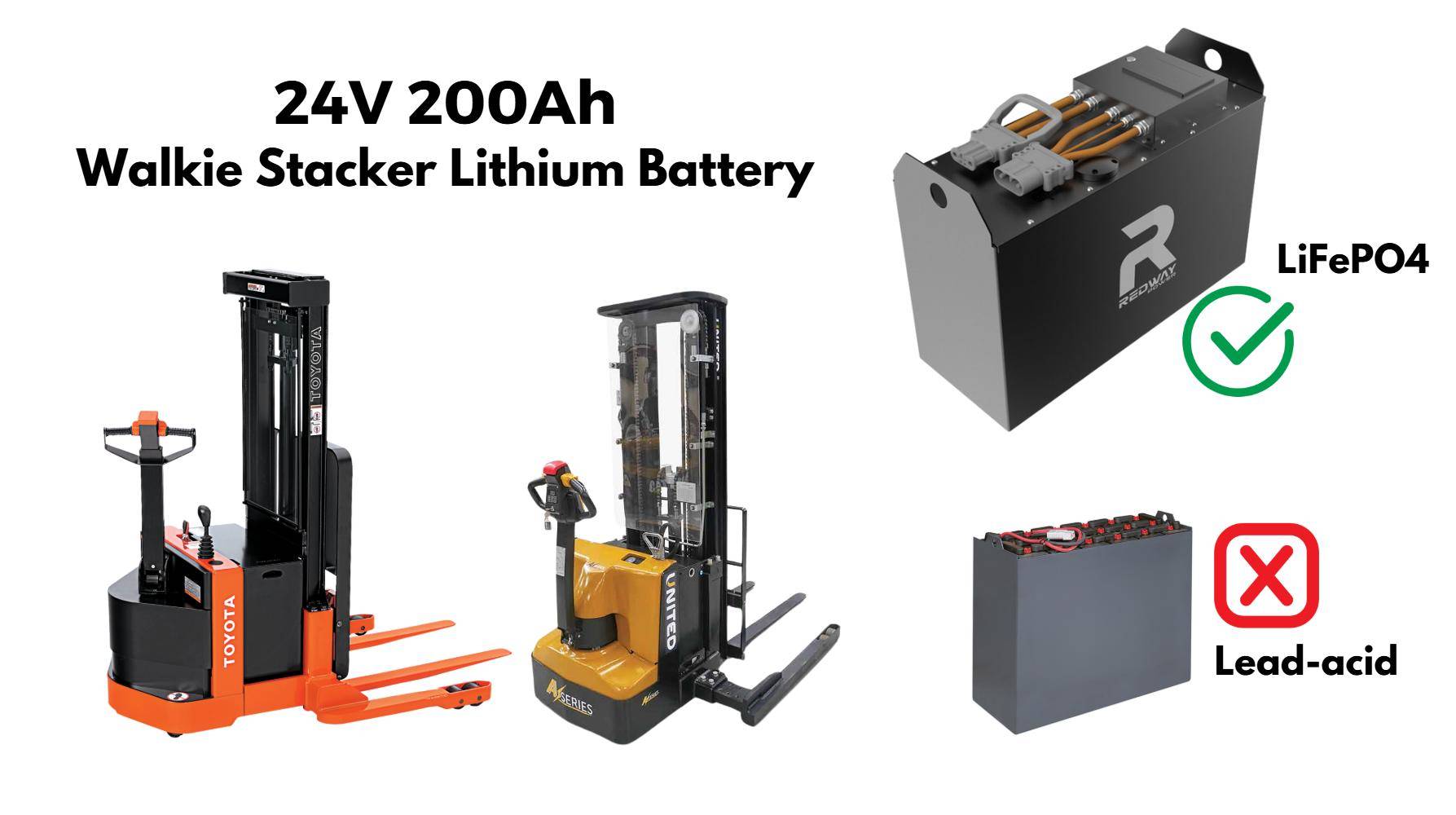
3. Power System: Lithium-ion or lead-acid batteries providing 6-8 hours of runtime.
4. Control Handle: Multi-function panel with lift/lower buttons and horn.
5. Safety Features: Overload sensors, emergency stop, and blue safety lights.
The mast’s construction directly impacts lifting capacity and stability. Triple-stage masts allow maximum height reach while maintaining a compact footprint when retracted. Fork adjustability is crucial for handling diverse pallet types – standard 48″x40″ pallets require at least 42″ fork spread, while Euro-pallets need 31.5″ minimum. Battery selection plays a pivotal role in operational efficiency. Lithium-ion batteries offer 30% faster charging than lead-acid alternatives, though they come at a 40% higher initial cost. Modern safety systems now integrate weight distribution sensors that automatically limit lift speeds when handling loads above 80% capacity.
| Component | Spec Range | Maintenance Interval |
|---|---|---|
| Mast Rollers | 1.5″-2″ diameter | Every 500 hours |
| Hydraulic Fluid | ISO 32 grade | Annual replacement |
| Control Board | 12-24V DC | 5-year lifespan |
What Innovations Are Transforming Walkie Stacker Technology?
Emerging advancements:
48v Lithium Forklift Batteries
1. LiFePO4 batteries reducing charge time to 45 minutes
2. Predictive maintenance sensors monitoring motor temperature
3. Anti-collision systems using UWB radio frequency
4. Cloud-connected fleet management via CANbus integration
The shift to lithium iron phosphate (LiFePO4) batteries has revolutionized energy management, providing 2,000+ charge cycles compared to 800 cycles in traditional batteries. These batteries maintain 80% capacity after five years of daily use. Predictive maintenance technology now uses vibration analysis to detect bearing wear 200 operating hours before failure, reducing unplanned downtime by 65%. Ultra-wideband (UWB) collision avoidance systems create dynamic safety zones that adjust based on travel speed – at 3 mph, the system maintains a 6-foot detection radius, while speeds above 4 mph trigger automatic slowdowns.
| Innovation | Impact | Adoption Rate |
|---|---|---|
| AI Load Stability | 62% fewer drops | 42% of new models |
| Wireless Charging | 15% uptime boost | 18% of facilities |
| AR Guidance | 27% faster training | 35% of large warehouses |
FAQs
- Q: Can walkie stackers handle outdoor terrain?
- A: Only models with pneumatic tires and IP54-rated components; avoid gravel or uneven surfaces.
- Q: What’s the lifespan of a walkie stacker?
- A: 7-10 years with proper maintenance, though battery replacements occur every 3-5 years.
- Q: Are walkie stackers GDPR-compliant for EU warehouses?
- A: Yes, when equipped with CE-marked safety systems and operator ID tracking.
What is a walkie stacker and how does it improve warehouse efficiency?
A walkie stacker is a pedestrian-operated forklift designed for lifting and stacking pallets in tight spaces. It improves warehouse efficiency by speeding up pallet handling, optimizing vertical storage, reducing labor time, and enhancing safety with its compact design and maneuverability.
How does a walkie stacker increase warehouse productivity?
Walkie stackers increase productivity by allowing operators to quickly move and stack pallets, reducing time spent on order picking and stock replenishment. Their ability to perform tasks without a traditional forklift or pallet jack speeds up material handling, enhancing overall workflow.
What is the role of a walkie stacker in maximizing vertical storage?
Walkie stackers help maximize vertical storage by lifting pallets to higher levels, enabling better use of shelf and rack space. This is particularly beneficial for small warehouses or areas with limited floor space, allowing more goods to be stored efficiently.
Why are walkie stackers ideal for narrow aisles?
Due to their compact size, walkie stackers can easily navigate narrow aisles and congested spaces where traditional forklifts cannot. Their design makes them ideal for tight environments, such as retail back rooms or small warehouses, improving space utilization and operational flexibility.
How do walkie stackers improve warehouse safety?
Walkie stackers enhance safety through features like emergency stops, stability controls, and a pedestrian-operated design. The operator stays close to the load, and the lower profile reduces the risk of accidents, providing safer operation compared to traditional forklifts.
What are the cost benefits of using a walkie stacker in warehouses?
Walkie stackers are more affordable than traditional forklifts, with lower initial costs and reduced maintenance needs. Their efficiency in tight spaces also minimizes labor costs and training time, making them a cost-effective solution for improving material handling in warehouses.