Yes, you can run LiFePO4 (Lithium Iron Phosphate) batteries in parallel, and doing so can significantly enhance your energy storage capabilities. Connecting multiple batteries allows for increased capacity while maintaining the same voltage. However, proper techniques and precautions must be followed to ensure safety and efficiency. This guide provides detailed instructions and considerations for connecting
LiFePO4 batteries in parallel.
How do you connect LiFePO4 batteries in parallel?
To connect LiFePO4 batteries in parallel, follow these steps:
- Gather Materials: Ensure you have compatible batteries, interconnect cables, and a multimeter.
- Check Voltage Levels: Before connecting, use a multimeter to confirm that all batteries have similar voltage levels (ideally within 0.3V).
- Connect Positive to Positive: Use appropriate gauge cables to connect the positive terminals of each battery together.
- Connect Negative to Negative: Similarly, connect all negative terminals together.
- Secure Connections: Ensure all connections are tight and secure to prevent resistance and overheating.
Chart: Connection Steps Overview
| Step |
Description |
| Gather Materials |
Collect necessary tools and batteries |
| Check Voltage Levels |
Measure voltage with a multimeter |
| Connect Positive Terminals |
Use cables to link positive terminals |
| Connect Negative Terminals |
Link negative terminals similarly |
| Secure Connections |
Ensure all connections are tight |
What are the benefits of connecting batteries in parallel?
Connecting LiFePO4 batteries in parallel offers several advantages:
- Increased Capacity: The total amp-hour (Ah) capacity increases, allowing for longer runtimes.
- Redundancy: If one battery fails, others continue to operate, enhancing reliability.
- Flexibility: Allows modular expansion; you can add more batteries as needed without changing the voltage.
Chart: Benefits of Parallel Connection
| Benefit |
Description |
| Increased Capacity |
Longer operational time |
| Redundancy |
Enhanced reliability |
| Flexibility |
Modular design allows easy expansion |
What safety precautions should you take when connecting batteries?
Safety is crucial when working with batteries:
- Use Identical Batteries: Ensure all connected batteries are of the same type, voltage, and capacity.
- Check Connections: Regularly inspect connections for corrosion or wear.
- Monitor Temperature: Keep an eye on battery temperature during operation; excessive heat can indicate issues.
- Use a Battery Management System (BMS): A BMS helps monitor individual cell voltages and balances charging.
How do you ensure proper current sharing among batteries?
To ensure even current distribution:
- Use Quality Cables: Select appropriately sized cables to handle the expected current load.
- Check Connections Regularly: Ensure that all connections remain secure and free of corrosion.
- Balance Cells Before Connection: Charge each battery individually to similar states of charge before connecting them.
Chart: Ensuring Current Sharing
| Method |
Description |
| Use Quality Cables |
Prevents overheating due to resistance |
| Check Connections |
Regular maintenance ensures reliability |
| Balance Cells |
Ensures equal discharge rates |
What is the configuration for connecting LiFePO4 batteries in parallel?
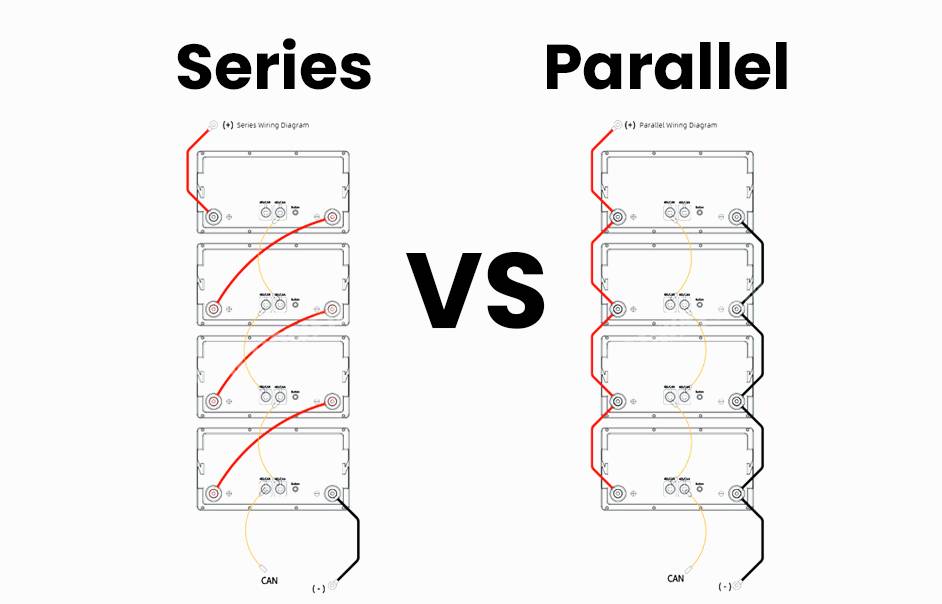
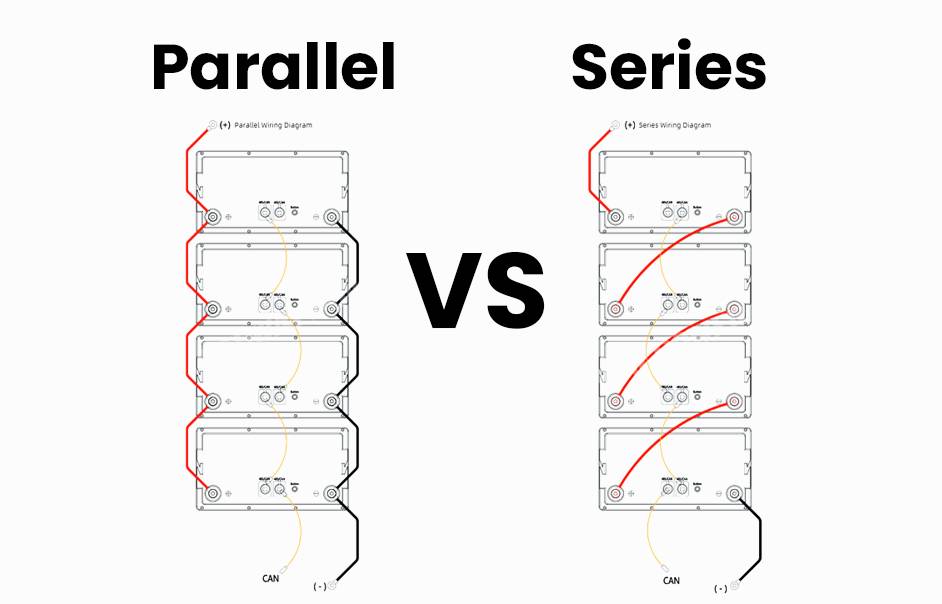
The configuration involves connecting multiple cells with their positive terminals linked together and their negative terminals linked together. This setup maintains the same voltage level while increasing total capacity. For example, if four 12V 100Ah LiFePO4 cells are connected in parallel, the system will still operate at 12V but will have a total capacity of 400Ah.
How can you charge LiFePO4 batteries connected in parallel?
Charging connected LiFePO4 batteries requires:
- Use a Suitable Charger: Ensure your charger matches the total voltage of your battery bank (e.g., if using four 12V cells, use a 12V charger).
- Connect Charger Leads: Attach charger leads to the positive and negative terminals of the entire bank.
- Monitor Charging Process: Keep an eye on charging progress; a good BMS will help manage this automatically.
Chart: Charging Process Overview
| Step |
Description |
| Use a Suitable Charger |
Match charger with total voltage |
| Connect Charger Leads |
Attach leads to bank’s terminals |
| Monitor Charging Process |
Use BMS for automatic management |
What common issues might arise when connecting batteries in parallel?
Common issues include:
- Imbalance Between Cells: Differences in state of charge (SOC) can lead to uneven discharging.
- Overheating: Poor connections or undersized cables can cause overheating during high loads.
- Reduced Lifespan: If not managed properly, imbalances can shorten battery life.
Why is battery management important for parallel connections?
Battery management is vital because it helps monitor each cell’s health, ensuring safe operation:
- Voltage Monitoring: Keeps track of individual cell voltages to prevent overcharging or over-discharging.
- Temperature Control: Monitors temperatures to avoid overheating and potential hazards.
- Balancing Functions: Ensures that all cells discharge evenly, extending overall lifespan.
How do you choose compatible batteries for parallel connections?
When selecting compatible batteries:
- Same Specifications: Choose cells with identical voltage ratings and capacities.
- Similar Age and Condition: Ideally, use batteries from the same manufacturing batch to minimize differences in performance.
- Manufacturer Recommendations: Follow guidelines provided by manufacturers regarding compatibility.
What steps should be followed to connect batteries safely?
To safely connect your LiFePO4 batteries:
- Ensure Compatibility: Confirm that all batteries meet specifications for voltage and capacity.
- Charge Individually First: Bring all cells to a similar SOC before connection.
- Follow Proper Wiring Techniques: Use appropriate gauge wires and secure connections.
Why is monitoring cell voltage crucial when using parallel configurations?
Monitoring cell voltage is essential because:
- Prevents Imbalance: Helps identify discrepancies between cells that could lead to failure or reduced performance.
- Enhances Safety: Detects potential overcharging or undercharging conditions early on.
- Extends Battery Life: Ensures that all cells remain within optimal operating conditions.
Industrial News
The use of lithium iron phosphate (LiFePO4) batteries continues to grow across various industries due to their safety and efficiency advantages over traditional lithium-ion chemistries. Recent advancements have focused on improving battery management systems (BMS) that enhance monitoring capabilities during both series and parallel configurations, ensuring optimal performance and longevity.
Redway Power Insights
“Connecting LiFePO4 batteries in parallel can significantly enhance your energy storage capabilities,” states an industry expert. “However, it’s crucial to understand proper connection techniques and monitoring practices to maintain safety and efficiency throughout the battery’s lifespan.”
FAQs

Can I put two LiFePO4 batteries in parallel?
Yes, LiFePO4 batteries can indeed be connected in parallel, allowing for increased capacity and power output. Connecting them in parallel combines the capacity and power output of the individual batteries, providing a higher overall capacity and power output.
- Parallel Connection: LiFePO4 batteries can be connected in parallel, allowing for increased capacity and power output.
- Combined Capacity and Power: Connecting batteries in parallel combines their individual capacities and power outputs, resulting in a higher overall capacity and power output.
- Feasibility Considerations: When connecting LiFePO4 batteries in parallel, ensure they are of the same chemistry, voltage, and capacity for proper operation and performance.
By connecting LiFePO4 batteries in parallel, users can increase the capacity and power output, providing a higher overall performance for their applications.
Is it safe to connect lithium batteries in parallel?
It is safe to connect lithium batteries in parallel as long as they have the same voltage and are of the same model. Connect positive to positive and negative to negative to ensure even load sharing and prevent imbalances.
- Voltage and Model Compatibility: It is safe to connect lithium batteries in parallel as long as they have the same voltage and are of the same model.
- Positive and Negative Connection: Connect positive terminals to positive terminals and negative terminals to negative terminals for even load sharing and to prevent imbalances.
- Safety and Capacity Increase: Connecting lithium batteries in parallel allows for increased capacity and redundancy, but proper precautions must be taken to ensure compatibility and safe operation.
By following the recommended procedures and ensuring compatibility, users can safely connect lithium batteries in parallel to achieve increased capacity or redundancy.
Do batteries in parallel drain equally?
When batteries are connected in parallel, they may not drain equally due to variations in internal resistance and capacity. Batteries with different amp-hour ratings or internal resistances may experience uneven distribution of current and voltage, resulting in unequal discharge rates.
- Unequal Discharge: When batteries are connected in parallel, they may not drain equally due to variations in internal resistance and capacity.
- Factors Affecting Equal Discharge: Batteries with different amp-hour ratings or internal resistances may experience uneven distribution of current and voltage.
- Unequal Discharge Rates: The battery with lower resistance or capacity may discharge faster than the other battery.
By considering the factors that can affect equal discharge, users can optimize the performance of batteries connected in parallel.
What is the difference between parallel and series LiFePO4 batteries?

Connecting
LiFePO4 batteries in series increases the voltage output, while connecting them in parallel increases the battery bank capacity. In a series connection, the total voltage is the sum of the individual battery voltages, while in a parallel connection, the capacities are combined to provide a higher overall capacity.
- Series Connection: Connecting LiFePO4 batteries in series increases the voltage output by summing up the individual battery voltages.
- Parallel Connection: Connecting LiFePO4 batteries in parallel increases the battery bank capacity by combining the capacities of individual batteries.
- Voltage and Capacity: Series connections provide higher voltage, while parallel connections offer higher capacity.
By choosing the appropriate connection method, users can tailor the LiFePO4 battery setup to meet their specific voltage and capacity requirements.
Do you need to balance LiFePO4 batteries in parallel?
Yes, balancing
LiFePO4 batteries in parallel is necessary. Individual cells can drift apart in their state of charge over time and through use, leading to an uneven distribution of charge and discharge. Balancing ensures equal charging and discharging among the batteries, optimizing their performance and longevity.
- Necessity of Balancing: Balancing LiFePO4 batteries in parallel is necessary to address variations in the state of charge among individual cells.
- Uneven Distribution: Over time and through use, individual cells can drift apart in their state of charge, resulting in an uneven distribution of charge and discharge among the batteries.
- Optimizing Performance and Longevity: Balancing ensures equal charging and discharging among the batteries, optimizing their performance and extending their lifespan.
By balancing LiFePO4 batteries in parallel, users can ensure the optimal performance and longevity of their battery system.
Can you mix different brands of LiFePO4 batteries in parallel?
Mixing different brands of LiFePO4 batteries in parallel is generally not recommended due to potential differences in chemistry, performance, and charging characteristics. It is advisable to use batteries from the same brand and model to ensure compatibility and optimal performance.
- Compatibility Concerns: Mixing different brands of LiFePO4 batteries in parallel is generally not recommended due to potential differences in chemistry, performance, and charging characteristics.
- Optimal Performance: To ensure compatibility and optimal performance, it is advisable to use batteries from the same brand and model when connecting them in parallel.
- Safety and Imbalance Prevention: Using batteries from different brands can lead to imbalances and potential issues, making it important to follow the recommendations and use batteries from the same brand and model.
By following the recommendations and using batteries from the same brand and model, users can ensure compatibility, optimal performance, and safety when connecting LiFePO4 batteries in parallel.
Is it better to connect lithium batteries in series or parallel?
Connecting lithium batteries in parallel can provide longer battery life as the voltage remains the same while the capacity increases. Connecting batteries in series increases the voltage, which may be more efficient for specific applications.
- Parallel Connection: Connecting lithium batteries in parallel can provide longer battery life as the voltage remains the same while the capacity increases.
- Series Connection: Connecting lithium batteries in series increases the voltage, which may be more efficient for specific applications that require higher voltage.
- Application-Specific Considerations: The choice between series and parallel connections depends on the specific requirements of the application, such as the desired voltage and capacity.
By considering the specific requirements of the application, users can determine whether connecting lithium batteries in series or parallel is better suited for their needs.
Can I connect 200Ah with 100Ah battery in parallel?
Mixing different capacity batteries in parallel, such as connecting a 200Ah battery with a 100Ah battery, is generally not recommended. It is best to use batteries with equal capacities to ensure balanced performance and avoid potential imbalances in charging and discharging.
- Balanced Performance: Mixing batteries of different capacities, like connecting a 200Ah battery with a 100Ah battery, is generally not recommended to ensure balanced performance.
- Charging and Discharging Imbalances: Using batteries with equal capacities in parallel avoids potential imbalances in charging and discharging, optimizing efficiency and extending battery lifespan.
By following the recommendations and using batteries with equal capacities, users can ensure balanced performance and maximize the efficiency and lifespan of their battery system.
Is putting batteries in parallel better than series?
The choice between putting batteries in parallel or series depends on the specific requirements of the application. Connecting batteries in parallel increases the capacity and allows for longer usage, while connecting them in series increases the voltage output.
- Parallel Connection: Putting batteries in parallel increases the overall capacity and allows for longer usage.
- Series Connection: Putting batteries in series increases the voltage output.
- Capacity vs. Voltage: The choice between parallel and series connections depends on the desired capacity and voltage requirements of the application.
By considering the specific requirements, users can determine whether putting batteries in parallel or series is better suited for their needs.
What are the problems with batteries in parallel?
Connecting batteries in parallel can lead to longer charging times, increased current draw, voltage drop, and the need for thicker cables. Potential problems include overheating, fires, and difficulties in powering large applications.
- Longer Charging Times: Connecting batteries in parallel can result in longer charging times due to increased capacity.
- Increased Current Draw and Voltage Drop: Batteries in parallel may require thicker cables to handle the higher current draw and may experience voltage drop during discharge.
- Overheating and Fires: Improperly connected batteries in parallel can lead to overheating and potential fire hazards.
By being aware of these potential problems and taking appropriate precautions, users can ensure the safe and effective usage of batteries connected in parallel.
How to charge a LiFePO4 battery in parallel?
To charge LiFePO4 batteries in parallel, ensure that the batteries have similar voltages and connect the positive terminals first. It is important to ensure high-quality connections for safe and efficient charging.”
- Voltage Matching: Before charging LiFePO4 batteries in parallel, ensure that the batteries have similar voltages.
- Connect Positive Terminals First: When charging in parallel, connect the positive terminals of the batteries first.
- High-Quality Connections: Ensure high-quality connections to facilitate safe and efficient charging of LiFePO4 batteries in parallel.
By following these steps and ensuring voltage matching and high-quality connections, users can safely and effectively charge LiFePO4 batteries in parallel.
Do batteries in parallel last longer?
Batteries last longer in parallel because the voltage remains the same, but the capacity increases. Connecting batteries in parallel doubles the amp-hours, allowing for longer usage.
- Parallel Connection: Batteries in parallel last longer because the voltage remains the same while the capacity increases.
- Increased Amp-Hours: Connecting batteries in parallel doubles the amp-hours, allowing for extended usage.
- Optimizing Battery Performance: By connecting batteries in parallel, users can maximize battery life for applications that require longer usage.
By considering the advantages of batteries in parallel and connecting them accordingly, users can optimize battery performance and enjoy extended usage.
FAQs
When do you need to connect batteries in parallel?
Connect batteries in parallel to increase capacity (amp-hour rating) while maintaining the same voltage. This setup is used to extend runtime or power more devices.
What are the advantages and disadvantages of connecting lithium batteries in series?
Advantages: Increases voltage for higher power output.
Disadvantages: Requires all cells to be balanced; failure of one can affect the entire system.
What are the key considerations when combining series and parallel connections?
Ensure all batteries are of the same type, capacity, and charge level. Proper balancing and protection circuits are crucial to prevent imbalances and overheating.
Why do LiFePO4 cells need to be connected in parallel and series?
Connecting in parallel increases capacity and connecting in series raises voltage. This combination allows for larger battery packs with desired voltage and capacity.
Can I connect 12V lithium batteries in series?
Yes, you can connect 12V lithium batteries in series to increase the voltage, but ensure they are of the same type and capacity to maintain balance.
What are the best practices for charging LiFePO4 batteries in series?
Use a charger specifically designed for LiFePO4 chemistry with a Battery Management System (BMS) to monitor and balance cells during charging.
When do you need to connect batteries in series?
Connect batteries in series to increase the overall voltage while keeping the same capacity. This is useful for applications requiring higher voltage levels.
Can I charge a LiFePO4 battery with a normal charger?
No, use a charger specifically designed for LiFePO4 batteries to ensure proper voltage and charging profile.
What are the two types of battery connections?
Series: Increases voltage.
Parallel: Increases capacity (amp-hour rating).
How can you ensure the safety and longevity of custom battery packs?
Use matching batteries, include a Battery Management System (BMS), monitor temperature, avoid overcharging/discharging, and ensure proper ventilation and protection.