

Blog
Understanding the Classification of Lead-Acid Batteries by Usage

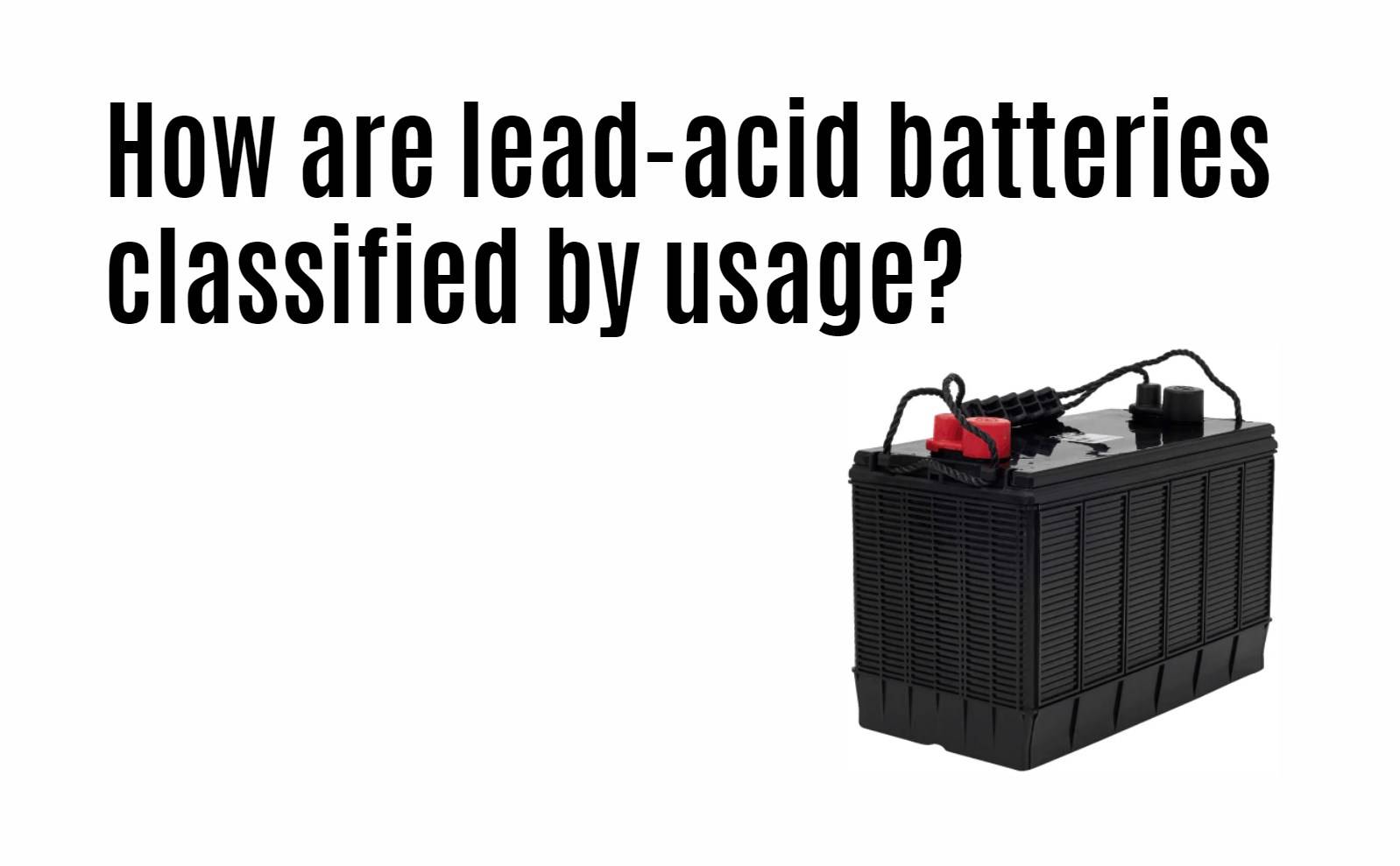
Lead-acid batteries remain foundational in energy storage, classified by usage into starting, deep-cycle, traction, and stationary types, each tailored for specific demands like vehicle ignition or backup power. Mastering this classification empowers businesses to select batteries that boost efficiency by up to 30% and cut replacement costs, delivering reliable performance across industries. Redway Power enhances this with lithium upgrades that extend lifespan threefold while matching lead-acid fit.
Table of Contents
ToggleWhat Is the Current State of the Lead-Acid Battery Industry?
Global lead-acid battery demand reached 450 million units in 2024, driven by automotive and UPS sectors, yet production faces rising raw material costs up 25% year-over-year. Automotive starts account for 60% of usage, with traction batteries in forklifts comprising 15%. Environmental regulations tighten as lead recycling rates hover at 99%, but improper disposal spikes contamination risks.
Industry growth projects to $68 billion by 2028 at 4.2% CAGR, per Statista reports. However, supply chain disruptions from mining shortages delay deliveries by 20-30 days.
What Pain Points Arise from Misclassification in Usage?
Wrong usage classification leads to 40% premature failures, costing fleets $500 per battery annually. Starting batteries in deep-cycle roles sulfation after 200 cycles, dropping capacity 50%. Traction misapplications in stationary setups increase downtime by 15 hours monthly.
Maintenance burdens average 10 hours weekly per 100 units due to electrolyte checks. Safety incidents rise 12% from venting in sealed environments, per OSHA data.
User complaints highlight 25% energy loss from mismatched plates, inflating operational costs 18%.
Why Do Traditional Solutions Fall Short for Modern Demands?
Traditional lead-acid batteries deliver 300-500 cycles at 50% DOD, versus lithium’s 4000+. Flooded types require weekly watering, risking spills that corrode 10% of equipment yearly. AGM variants cut maintenance but cost 20% more with only marginal gains.
Deep-cycle lead-acid weighs 2-3x lithium equivalents, reducing forklift runtime 25%. Charging times stretch to 8-10 hours, idling assets 40% longer.
Redway Power’s LiFePO4 replacements address these by dropping weight 60% and charging in 2 hours.
What Core Features Define Effective Classification-Based Solutions?
Redway Power’s lithium batteries classify usage via modular designs: 24V-80V for forklifts, RV deep-cycle packs, and 48V rack-mount for storage. ISO 9001:2015 certification ensures 6000+ cycles at 80% DOD.
Faster charging reaches 95% in 1 hour, with BMS preventing over-discharge. IP67 rating suits harsh forklift environments, supporting pallet jacks to electric trucks.
Redway Power scales from single units to rack systems for telecom, cutting energy loss to under 3%.
How Do Solutions Compare to Traditional Lead-Acid?
| Feature | Traditional Lead-Acid | Redway Power Lithium |
|---|---|---|
| Cycle Life (80% DOD) | 500 cycles | 6000 cycles |
| Charge Time | 8-10 hours | 1-2 hours |
| Weight (per kWh) | 50-70 kg | 20-25 kg |
| Maintenance | Weekly watering/checks | None |
| Efficiency | 70-80% | 95%+ |
| Lifespan (years) | 2-3 | 10+ |
| Cost per Cycle | $0.15 | $0.02 |
Redway Power outperforms by 12x cycles, slashing TCO 70% over 5 years. Forklift runtime extends 50%.
How Does the Usage Classification Solution Process Work?
-
Assess needs: Match starting (high CCA), traction (deep DOD), or stationary via load audit.
-
Select Redway model: 24V forklift for traction, 48V rack for UPS.
-
Install drop-in: Bolt-compatible, 30-minute swap with BMS auto-config.
-
Monitor via app: Track SOC, cycles; calibrate quarterly.
-
Scale as needed: Add racks for growth, Redway supports up to 1MWh.
What Real-World Scenarios Prove Usage Classification Value?
Forklift Fleet Operator
Problem: Lead-acid traction batteries failed after 400 cycles, costing $10K yearly replacements.
Traditional: Daily watering, 10-hour charges halted shifts.
After Redway 48V LiFePO4: 5000 cycles, 2-hour charges boosted uptime 40%.
Key Benefit: $15K annual savings, 30% productivity gain.
RV Enthusiast
Problem: Deep-cycle lead-acid sagged under 50% DOD, blackouts mid-trip.
Traditional: 100kg pack limited range 20%.
After Redway RV lithium: Consistent 90% DOD, halved weight extended trips 50%.
Key Benefit: 4000 miles extra range yearly, no maintenance.
Data Center Manager
Problem: Stationary lead-acid vented, risking $50K downtime.
Traditional: 300 cycles max, manual checks.
After Redway rack-mount: Seamless UPS, zero venting over 7000 cycles.
Key Benefit: 99.99% uptime, $20K saved on service.
Solar Installer
Problem: Energy storage lead-acid lost 30% capacity yearly.
Traditional: Frequent swaps disrupted off-grid power.
After Redway 51.2V: Stable DOD, integrated MPPT.
Key Benefit: 15-year ROI, 25% more harvestable energy.
Redway Power excels in telecom racks too.
Why Must You Adopt Usage Classification Solutions Now?
Lithium adoption surges 25% yearly, per BloombergNEF, as lead-acid recycling mandates tighten by 2027. Delaying risks 40% higher costs amid material shortages. Redway Power positions users ahead with scalable LiFePO4, ensuring compliance and 5x ROI.
Future grids demand 90% DOD reliability; act now for seamless transition.
Frequently Asked Questions
How are lead-acid batteries classified by usage?
Starting for engines, deep-cycle for sustained draw, traction for motors, stationary for backup.
What usage suits forklift batteries?
Traction classification handles repeated deep discharges in material handling.
Why replace lead-acid with lithium like Redway Power?
Lithium offers 10x cycles, zero maintenance, fitting same footprints.
When does misclassification cause failures?
Using starting types in deep-cycle roles halves lifespan within 6 months.
Which Redway Power batteries match RV needs?
Deep-cycle LiFePO4 packs provide lightweight, durable off-grid power.
Does Redway Power support custom voltages?
Yes, from 24V to 80V for forklifts, racks at 48V/51.2V.
Are Redway batteries drop-in replacements?
Fully compatible, install in 30 minutes without modifications.
Sources
-
https://www.batteryuniversity.com/article/bu-214-summary-table-of-lead-based-batteries
-
https://www.lessosolar.com/news/types-of-lead-acid-batteries-and-their-characteristics/
-
https://about.bnef.com/ (BloombergNEF lithium trends)
-
https://www.redwaypower.com/ (Redway Power product specs)
-
https://www.osha.gov/ (safety incident data)