Blog
What Is BCI Group Size and How Does It Affect Your Battery Choice

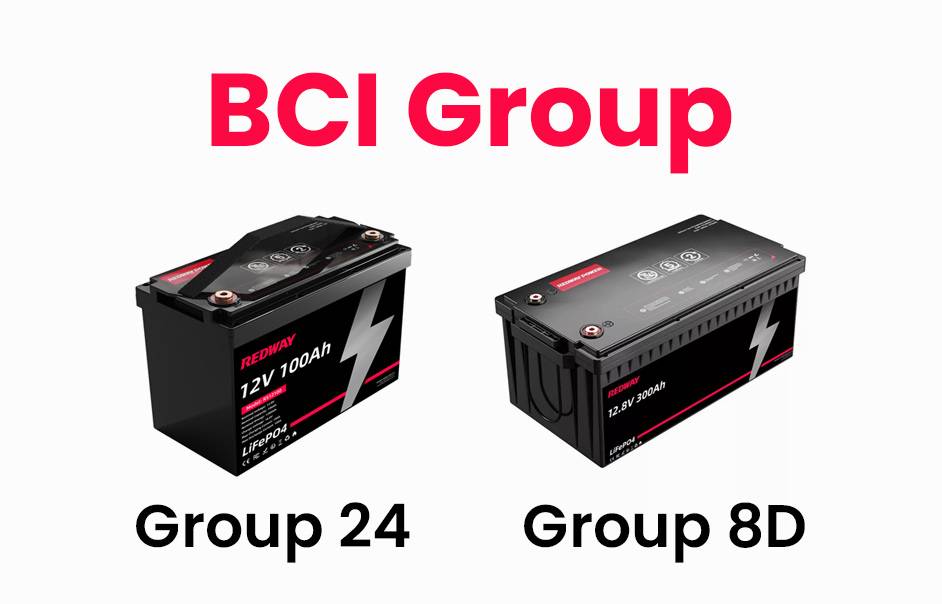
BCI Group Size is a standardized classification system for car batteries, defining physical dimensions, terminal placement, and power capacity. It ensures compatibility with your vehicle’s design and electrical requirements. Choosing the wrong group size can lead to poor performance, safety risks, or damage. Always consult your owner’s manual or a compatibility guide to select the correct BCI group size.
12V 100Ah LiFePO4 Battery (Ultra)
What Are BCI Battery Group Sizes and Why Do They Matter?
BCI (Battery Council International) group sizes categorize batteries by length, width, height, terminal position, and cold cranking amps (CCA). They ensure the battery fits your vehicle’s tray and aligns with its power needs. Using the wrong size may cause electrical failures, poor starting, or even physical damage. For example, Group 24 is common in trucks, while Group 35 fits many sedans.
How Do You Determine the Correct BCI Group Size for Your Vehicle?
Check your owner’s manual or existing battery label for the BCI group number. Online tools like BCI guides or retailer databases match vehicles to group sizes. For instance, a Honda Civic typically uses Group 51R, while a Ford F-150 may require Group 65. Physical measurements of the battery tray also help confirm compatibility.
Advanced methods include using smartphone apps that scan your vehicle’s VIN to recommend compatible group sizes. Mechanics often employ measuring templates to verify tray dimensions and terminal orientation. For modified vehicles, consult aftermarket specialists—a lifted truck with added electronics might need a Group 31 battery instead of the factory-recommended Group 34. Always cross-reference multiple sources, as manufacturers occasionally revise specifications between model years.
| Vehicle Type | Common BCI Group | Typical CCA Range |
|---|---|---|
| Compact Sedans | 51R | 400-550 |
| Full-Size Trucks | 65 | 750-950 |
| RVs/Boats | 31 | 800-1,100 |
What Happens If You Use the Wrong BCI Group Size Battery?
Incorrect group sizes risk terminal corrosion, loose mounting, or electrical overload. A too-small battery may lack power for starting, while a too-large one can strain the alternator. For example, installing a Group 34 (smaller) in a car designed for Group 35 might cause poor cranking in cold weather.
How Does BCI Group Size Relate to Battery Capacity and Performance?
Larger group sizes often support higher CCA and reserve capacity (RC). Group 31 batteries, used in RVs, may offer 1,000 CCA and 200+ minutes RC, while compact Group 51 batteries provide ~500 CCA. However, capacity also depends on technology—AGM batteries in the same group size often outperform flooded counterparts.
What Environmental Factors Influence BCI Group Size Selection?
Extreme climates demand specific sizes. Arctic regions require batteries with higher CCA (like Group 65) for cold starts. Flood-prone areas benefit from AGM batteries in standard group sizes due to spill-proof designs. Recycling programs also prioritize common group sizes like 24F or 35 for easier processing.
In desert environments, heat-resistant Group 75 batteries with enhanced water retention perform better. Marine applications need corrosion-resistant terminals regardless of group size. Recent studies show batteries in Group 48 (common for hybrids) degrade 18% slower in urban stop-and-go traffic compared to traditional sizes. Always consider your local climate’s average temperature range and humidity levels when selecting group size.
“While BCI group sizes standardize fitment, emerging technologies are reshaping capacity expectations. We’re seeing Group 31 AGM batteries with 220Ah capacity—previously unthinkable. Still, adherence to BCI guidelines ensures safety. Always prioritize correct sizing over raw specs; a well-matched mid-sized battery often outperforms a mismatched high-capacity unit.”
FAQs
- Can I Use a Higher BCI Group Size Battery for More Power?
- Only if your vehicle’s tray and electrical system support it. Consult a mechanic to avoid overloading the alternator.
- Do BCI Group Sizes Apply to Electric Vehicle Batteries?
- No. EVs use proprietary battery packs unrelated to BCI standards, which govern starter batteries.
- How Often Do BCI Group Size Standards Update?
- BCI revises standards every 5-10 years. The last major update in 2020 added sizes for hybrid vehicles.
- Are Marine Battery Group Sizes Different from Automotive?
- Some overlap exists (e.g., Group 31), but marine batteries prioritize deep-cycle performance over CCA. Always check dual ratings.