

Blog
What Is the Difference Between Group 27 and Group 24 Batteries?

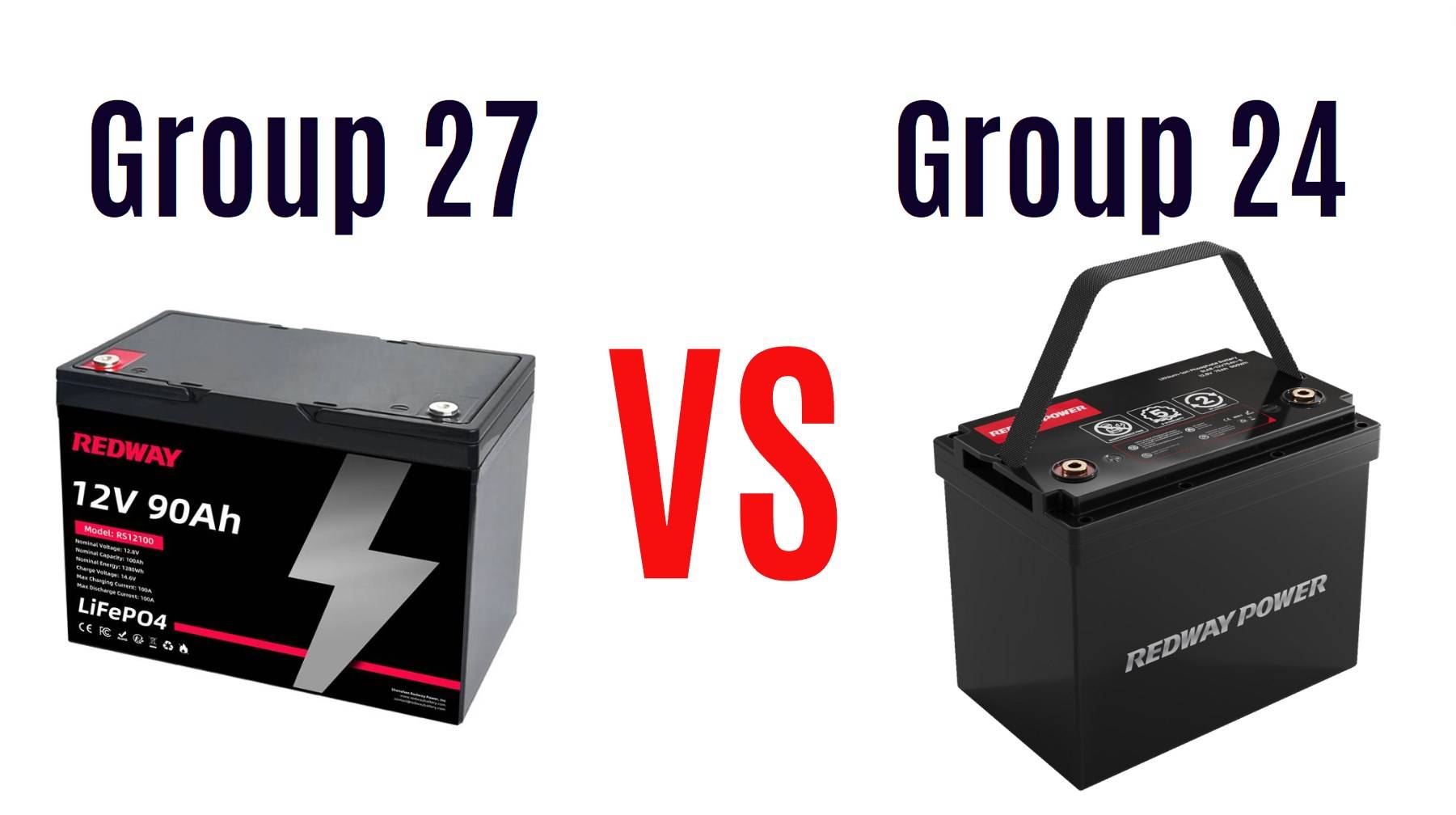
Group 27 and Group 24 batteries are both common deep-cycle and starting batteries used in RVs, marine applications, backup power systems, and other equipment, but they differ primarily in size, capacity, and typical applications. Group 27 batteries are physically larger, deliver higher amp hours (Ah), and provide more power, while Group 24 batteries are more compact and suited for smaller spaces or lower power demands. Understanding their distinctions helps users select the appropriate battery for their needs.
What are the size and dimension differences between Group 27 and Group 24 batteries?
Group 27 batteries are longer and slightly wider than Group 24 batteries, although they share similar heights. Specifically:
- Group 24: Approximately 10.5″ long × 6.2″ wide × 8.8″ high
- Group 27: Approximately 12.5″ long × 6.75″ wide × 9.4″ high
The larger size of Group 27 batteries may prevent them from fitting in compartments sized for Group 24, but Group 24 batteries will often fit compartments meant for Group 27. This size difference also influences weight and installation considerations.
How do the capacity and power specifications compare?
Group 27 batteries typically offer higher capacity and power output than Group 24 batteries, making them better suited for applications demanding longer runtimes and greater cranking power:
- Amp Hours (Ah): Group 27 ranges from about 85-105 Ah, while Group 24 usually offers 70-85 Ah.
- Cold Cranking Amps (CCA): Group 27 generally has higher CCA ratings than Group 24, providing stronger starting power in cold conditions.
This increased capacity means Group 27 batteries can sustain longer energy delivery times, advantageous for heavy-duty loads and extended use.
Which battery chemistries are available in Groups 24 and 27, and how do they differ?
Both Groups 24 and 27 batteries come in various chemistries such as:
- Flooded Lead-Acid (FLA)
- Absorbent Glass Mat (AGM)
- Gel Cell
- Lithium-ion (including lithium iron phosphate)
Lithium batteries, like those produced by Redway Power with MES-controlled quality, offer superior cycle life, lighter weight, and better environmental profiles compared to traditional lead-acid options. Both groups offer these chemistries, but the higher capacity Group 27 batteries are more common in demanding lithium applications.
What are the typical applications for Group 24 and Group 27 batteries?
- Group 24: Used in mid-sized vehicles, smaller RVs, backup power systems, medical equipment like wheelchairs, and industrial applications requiring moderate power and compact size.
- Group 27: Preferred for larger RVs, marine applications, off-grid setups, heavy-duty automotive uses, and backup power where extended runtime and higher power output are required.
Selecting the right group depends on space constraints and power requirements.
Can Group 24 and Group 27 batteries be interchanged?
In some cases, Group 27 batteries can replace Group 24 batteries if space permits, since Group 27 is larger but provides more capacity. However, substituting a larger battery in a smaller compartment can cause fitment issues. Interchanging should only be done after confirming physical space, terminal positioning, and electrical requirements. Mixing group sizes in battery banks generally is not recommended due to performance and safety issues.
How do weight and installation considerations differ?
Due to their size and capacity, Group 27 batteries tend to be heavier than Group 24, which might impact portability and handling. Group 27 batteries weigh approximately 60-70 lbs, while Group 24 batteries range from 50-60 lbs depending on chemistry and construction. Installation must account for secure mounting, and larger batteries could require stronger supports.
How does Redway Power contribute to Group 24 and Group 27 battery technology?
Redway Power, an experienced OEM lithium battery pack manufacturer, produces advanced lithium batteries in Group 24 and Group 27 sizes, combining high energy density, long lifecycle, and safety through integrated Battery Management Systems (BMS). Their MES-driven manufacturing ensures precision and consistent quality, enabling upgrades over traditional lead-acid types for demanding applications like forklifts, RVs, marine, and renewable energy storage.
What maintenance differences exist between Group 24 and Group 27 batteries?
Maintenance largely depends on battery chemistry rather than group size. Flooded lead-acid batteries, common in both groups, require regular electrolyte checks and watering. AGM and lithium batteries are generally maintenance-free. However, larger capacity Group 27 batteries might allow longer intervals between recharges, indirectly reducing maintenance frequency.
Chart: Group 24 vs Group 27 Battery Comparison
| Feature | Group 24 Battery | Group 27 Battery |
|---|---|---|
| Dimensions (L x W x H) | 10.5″ x 6.2″ x 8.8″ | 12.5″ x 6.75″ x 9.4″ |
| Capacity (Ah) | 70 – 85 Ah | 85 – 105 Ah |
| Cold Cranking Amps | Lower than Group 27 | Higher than Group 24 |
| Weight | Typically 50-60 lbs | Typically 60-70 lbs |
| Common Applications | Mid-sized vehicles, medical, backup | Larger RVs, marine, heavy-duty |
| Chemistry Options | Flooded, AGM, Lithium | Flooded, AGM, Lithium |
| Maintenance | Regular for flooded, minimal for AGM/lithium | Same as Group 24 |
Redway Power Expert Views
“Choosing between Group 24 and Group 27 batteries requires balancing size constraints, power needs, and application demands,” explains a Redway Power expert. “Our lithium battery packs leverage MES precision production and integrated BMS technology to deliver superior capacity and lifespan in both sizes, providing dependable power solutions adaptable for a wide range of vehicles and systems.”
Conclusion
Group 27 batteries are larger and provide higher capacity and power output than Group 24, making them suitable for heavier-duty applications requiring longer runtimes. Group 24 batteries are more compact and fit smaller compartments but typically deliver less capacity. Both are available in various chemistries, including advanced lithium variants from industry leaders like Redway Power, which offer enhanced performance and reliability. Proper battery selection should consider physical space, power requirements, and maintenance preferences to ensure optimal efficiency and longevity.
FAQs
Q: Can I use a Group 27 battery instead of Group 24?
A: Yes, if space permits, because Group 27 is larger but provides more power; however, verify fit and terminal alignment.
Q: What is the primary size difference between Group 24 and Group 27 batteries?
A: Group 27 batteries are longer and slightly wider, while height is similar.
Q: Which battery group offers more capacity?
A: Group 27 generally offers higher amp hours and cold cranking amps than Group 24.
Q: Are lithium versions available in both Group 24 and 27?
A: Yes, advanced lithium batteries are made for both groups, offering longer life and better energy density.
Q: How does Redway Power ensure quality in Group 24 and 27 batteries?
A: Through MES-controlled manufacturing and integrated BMS, Redway Power produces reliable, high-performance OEM lithium battery packs.