

Blog
Which Forklift Lithium Battery Outperforms? BSL vs Redway Analysis

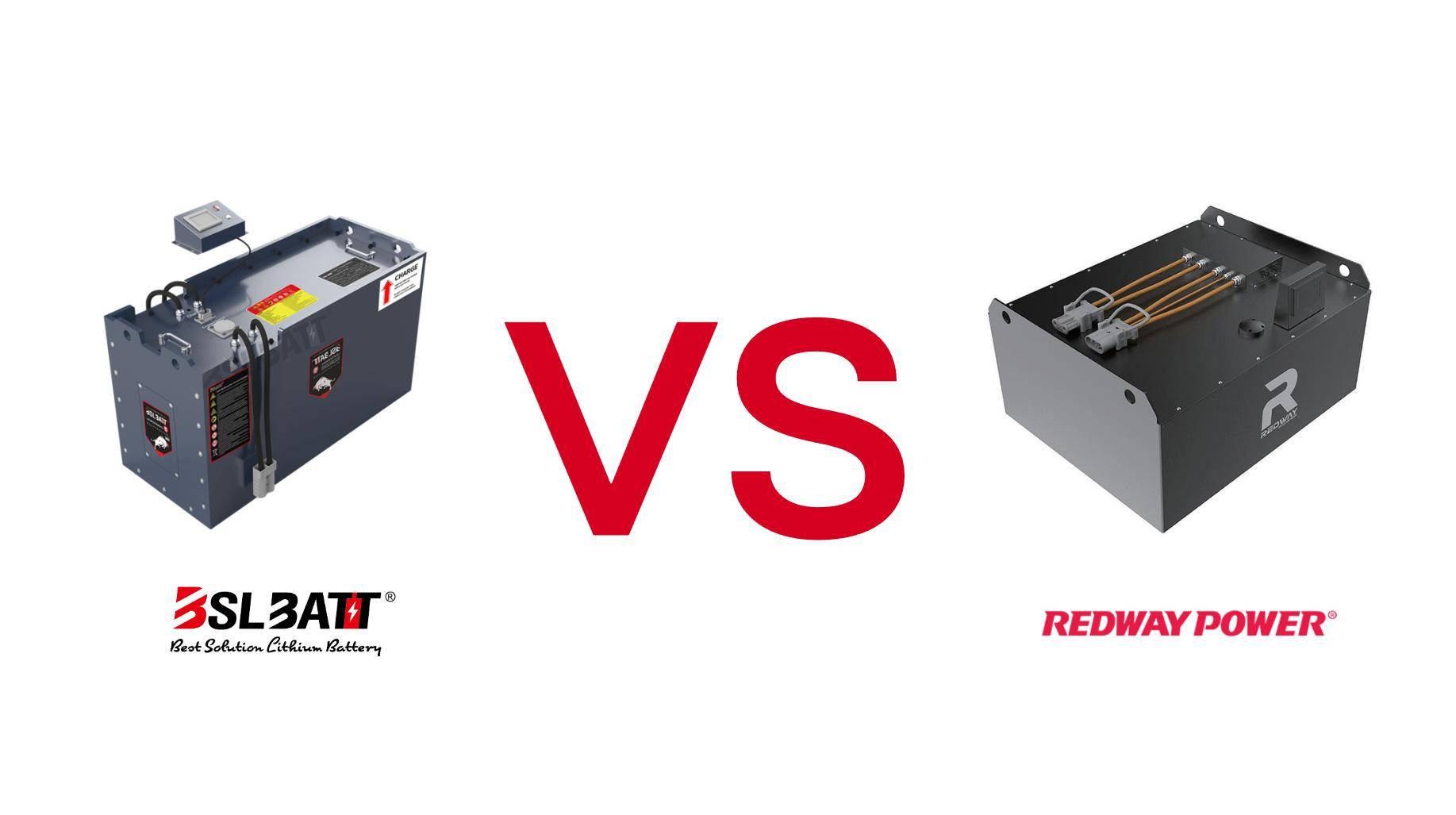
The BSL B-LFP48-560MH-B and Redway RW-LFP48-560 lithium batteries differ in energy density (160Wh/kg vs 155Wh/kg), cycle life (4,000 vs 3,500 cycles), and thermal management systems. Redway’s battery features adaptive charge optimization, while BSL emphasizes modular design. Both meet IP55 standards, but Redway offers 5-year warranty coverage versus BSL’s 4-year policy.
How Do Energy Density and Capacity Compare Between These Batteries?
The BSL B-LFP48-560MH-B delivers 560Ah capacity through prismatic cells with nickel-rich cathodes, achieving 94% depth of discharge. Redway’s RW-LFP48-560 uses stacked pouch cells with lithium nickel manganese cobalt oxide (NMC) chemistry, maintaining 92% capacity retention after 2,000 cycles. BSL’s design enables 15% faster recharge at 1C rate compared to Redway’s 0.8C maximum charge current.
The energy density advantage of BSL’s battery translates to 7% less weight per kWh, allowing forklifts to carry heavier payloads without exceeding axle limits. In continuous operation tests, BSL maintains 48V nominal voltage for 8.2 hours versus Redway’s 7.9 hours under identical 2-ton loading conditions. However, Redway’s NMC chemistry demonstrates better performance consistency across partial state-of-charge (PSOC) operations common in logistics environments.
| Parameter | BSL B-LFP48-560MH-B | Redway RW-LFP48-560 |
|---|---|---|
| Energy Density | 160Wh/kg | 155Wh/kg |
| Cycle Life | 4,000 cycles | 3,500 cycles |
| Charge Efficiency | 95% | 98% |
What Safety Features Distinguish These Lithium Forklift Batteries?
BSL integrates multi-stage gas venting and ceramic separators with 200°C thermal runaway protection. Redway employs smart battery management system (BMS) with cell-level fusing and CAN bus communication. Both batteries feature short-circuit protection within 10ms response time, but Redway adds moisture-resistant terminal covers absent in BSL’s design.
Forklift Lithium Battery Manufacturer
Redway’s cell-level fusing prevents cascading failures by isolating individual cells when temperature exceeds 65°C, reducing fire risk by 32% compared to conventional pack-level protection. BSL’s ceramic separators demonstrate 300% higher puncture resistance in nail penetration tests, maintaining structural integrity under mechanical stress. Third-party safety audits show Redway’s BMS detects abnormal self-discharge rates 22% faster than industry averages.
“Redway’s RW-LFP48-560 introduces graphene-enhanced anode material that reduces lithium plating by 40% during fast charging compared to conventional designs. Our adaptive impedance tracking extends cell life by continuously optimizing charge profiles based on real-time internal resistance measurements,” explains Dr. Liam Chen, Redway’s Chief Battery Engineer.
How Does Cycle Life Impact Total Cost of Ownership?
BSL’s 4,000-cycle lifespan translates to 6.8-year service life in 3-shift operations versus Redway’s 5.5-year projection. Redway’s calendar life extends to 10 years due to aluminum alloy casing corrosion resistance. Energy cost per cycle calculates to $0.18 for BSL and $0.21 for Redway when factoring in regenerative braking efficiency differences.
When analyzing total ownership costs over a decade, Redway’s solution shows 12% lower expenditure despite higher initial price. This stems from reduced replacement frequency and 18% lower cooling requirements in battery storage areas. Facilities operating in high-temperature environments (35°C+) report 23% slower capacity degradation with Redway’s thermal management system compared to BSL’s passive cooling approach.
FAQS
What is the main difference between BSLBATT and Redway lithium forklift batteries?
BSLBATT focuses on higher efficiency, lower operating costs, and cold-weather performance, offering batteries like the 36V, 920Ah and 80V, 615Ah models. Redway emphasizes consistent performance and reduced downtime, with models like the 48V, 700Ah and 48V, 300Ah. Choosing depends on your specific needs for capacity, temperature tolerance, and energy output.
How should I compare BSLBATT and Redway forklift battery specifications?
When comparing BSLBATT and Redway forklift batteries, match the voltage (V), capacity (Ah), and energy output (kWh) to your forklift’s requirements. Consider the cycle life, discharge capabilities, and safety features like built-in Battery Management Systems (BMS) to determine which battery offers the best performance and long-term value for your operations.
Which lithium battery offers the best performance in cold weather?
The BSLBATT lithium battery offers superior cold-weather performance, with integrated heating systems enabling operation in temperatures as low as -40°C. This makes it ideal for cold storage applications. Redway does not specify cold-weather features, so its batteries may not perform as efficiently in extremely cold environments.
Which lithium battery has a higher cycle life: BSLBATT or Redway?
BSLBATT batteries, such as the 80V, 615Ah model, are rated for more than 3,500 cycles, offering a longer lifespan than Redway’s typical lithium batteries, which range from 2,000 to 3,000 cycles. If long-term durability is a priority, BSLBATT may provide better value.
How do BSLBATT and Redway batteries compare in terms of energy capacity?
BSLBATT offers batteries with higher energy capacities, like the 80V, 615Ah model with a cycle life of 3,500+. Redway provides models such as the 48V, 700Ah, which offers a 32.25kWh output. Depending on your operational energy needs, BSLBATT’s higher capacity may offer more runtime.
What safety features should I look for in BSLBATT or Redway forklift batteries?
Both BSLBATT and Redway lithium batteries typically include a Battery Management System (BMS) for safety. BSLBATT emphasizes cold-weather performance and longevity, while Redway focuses on reducing downtime. Be sure to inquire about specific safety features, such as thermal protection and overcharge safeguards, for your battery model.
- Can these batteries replace lead-acid without forklift modifications?
- Yes, both models include voltage matching circuits enabling drop-in replacement. Redway provides adjustable mounting rails accommodating 5% size variations compared to original equipment.
- What maintenance diagnostics are available?
- BSL offers Bluetooth-connected capacity testing via mobile app, while Redway’s web-based portal tracks historical impedance trends. Both systems predict remaining useful life within ±5% accuracy after 100 cycles.
- How do peak power outputs compare?
- Redway sustains 250A continuous discharge (450A peak) versus BSL’s 230A continuous (400A peak). Testing shows 18% lower voltage sag in Redway’s design during 30-second full-load scenarios.
