Blog
What Are the Differences Between 100Ah AGM and 100Ah Lithium Batteries?

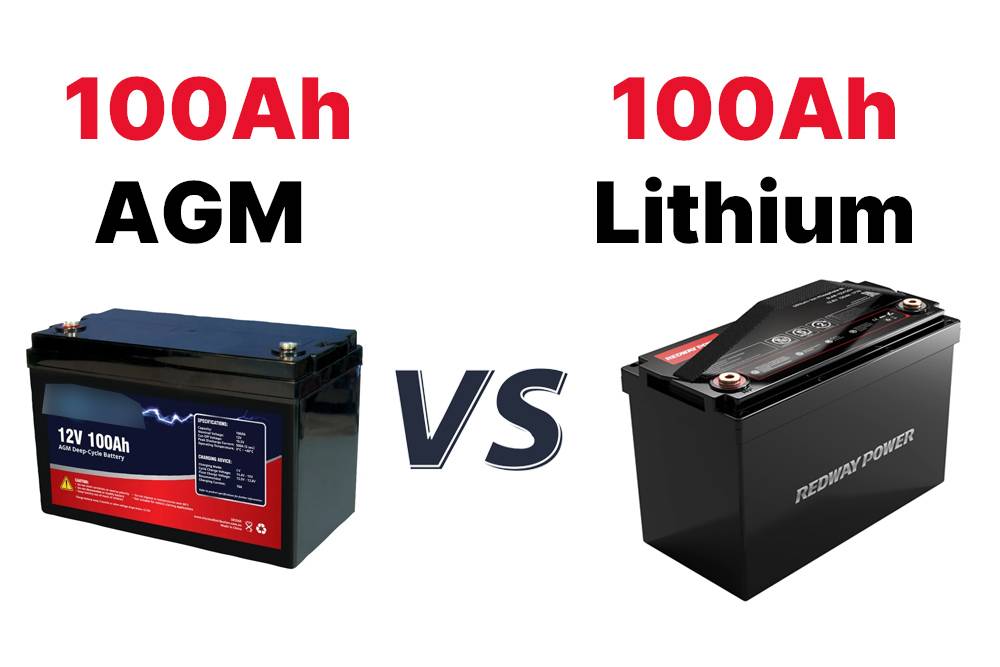
100Ah AGM and 100Ah lithium batteries differ chiefly in weight, lifespan, performance, cost, and maintenance. AGM batteries are heavier, have a shorter lifespan (3-5 years), and lower usable capacity, whereas lithium batteries are lighter, last longer (10-15 years), offer deeper discharge, faster charging, and better efficiency, making them ideal for high-demand applications.
What are AGM and Lithium batteries?
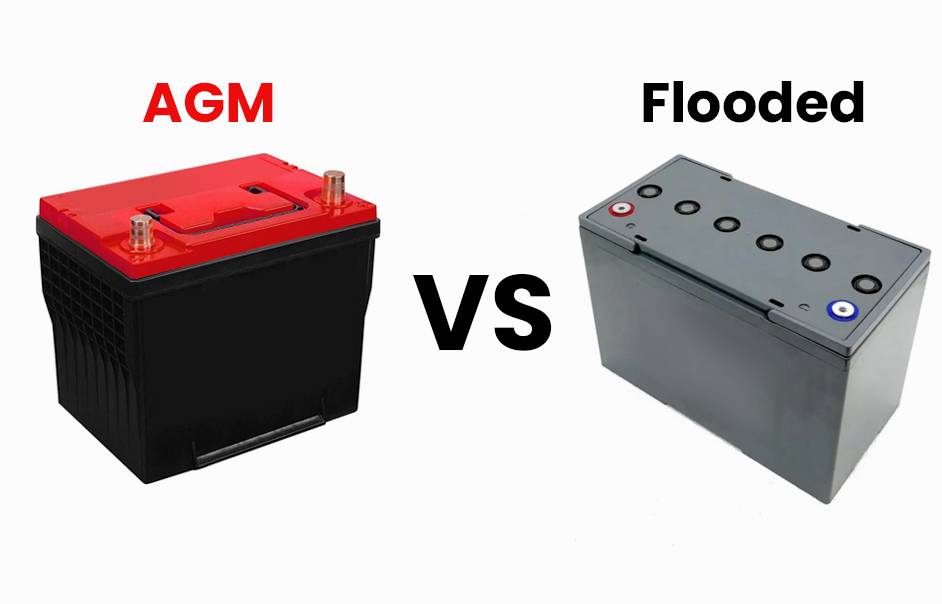
AGM (Absorbent Glass Mat) batteries are a type of lead-acid battery that use fiberglass mats to hold the electrolyte, making them spill-proof and vibration resistant. Lithium batteries, particularly lithium iron phosphate (LiFePO4), utilize advanced lithium-ion chemistry, delivering higher energy density, lighter weight, longer lifespan, and superior charging capabilities compared to AGM.

How do size and weight differ between 100Ah AGM and 100Ah Lithium batteries?
A typical 100Ah AGM battery weighs between 60 to 70 lbs (27-32 kg), whereas the equivalent lithium battery weighs only 25 to 35 lbs (11-16 kg). Lithium batteries’ compact size and lighter weight make them more suitable for mobile setups like RVs, boats, and portable solar systems, where minimizing weight and space is crucial.
What are the lifespan and cycle life differences?
AGM batteries last about 3-5 years with 300-500 cycles, typically discharged to 50% depth of discharge (DoD) to preserve battery life. Lithium batteries can last 10-15 years, offering 2,000 to 5,000 cycles at 80-90% DoD, meaning they provide much more usable energy and outlast AGM batteries significantly.
How do AGM and Lithium batteries perform under load?
Lithium batteries handle higher discharge rates with minimal voltage drop and sustain consistent power output under heavy loads. AGM batteries experience voltage sag towards the end of their charge and have lower usable capacity due to limited DoD. Lithium’s superior performance makes it better for applications requiring steady high power.
How do charging times and efficiencies compare?
Lithium batteries recharge 2-3 times faster than AGM batteries because they accept a higher charge current without requiring multi-stage slow charging. Lithium’s round-trip efficiency exceeds 95%, whereas AGM batteries typically achieve 80-85%, resulting in less energy loss and better overall power management.

What are the cost differences and long-term values?
Though AGM batteries have a lower initial purchase cost, lithium batteries offer a better cost-per-cycle value over their lifespan due to longevity and higher efficiency. Lithium batteries’ upfront price can be 2-3 times higher than AGM, but their durability and lower maintenance can lead to long-term savings.
How do safety, warranty, and environmental impacts differ?
AGM batteries are stable but can leak acid if damaged. Lithium batteries have built-in Battery Management Systems (BMS) for overcharge, undervoltage, and thermal protection, enhancing safety. Lithium often comes with longer warranties (5-10 years) compared to AGM (1-3 years). Environmentally, lithium batteries generally have a smaller footprint thanks to longer life and recyclable materials.
What are the best applications for each battery type?
AGM batteries are suitable for budget-conscious users or applications where cold-weather performance is vital, as AGM batteries tolerate low temperatures better. Lithium batteries excel in high-demand, weight-sensitive, portable, or solar energy setups, such as RVs, boats, telecom systems, and home energy storage.
How to install and maintain these batteries effectively?
AGM batteries require minimal maintenance but should be monitored to prevent sulfation and deep discharge. Lithium batteries need proper installation with integrated BMS and compatible chargers. Monitoring via smart apps or Bluetooth is common for lithium, ensuring optimal performance and longevity.
Chart: Comparison of 100Ah AGM and 100Ah Lithium Batteries
| Feature | AGM Battery | Lithium Battery |
|---|---|---|
| Weight | 60-70 lbs (27-32 kg) | 25-35 lbs (11-16 kg) |
| Lifespan | 3-5 years | 10-15 years |
| Cycle Life | 300-500 cycles | 2,000-5,000 cycles |
| Depth of Discharge (DoD) | ~50% usable capacity | 80-90% usable capacity |
| Charging Time | Slow, multi-stage | Fast, high-rate capable |
| Efficiency | 80-85% | >95% |
| Warranty | 1-3 years | 5-10 years |
| Maintenance | Low, avoid deep discharge | Low, BMS managed |
Redway Power Expert Views
“Selecting between a 100Ah AGM and 100Ah lithium battery hinges on the application and long-term goals. Lithium batteries, with their remarkable longevity and lightweight design, are revolutionizing how we power equipment, especially in mobile and off-grid systems. At Redway Power, our advanced lithium packs embody cutting-edge MES manufacturing and stringent quality control, ensuring exceptional reliability for diverse uses—from forklifts to marine applications. For anyone seeking efficiency and durability, lithium is generally the superior choice, though AGM remains relevant where cost and temperature resilience matter most.” — Redway Power Battery Expert
Conclusion
Choosing between 100Ah AGM and 100Ah lithium batteries involves evaluating weight, lifespan, performance, charging speed, cost, and application needs. Lithium batteries provide superior longevity, efficiency, and usability at a higher upfront cost, while AGM batteries offer a budget-friendly option with proven reliability in cold conditions. For advanced and long-term power solutions, industry leaders like Redway Power emphasize lithium’s advantages as the future of battery technology.
FAQs
-
Can I replace an AGM battery with a lithium battery in my system?
Generally yes, but you must ensure your charging system and battery management are compatible with lithium chemistry. -
Which battery is safer to use indoors?
Both are safe with proper installation, but lithium batteries have built-in BMS that enhance safety. AGM can emit gases if overcharged. -
How does temperature affect these batteries?
AGM batteries perform better in freezing temperatures; lithium batteries require temperature management to avoid charging below freezing. -
Is lithium battery maintenance complicated?
No, lithium batteries require less maintenance due to integrated BMS and do not need periodic watering or equalizing unlike some lead-acid batteries. -
Where can I buy reliable lithium batteries?
Redway Power offers high-quality lithium battery packs with ISO 9001:2015 certified manufacturing, suited for various applications.