Blog
Which Is Better for Battery Wiring: Series or Parallel?

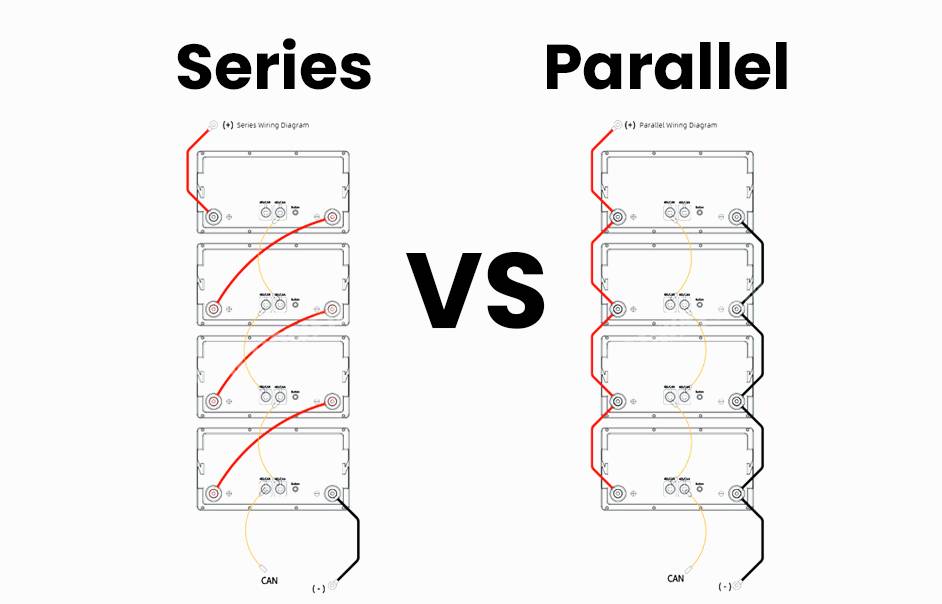
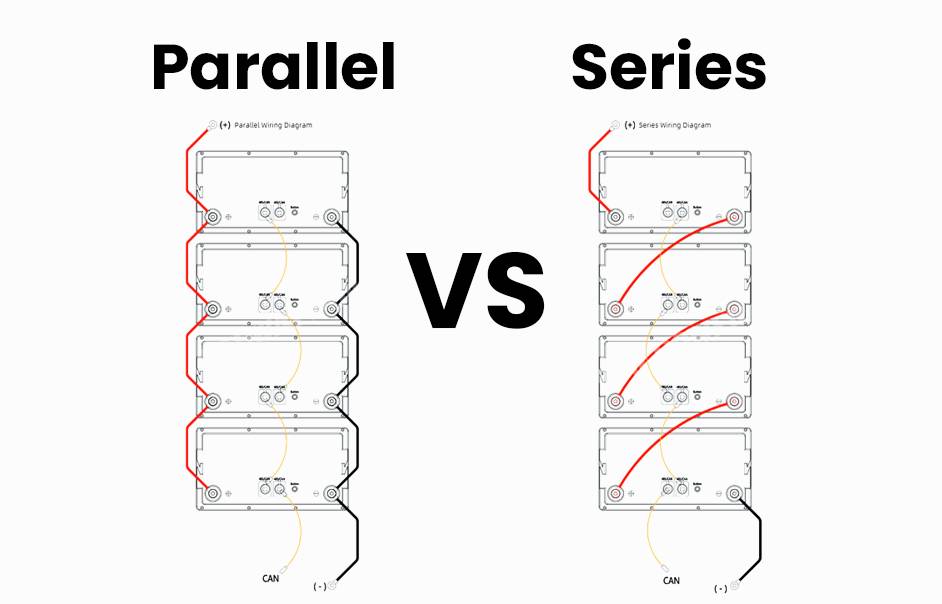
Choosing between series and parallel wiring for batteries depends on your specific needs: whether you want higher voltage or increased capacity (amp-hours). Series wiring increases total voltage by connecting batteries end-to-end, keeping capacity the same, while parallel wiring maintains voltage and increases capacity by linking all positives and negatives together. Both have distinct pros, cons, and best-use scenarios.
What Is Series Battery Wiring and How Does It Affect Voltage and Capacity?
Series wiring connects batteries positive terminal to the negative terminal of the next battery, adding their voltages while the amp-hour (Ah) capacity remains equal to a single battery. For example, two 12V 100Ah batteries in series provide 24V at 100Ah. This configuration is ideal for applications requiring higher voltage input, such as electric vehicles or solar inverters, as it allows powering higher-voltage devices efficiently with less current draw.
What Is Parallel Battery Wiring and How Does It Affect Voltage and Capacity?
Parallel wiring connects all positive terminals together and all negative terminals together, keeping system voltage the same as a single battery, but adding their capacities (amp-hours). For instance, two 12V 100Ah batteries in parallel provide 12V at 200Ah. This setup extends runtime and supports higher current output, suitable for off-grid solar systems, energy storage, and situations needing longer endurance without raising voltage.
How Do Series and Parallel Wiring Differ in Terms of Runtime and Power Delivery?
Series wiring delivers voltage suitable for high-power, high-voltage applications with the same runtime as a single battery’s capacity; parallel wiring extends runtime and current capacity at a fixed voltage. Series increases voltage for efficient power transmission over longer distances with thinner wiring, while parallel supports longer use and higher surge currents due to increased amp-hour capacity.
What Are the Main Advantages of Series Wiring?
- Increases voltage to meet high-voltage system requirements.
- Reduces current draw, which lowers resistive losses and allows using thinner cables.
- Enables use of standard voltage batteries to create uncommon system voltages.
What Are the Main Advantages of Parallel Wiring?
- Increases overall battery capacity, extending runtime and load support.
- Improves system redundancy: if one battery fails, others can continue to supply power.
- Simplifies charging at the same voltage level, using standard chargers.
What Are the Typical Disadvantages or Challenges of Series Wiring?
- System depends on all batteries functioning; one failure disrupts the entire chain.
- Requires chargers compatible with the total series voltage, which may be specialized or expensive.
- Balancing charge among batteries is essential to avoid damage or reduced lifespan.
What Are the Typical Disadvantages or Challenges of Parallel Wiring?
- Voltage remains constant, which may be insufficient for high-voltage applications.
- Increased wiring complexity with more connection points can lead to uneven discharge if batteries differ in age or capacity.
- Requires careful management to prevent imbalances caused by mismatched batteries.
Which Wiring Configuration Offers Better Safety and Reliability?
Parallel wiring can be safer and more reliable because the system continues to function even if one battery fails, reducing total system downtime. However, series wiring reduces the current load and associated heating and facilitates more efficient power transmission but demands perfect battery matching and monitoring to prevent voltage imbalances and failures.
How Do You Decide Between Series and Parallel Wiring for Your Battery Bank?
Choose series wiring when your application requires higher voltage to operate equipment efficiently, such as in electric vehicles or high-voltage solar inverters. Choose parallel wiring for applications demanding longer runtime and higher capacity at a fixed voltage, such as backup power or DC appliances. Sometimes, a combination of series-parallel wiring is used to optimize both voltage and capacity.
What Are Common Applications Suited to Series, Parallel, or Combined Wiring?
| Wiring Type | Typical Applications |
|---|---|
| Series | Electric vehicles, high-voltage solar systems, power tools |
| Parallel | Off-grid solar battery banks, backup power supplies |
| Series + Parallel | Large battery banks for EVs, telecom, and data centers |
How Does Battery Chemistry Influence Series vs. Parallel Wiring Choices?
Lithium batteries, such as those manufactured by Redway Power, require careful balancing in series wiring due to their sensitivity to overcharge/overdischarge. Parallel wiring can mitigate some risks by maintaining consistent voltage. Regardless of chemistry, balanced charge management and matched batteries are crucial to prolong battery life and ensure safety in any wiring configuration.
How Does Proper Battery Management Impact Series and Parallel Systems?
Battery Management Systems (BMS) monitor voltage, current, temperature, and state-of-charge for individual cells or batteries, helping balance cells in series or manage capacity in parallel. Effective BMS integration, as developed by experts like Redway Power, avoids overcharging, deep discharge, and thermal issues, preserving battery health and system reliability regardless of wiring method.
What Are Best Practices for Wiring Batteries in Series or Parallel?
- Always use batteries of the same type, age, and capacity.
- Use proper cabling and connectors rated for voltage and current.
- Employ quality BMS to monitor individual battery conditions.
- Use fuses or circuit breakers on battery terminals for safety.
- Regularly inspect and maintain battery connections and balance.
Battery Wiring Comparison Chart
| Feature | Series Wiring | Parallel Wiring | Combined Series-Parallel |
|---|---|---|---|
| Voltage | Increases (adds voltages) | Remains same | Increases (partial sum) |
| Capacity (Ah) | Remains same | Increases (adds capacities) | Increases (partial sum) |
| Runtime | Comparable to single battery | Extended runtime | Extended runtime |
| Current Output | Limited to single battery | Increased current | Increased current |
| Risk of Failure | System stops if one battery fails | System continues with reduced capacity | Partial tolerance |
| Wiring Complexity | Simpler (series chain) | More complex (multiple links) | Highest complexity |
| Charging Requirements | Higher voltage charger needed | Standard voltage charger | Depends on combined configuration |
Redway Power Expert Views
“At Redway Power, we stress the importance of selecting the correct wiring configuration tailored to your energy needs. Series wiring benefits applications where high voltage and lower current are essential, whereas parallel wiring excels in extending runtime and providing redundancy. Our high-quality lithium battery packs incorporate advanced BMS technology designed to ensure safe and balanced operation regardless of wiring method, delivering performance and longevity.”
Conclusion
Neither series nor parallel wiring is universally better; the choice depends on application voltage requirements, desired capacity, system complexity, and safety. Series wiring increases voltage, suitable for high-power applications, while parallel wiring boosts capacity and runtime. Combining wiring principles and employing robust battery management systems—as implemented in Redway Power’s premium battery solutions—ensures optimized, reliable performance tailored to your specific needs.
Frequently Asked Questions
Q: Does wiring batteries in series increase total energy (watt-hours)?
A: No, it increases voltage but keeps amp-hours the same; total energy depends on voltage times capacity.
Q: Can you mix batteries of different capacities or ages in series or parallel?
A: It is not recommended because it causes imbalance and reduces battery life.
Q: What kind of charger do I need for series-wired batteries?
A: A charger that matches the total series voltage of the battery bank.
Q: Is parallel wiring safer in terms of failure?
A: Yes, because if one battery fails, others can continue to supply power with reduced capacity.
Q: How does Redway Power ensure safe wiring and battery management?
A: Redway Power uses advanced Battery Management Systems and quality manufacturing processes to maintain balanced and safe operation in both series and parallel battery configurations.