Blog
What Are the Essential Parts of a Forklift and Their Roles?

Forklifts are indispensable machines in industrial operations, designed to lift, move, and stack heavy materials efficiently. Understanding their core components and maintenance requirements ensures safe operation and maximizes productivity in warehouses, construction sites, and manufacturing facilities. This guide explores critical forklift parts, their functions, and best practices for upkeep, while addressing common questions from operators and facility managers.
LiFePO4 Forklift Batteries OEM Manufacturer
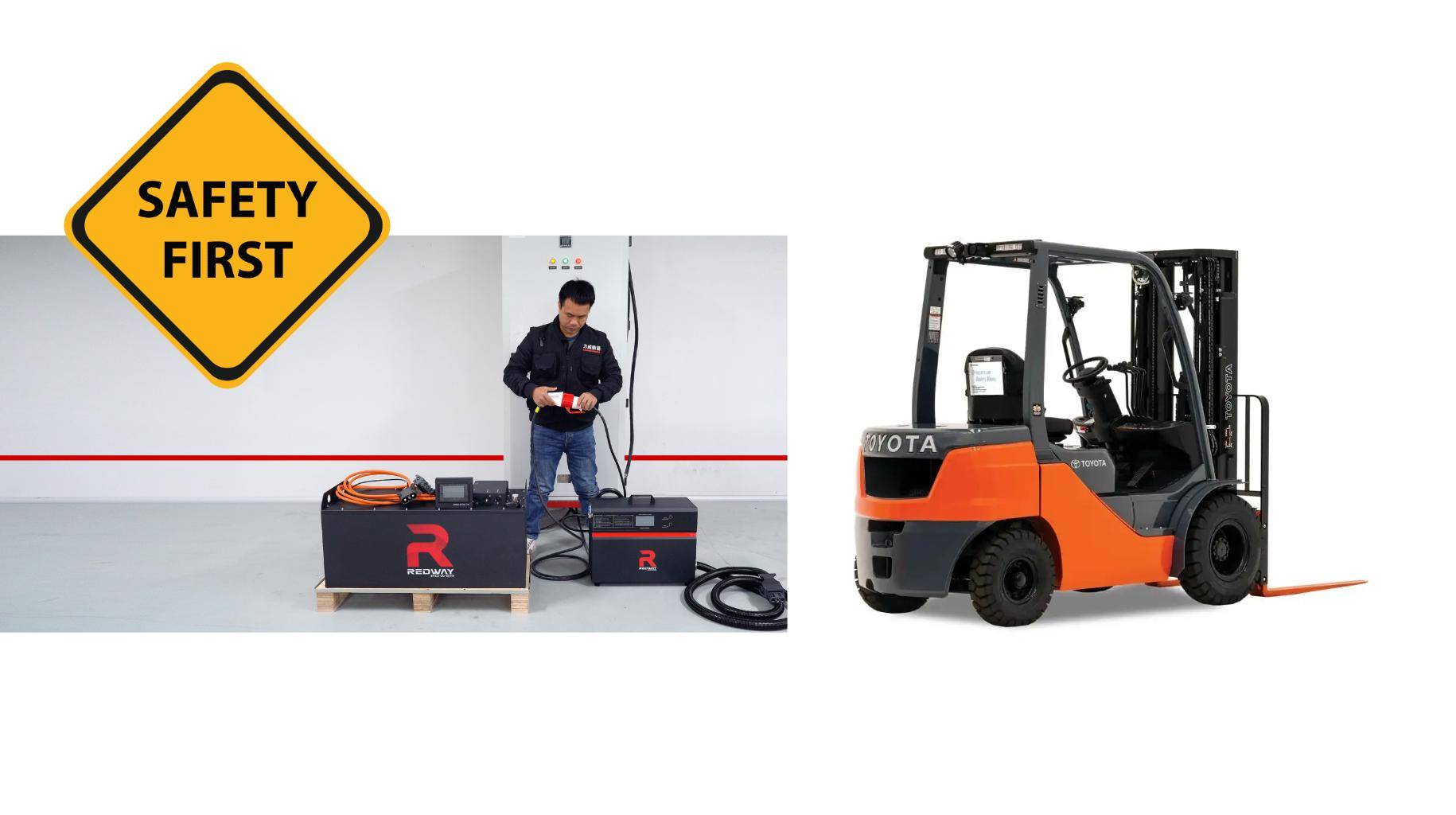
A forklift consists of several essential parts that work together to ensure safe, efficient material handling. Key components include the mast for lifting, forks for carrying loads, the counterweight for balance, and the power source for operation. Understanding these parts and their roles helps optimize forklift performance and safety.
What Is the Role of the Mast in a Forklift?
The mast is the vertical assembly that raises and lowers loads. It consists of rails, lift cylinders, chains, and a carriage that supports the forks. The mast allows precise vertical movement, enabling forklifts to stack and retrieve loads at varying heights safely.
How Do the Forks Function in Material Handling?
Forks are the horizontal tines attached to the carriage that engage and lift loads. They come in various sizes and shapes to accommodate different pallet types and load configurations. Forks transfer the weight of the load to the forklift, making them critical for secure handling.
What Purpose Does the Counterweight Serve?
The counterweight is a heavy mass located at the rear of the forklift that balances the weight of the load on the forks. It prevents the forklift from tipping forward during lifting operations, maintaining stability and operator safety.
How Does the Hydraulic System Operate the Forklift’s Lifting and Tilting?
The hydraulic system powers the lift and tilt functions through hydraulic pumps, lift cylinders, and tilt cylinders. Hydraulic fluid pressure raises and lowers the mast and tilts the forks forward or backward, allowing controlled load placement and transport.
What Is the Importance of the Power Source in Forklift Operation?
The power source—either an internal combustion engine (gasoline, diesel, LPG) or an electric motor powered by batteries—provides energy to move the forklift and operate hydraulic systems. The choice impacts performance, emissions, and suitability for indoor or outdoor use.
How Does the Operator Cab Facilitate Control and Safety?
The operator cab houses controls such as the steering wheel, pedals, levers, and safety devices like seat belts and overhead guards. It provides the operator with visibility, comfort, and protection, enabling precise maneuvering and load handling.
What Role Do Wheels and Tires Play in Forklift Mobility?
Wheels and tires support the forklift’s weight and enable movement across various surfaces. Pneumatic tires are suited for outdoor rough terrain, while cushion tires are ideal for smooth indoor floors. Proper tires enhance stability and traction.
How Do the Carriage and Load Backrest Support Load Stability?
The carriage is the platform on which forks or attachments are mounted, moving vertically along the mast. The load backrest prevents the load from shifting backward toward the operator, improving safety and load security during lifting.
What Are the Functions of Safety Features Like Overhead Guards and Lights?
Overhead guards protect the operator from falling objects, while lights and horns improve visibility and alert others in the work area. These features reduce accidents and enhance workplace safety.
How Does Redway Power Contribute to Forklift Performance?
Redway Power specializes in OEM lithium battery packs that provide forklifts with reliable, long-lasting power. Their advanced battery technology ensures consistent performance, faster charging, and reduced maintenance, enhancing electric forklift efficiency and uptime.
What Maintenance Practices Are Vital for Forklift Parts?
Regular inspection, lubrication, and replacement of wear parts like forks, tires, and hydraulic components are essential. Using genuine parts and professional service, such as those offered by Redway Power, ensures longevity and safe operation.
How Do Attachments Expand Forklift Capabilities?
Attachments like clamps, rotators, and side shifters mount on the carriage to handle specialized loads. They increase forklift versatility, allowing efficient handling of diverse materials beyond standard pallets.
What Innovations Are Emerging in Forklift Component Design?
New materials improve durability and reduce weight, while smart sensors and telematics enhance safety and maintenance. Lithium-ion batteries from providers like Redway Power are revolutionizing power sources with longer life and eco-friendliness.
Forklift Mast: The Backbone of Vertical Lifting
The mast is the vertical structure responsible for raising and lowering loads. Composed of interlocking rails, chains, and hydraulic cylinders, its design directly impacts lifting capabilities. Masts come in single-stage (basic lifts), double-stage (medium reach), and triple-stage configurations (high-reach up to 30+ feet). Triple-stage masts are essential for stacking goods in multi-story storage racks, commonly seen in e-commerce fulfillment centers. Hydraulic pressure powers the mast’s extension, while precision-guided chains ensure smooth vertical movement. Regular lubrication of mast rails and inspection of chain tension prevent jerky operation—a common cause of load spills.
Forks and Load Backrests: Precision Tools for Material Handling
Forklift forks are the workhorses of material handling, engineered to slide under pallets and bear substantial weight. Standard forks handle up to 5,000 lbs, but specialized variants like drum forks (2,200 lbs capacity) or paper roll clamps (4,400 lbs) cater to niche industries. Adjustable forks accommodate irregular loads, while load backrests—a mesh or solid metal panel behind the forks—prevent items from toppling backward. Key safety practices include:
- Aligning forks evenly to avoid lateral imbalance
- Ensuring backrest height exceeds 50% of the load’s height
- Using corrosion-resistant stainless steel forks in food processing plants
| Fork Type | Industry Use | Key Feature |
|---|---|---|
| Standard | Retail Warehousing | 5,000 lbs capacity |
| Drum | Chemical Plants | Curved tips for barrel stability |
| Non-marking | Aerospace | Polyurethane coating to prevent scratches |
Counterweights: The Unsung Heroes of Stability
Located at the forklift’s rear, counterweights balance front-loaded cargo. Typically made of cast iron or steel, they prevent forward tipping during heavy lifts. For example, a 5,000-lb capacity forklift might have a 3,000-lb counterweight. Operators must never modify counterweights, as even minor alterations can disrupt the machine’s center of gravity. In electric forklifts, the battery often serves as part of the counterweight system, doubling as a power source and stabilizer.
Tire Technology: Matching Terrain to Tread
Forklift tires significantly influence performance and safety. Cushion tires (solid rubber) dominate indoor settings for their smooth ride and minimal floor damage, while pneumatic tires (air-filled or foam) tackle outdoor rubble and slopes. Emerging trends include:
- Non-marking tires: Essential for cleanrooms and electronics manufacturing
- Tire Pressure Monitoring Systems (TPMS): Alerts for underinflation, a leading cause of tip-overs
- Foam-filled pneumatics: Eliminate flats in construction zones with nail debris
A case study from a Michigan auto plant showed that switching to puncture-resistant tires reduced downtime by 40% annually.
Hydraulic Systems: Powering Precision Movements
The hydraulic system converts engine or battery power into lifting force through pressurized fluid. Key components include:
- Pump: Generates fluid pressure (up to 2,500 PSI)
- Control Valve: Directs fluid flow for lifting/tilting
- Cylinders: Transform fluid pressure into linear motion
Common issues like slow mast movement often stem from low hydraulic fluid or contaminated filters. A Texas logistics company reported a 25% efficiency boost after switching to synthetic hydraulic fluid resistant to high temperatures.
Expert Insights: Maintenance Saves Costs and Lives
“Proactive maintenance isn’t optional—it’s a ROI multiplier,” notes Sarah Lin, OSHA-certified trainer. “For instance, replacing worn mast rollers before failure can prevent $8,000+ in downtime costs. Similarly, training operators to listen for hydraulic whining noises catches pump issues early.”
FAQs: Addressing Critical Concerns
- Electric vs. ICE Forklifts: Which Offers Better Long-Term Value?
- Electric models cost 20% more upfront but save $5,000+/year in fuel and emit zero fumes—ideal for food/pharma sectors. Diesel forklifts excel in outdoor heavy lifting but require $1,200/year in emission system upkeep.
- How to Spot Worn-Out Forks?
- Measure heel thickness monthly; replace if under 90% of original. Check for cracks with magnetic particle testing annually.
- Can Forklifts Operate on Inclines Safely?
- Yes, but with strict protocols: Always drive loaded forklifts uphill forward, unloaded downhill backward. Never exceed a 10% grade with palletized loads.
What are the essential parts of a forklift and their roles?
The essential parts of a forklift include the frame, mast, forks, counterweight, and power source. The frame supports all components, the mast raises and lowers the load, the forks engage with the load, the counterweight stabilizes the forklift, and the power source (either engine or battery) provides energy for operation.
What is the role of the forklift mast?
The mast is a vertical structure at the front of the forklift that raises and lowers the load. It contains hydraulic cylinders that allow for vertical movement, enabling the forklift to lift heavy loads to various heights efficiently.
What is the function of the forklift counterweight?
The counterweight is located at the rear of the forklift and balances the weight of the load on the forks. It prevents the forklift from tipping over by counteracting the load’s weight, ensuring stability during lifting and transport.
What does the forklift power source do?
The power source, which can be an internal combustion engine or an electric motor, powers the forklift’s movement and its hydraulic systems. It is responsible for providing the energy necessary to lift and move loads, either through fuel or battery.
What is the purpose of the forklift overhead guard?
The overhead guard is a protective structure placed above the operator’s head to shield them from falling objects. It is a key safety feature designed to prevent injuries from materials that may fall during operations.
Why are forklift tires important?
Forklift tires are crucial for providing traction, stability, and smooth movement. They support the weight of the forklift and its load, ensuring safe handling and efficient operation across various surfaces, including rough or uneven terrain.
Conclusion: Optimizing Forklift Lifespan Through Knowledge
From mast mechanics to tire innovations, every forklift component plays a vital role in operational safety and efficiency. By adhering to scheduled maintenance, using OEM-approved parts, and investing in operator training, businesses can reduce downtime by up to 35% and extend equipment life beyond 15,000 service hours. As automation advances, integrating IoT sensors for real-time component health monitoring will become the next frontier in forklift management.