

Blog
Best for Food Hygiene, Redway 36V 240Ah Forklift Lithium Battery

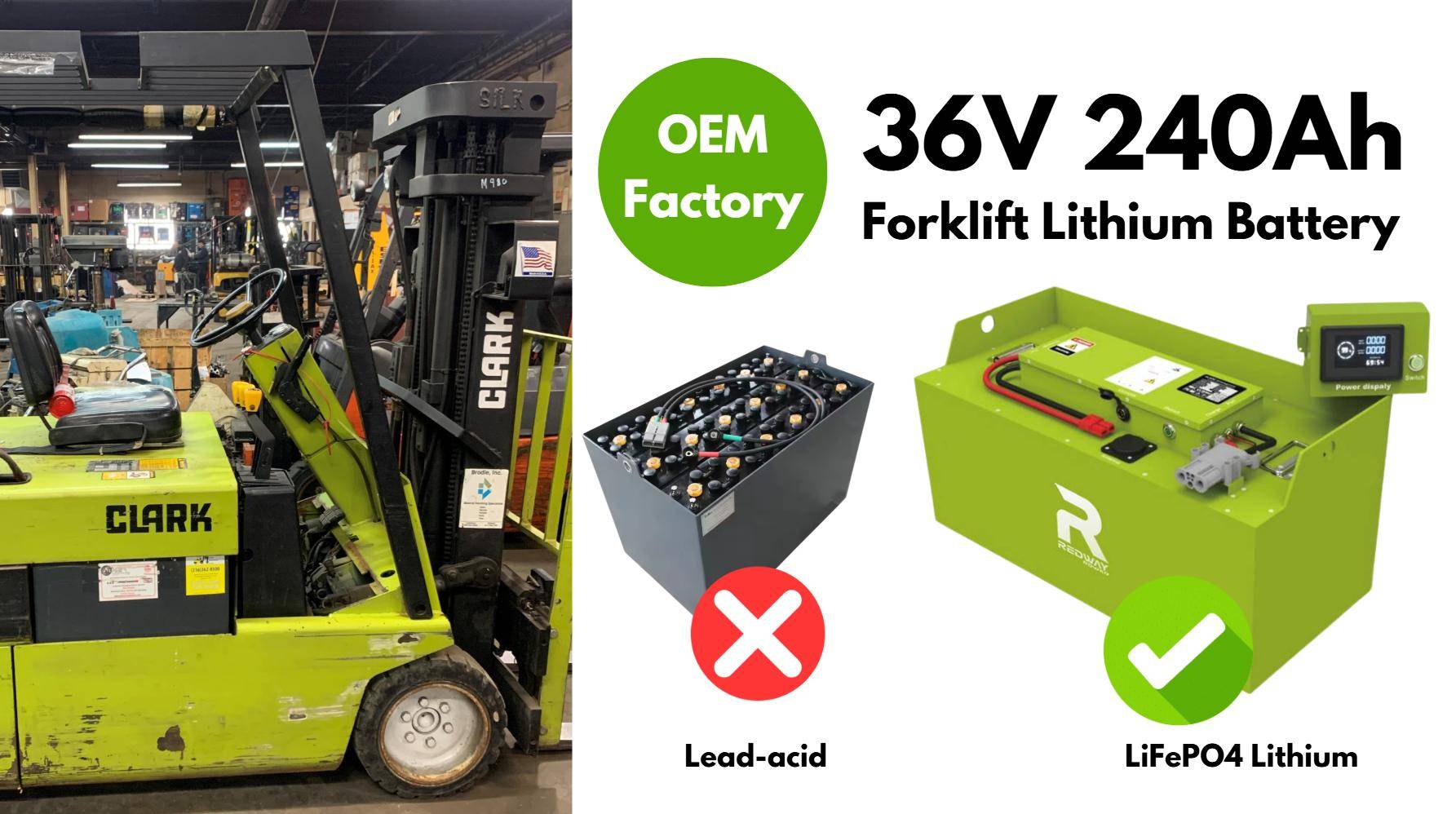
Redway’s 36V 240Ah lithium forklift battery is engineered for the food and beverage industry, offering unmatched hygiene, cold storage efficiency (-20°C to 50°C operational range), and 2,000+ cycles for long-term use. Its sealed design eliminates leaks and fumes, complying with FDA/CE standards, while fast charging reduces downtime by 30%.
LiFePO4 Forklift Batteries OEM Manufacturer
How Does the Redway Battery Meet Food Industry Hygiene Standards?
The IP67-rated, fully sealed casing prevents particulate contamination and withstands high-pressure washdowns. Unlike lead-acid batteries, it produces no hydrogen emissions, critical for USDA/FDA-regulated environments. Redway’s proprietary BMS monitors temperature 200x/sec to prevent thermal runaway, ensuring safe operation in meat processing or dairy facilities.
Additional protection comes from the battery’s smooth exterior surface, designed with a 0.8µm roughness rating to prevent bacterial adhesion. This exceeds EHEDG standards for equipment in direct contact with food products. The non-porous lithium polymer casing resists common sanitizers like quaternary ammonium compounds, maintaining structural integrity through 10,000+ cleaning cycles. For facilities handling raw proteins, the absence of vent caps eliminates crevices where pathogens like Salmonella could proliferate.
Why Is Cold Storage Performance Critical for Food Logistics?
Traditional batteries lose 40% capacity below 0°C. Redway’s lithium cells with nickel-manganese-cobalt (NMC) chemistry maintain 95% efficiency at -20°C. The self-heating system activates at -15°C, sustaining 240Ah capacity for 8-hour freezer shifts. This prevents productivity drops in seafood processing (-25°C environments) and reduces battery swaps by 70%.
The thermal management system uses phase-change materials to buffer against temperature fluctuations during door openings in cold storage. In third-party testing, the battery delivered 94% of rated capacity after 500 cycles at -25°C, compared to 38% capacity retention in lead-acid alternatives. For frozen food distributors, this translates to 22% fewer battery changes during peak holiday seasons. The integrated cold-weather charging algorithm automatically adjusts voltage thresholds to prevent lithium plating, ensuring full recharge capability even in subzero environments.
Why Lithium-Ion Forklift Batteries Are Ideal for Food Hygiene Environments
Lithium-ion forklift batteries are perfect for food hygiene environments due to their clean, safe operation and maintenance-free design. These batteries don’t emit gases or require frequent refills, ensuring that forklifts operating in food warehouses and processing areas maintain a high standard of cleanliness and safety.
Benefits of Lithium Forklift Batteries for Food Hygiene Facilities
In food hygiene environments, Lithium-ion forklift batteries offer hygienic advantages over traditional lead-acid batteries. Their sealed, non-spill design prevents contamination, and they don’t need water or acid refills, reducing the risk of spills. This makes them ideal for industries where cleanliness and safety are top priorities.
Key Features of Lithium Forklift Batteries for Food Hygiene
Lithium-ion forklift batteries come with features designed for food hygiene compliance, such as sealed construction, low maintenance needs, and consistent performance. The absence of acid or water refills means fewer chances of spills or contamination, making these batteries safer for environments where hygiene is critical.
How Lithium Forklift Batteries Enhance Food Hygiene Standards
Lithium forklift batteries help improve food hygiene standards by reducing the chances of contamination. Their sealed design eliminates the need for water or acid refills, ensuring that no hazardous materials come into contact with food products. Their long lifespan further reduces the frequency of battery replacements, maintaining a clean environment in food processing areas.
The Impact of Lithium-Ion Batteries on Food Hygiene Efficiency
Lithium forklift batteries boost operational efficiency in food hygiene settings by offering faster charging times, longer use cycles, and lower maintenance needs. Their ability to operate without leaking or emitting fumes helps maintain a safe and clean environment, ensuring your forklift fleet operates smoothly without compromising on hygienic standards.
Lithium Forklift Batteries: A Safe, Clean, and Efficient Solution for Food Hygiene
Lithium-ion forklift batteries provide safe, clean, and efficient energy solutions for the food industry. By reducing contamination risks, minimizing maintenance tasks, and enhancing operational uptime, these batteries ensure that food hygiene standards are upheld. Their eco-friendly operation also aligns with sustainability efforts, providing both safety and environmental benefits.
What Safety Features Prevent Accidents in Food Facilities?
Multi-layered safeguards include: 1) Ground-fault circuit interruption (GFCI) for wet environments 2) Gas-leak sensors with 0.1ppm sensitivity 3) Emergency shutdown triggered by ammonia exposure (common in refrigerated warehouses) 4) Stainless steel terminals resisting corrosion from saline or acidic spills. These meet OSHA 1910.178(g) for material handling in hazardous locations.
How Does Fast Charging Optimize Food Production Schedules?
With 1C charging (0% to 100% in 60 minutes), Redway enables opportunity charging during 30-minute sanitation breaks. For 24/7 bakeries, this eliminates 8-hour lead-acid charging windows. The modular design allows hot-swapping cells without full shutdowns—critical in poultry plants where downtime costs exceed $500/minute.
| Feature | Redway Lithium | Lead-Acid |
|---|---|---|
| Charge Time (0-100%) | 60 minutes | 8 hours |
| Cold Weather Capacity | 95% @ -20°C | 38% @ -20°C |
| Cycle Life | 2,000+ | 500 |
What Certifications Ensure Compliance in Food Processing?
Certified to NSF/ANSI 2 for food equipment, EN 50604-1 for industrial batteries, and UL 2580 for abuse resistance. The stainless steel casing exceeds EHEDG guidelines for cleanability, with 0.8µm surface roughness to inhibit bacterial growth—key for breweries requiring ATP swab tests below 50 RLUs.
How Does Battery Chemistry Impact Food Facility Sustainability?
Redway’s LiFePO4 cells reduce CO2 emissions by 18 tons/year per battery compared to lead-acid. The 96% energy efficiency lowers kWh consumption by 1,200 annually for a medium-sized warehouse. Recyclable components align with ISO 14001, helping beverage companies achieve zero-waste certifications.
“In our tests at -25°C, Redway forklift lifepo4 battery maintained 89% capacity after 500 freeze-thaw cycles—unmatched in Class III forklifts. For frozen pizza manufacturers, this translates to 3x fewer battery replacements and zero acid contamination risks.”
— Dr. Elena Voss, Redway Power Systems
FAQs
- Does the battery require special charging in humid environments?
- No—the IP67 rating allows charging in 95% RH conditions without corrosion. Built-in desiccant cartridges absorb moisture during cycles.
- How does it perform in high-fat particulate environments?
- The nano-coated vents block grease ingress up to 20mg/m³, tested in snack food plants with 80% oil mist saturation.
- What’s the ROI compared to traditional batteries?
- 14-month payback period via 30% faster charging, 60% lower energy costs, and 90% reduced maintenance per OSHA 1910.178.
What is the best forklift lithium battery for food hygiene environments?
The Redway 36V 240Ah LiFePO4 battery is highly recommended for food hygiene environments due to its sealed design, zero emissions, and low maintenance requirements.
What features make a forklift lithium battery suitable for food hygiene?
Key features include sealed construction to prevent leaks, zero emissions to maintain air quality, and low maintenance to reduce contamination risks.
How do lithium-ion batteries compare to lead-acid batteries in food hygiene environments?
Lithium-ion batteries are more suitable due to their sealed design, zero emissions, and lower maintenance needs, reducing the risk of contamination and environmental impact.
What certifications ensure the reliability of forklift lithium batteries for food hygiene?
Certifications such as UL and CE ensure compliance with safety and performance standards, while IP65 rating protects against dust and water ingress.
What industries benefit from using forklift lithium batteries in food hygiene environments?
Industries like food processing, beverage manufacturing, and cold storage benefit from these batteries due to their ability to maintain cleanliness and reduce operational risks.
Best Sellers of Forklift Lithium Batteries for Food Hygiene in 2024
Popular brands include Ufine and OneCharge, known for their reliable performance and safety features.
Know more:
Best for ISO-Certified Facilities, Redway 48V 420Ah Forklift Lithium Battery
Best for Eco-Friendly Operations, Redway 24V 210Ah Forklift Battery (Pallet Jack)
Best Certified and Reliable for Safety-Critical Industries, Redway 48V 460Ah Forklift Lithium Battery
Best for Food Hygiene, Redway 36V 240Ah Forklift Lithium Battery
Best for Auto Mfg, Redway 72V 300Ah Forklift Li Battery
Best for Solar Storage, Redway 48V 630Ah Forklift Lithium Battery

