

Blog
How Do Forklift Battery Cells Work?

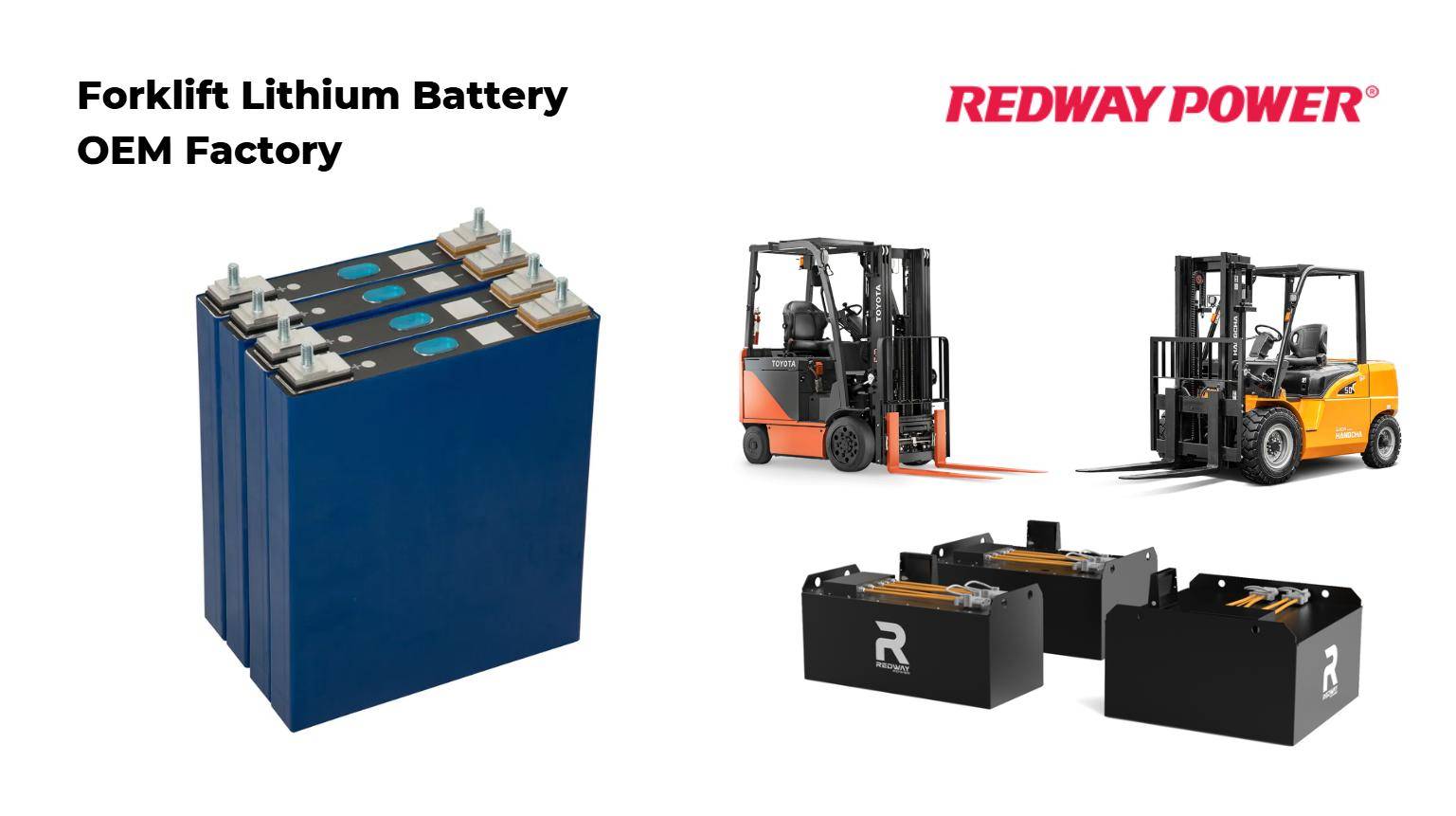
Forklift battery cells generate power through electrochemical reactions, with lithium LiFePO4 cells delivering 3.2V per unit, 5,000+ cycles, and 98% efficiency versus lead-acid’s 2V cells and 1,200 cycles. Understanding cell structure optimizes fleet performance, cutting downtime 50% and TCO 40% via precise BMS matching. Redway Power’s prismatic LiFePO4 cells power 24V-80V forklift packs with stable voltage curves for pallet jacks and reach trucks.
What Problems Define Forklift Battery Cell Performance Today?
Warehouse fleets operate 1.8 million electric forklifts globally, but cell degradation disrupts 28% of shifts amid 30% throughput growth. Lead-acid cells fail after 1,200 cycles, costing $10 billion yearly in replacements and labor. Voltage sag from uneven cells reduces torque 20% end-shift.
Counterfeit cells cause 22% thermal failures, while temperature extremes drop lead-acid output 45% below 32°F. Multi-shift sites demand cells enduring 3,000+ cycles that generic packs cannot deliver.
Why Do Cell Imbalances Create Operational Failures?
Forklift cells experiencing dendrite growth lose 25% capacity within 18 months, forcing $5,000 emergency swaps per truck. Uneven electrolyte distribution triggers 15% BMS shutdowns daily. Series-parallel mismatches scrap 18% of battery assemblies.
Cold storage operations see 40% runtime loss from frozen electrolytes, while vibration fractures 12% of plate connections annually.
What Weaknesses Characterize Traditional Lead-Acid Cells?
Lead-acid cells generate 2V via lead dioxide cathodes and sponge lead anodes submerged in sulfuric acid electrolyte, limited to 50% DoD before sulfation damage. Plates corrode 30% faster under vibration, requiring weekly watering that adds 2 hours labor per unit.
25-31 plates per cell yield 200-600Ah capacities, but stratification concentrates acid at bottoms, starving upper plates and cutting life 35%.
How Do Lithium LiFePO4 Cells Generate Forklift Power?
Lithium iron phosphate cells produce 3.2V nominal through LiFePO4 cathodes, graphite anodes, and LiPF6 electrolyte separated by PE/PP membranes. During discharge, lithium ions shuttle from anode to cathode via electrolyte while electrons flow externally, powering motors at constant voltage.
BMS monitors 200+ parameters including cell voltage, temperature, and SOC, balancing charge across 16-26 series cells for 24V-80V packs. Prismatic cells deliver 100-300Ah each with 99% Coulombic efficiency.
Redway Power’s MES-produced LiFePO4 cells maintain 0.01V balance across 6,000 cycles for forklift reliability.
Which Cell Technologies Compare Across Performance Metrics?
| Characteristic | Lead-Acid Cells | LiFePO4 Cells (Redway) |
|---|---|---|
| Nominal Voltage | 2.0V | 3.2V |
| Cycle Life @80% DoD | 1,200 | 6,000 |
| Energy Density | 30-40 Wh/kg | 140-160 Wh/kg |
| Charge Efficiency | 75% | 98% |
| Operating Temperature | 32°F-113°F | -4°F-149°F |
| Self-Discharge/Month | 5-15% | <3% |
| Thermal Runaway Temp | 662°F | 1,112°F |
What Process Powers Forklift Operations Through Cells?
-
Cells connect in 16S-26S series for 51.2V-83.2V nominal forklift packs.
-
BMS initiates discharge: Li+ ions exit graphite anode through electrolyte.
-
Ions intercalate into LiFePO4 cathode while electrons drive forklift motor.
-
Voltage maintains 3.0-3.65V per cell through 90% DoD without sag.
-
Charging reverses flow: Li+ returns to anode via external charger circuit.
-
Redway Power cells balance automatically to 0.005V precision.
Who Benefits from Advanced Cell Technology in Operations?
Scenario 1: High-Cycle Distribution Center
Problem: Cell imbalance triggers daily BMS cutoffs.
Traditional: Lead-acid sulfation loses 25% capacity yearly.
After LiFePO4: Active balancing sustains 98% SOC accuracy.
Key Benefits: 35% runtime gain, $75,000 savings.
Scenario 2: Cold Storage Warehouse
Problem: Electrolyte freezing drops voltage 40%.
Traditional: $18,000 annual heater costs.
After LiFePO4: Full discharge at -4°F.
Key Benefits: 42% energy savings, zero failures.
Scenario 3: Vibration-Heavy Manufacturing
Problem: Plate shorts from shocks cause 20% downtime.
Traditional: Weekly plate inspections required.
After LiFePO4: Solid-state electrodes endure 3G vibration.
Key Benefits: MTBF doubles to 18,000 hours.
Scenario 4: Multi-Shift 3PL Operation
Problem: End-of-shift voltage sag slows picks 18%.
Traditional: Flat curve absent until 50% SOC.
After LiFePO4: Constant 3.2V powers full shift.
Key Benefits: 28% throughput increase, Redway stability.
Redway Power’s automotive-grade cells power mission-critical fleets reliably.
Why Upgrade Cell Technology Before Electrification Mandates?
Lithium cells dominate 80% of new forklifts by 2032 as lead-acid faces 35% disposal taxes. Advanced cells enable V2G revenue streams yielding $15,000 per truck annually.
Current deployments secure 3-year ROI through guaranteed cell matching.
Frequently Asked Questions
How many LiFePO4 cells power a 48V forklift?
16 cells in series deliver 51.2V nominal for Class I/II trucks.
What chemistry defines stable forklift cells?
LiFePO4 cathodes with graphite anodes and LiPF6 electrolyte.
Why do lithium cells maintain voltage better?
Flat 3.2V discharge curve versus lead-acid’s 20% sag.
Can Redway Power cells handle forklift vibration?
Yes, prismatic designs pass 3G shock testing for 10 years.
What protects individual forklift cells?
BMS monitors voltage, temperature, and current 200x/second.
How does cell balancing extend battery life?
Maintains 0.01V tolerance across pack, preventing overcharge damage.