

Blog
How Does Forklift Battery Weight Impact Performance and Safety?

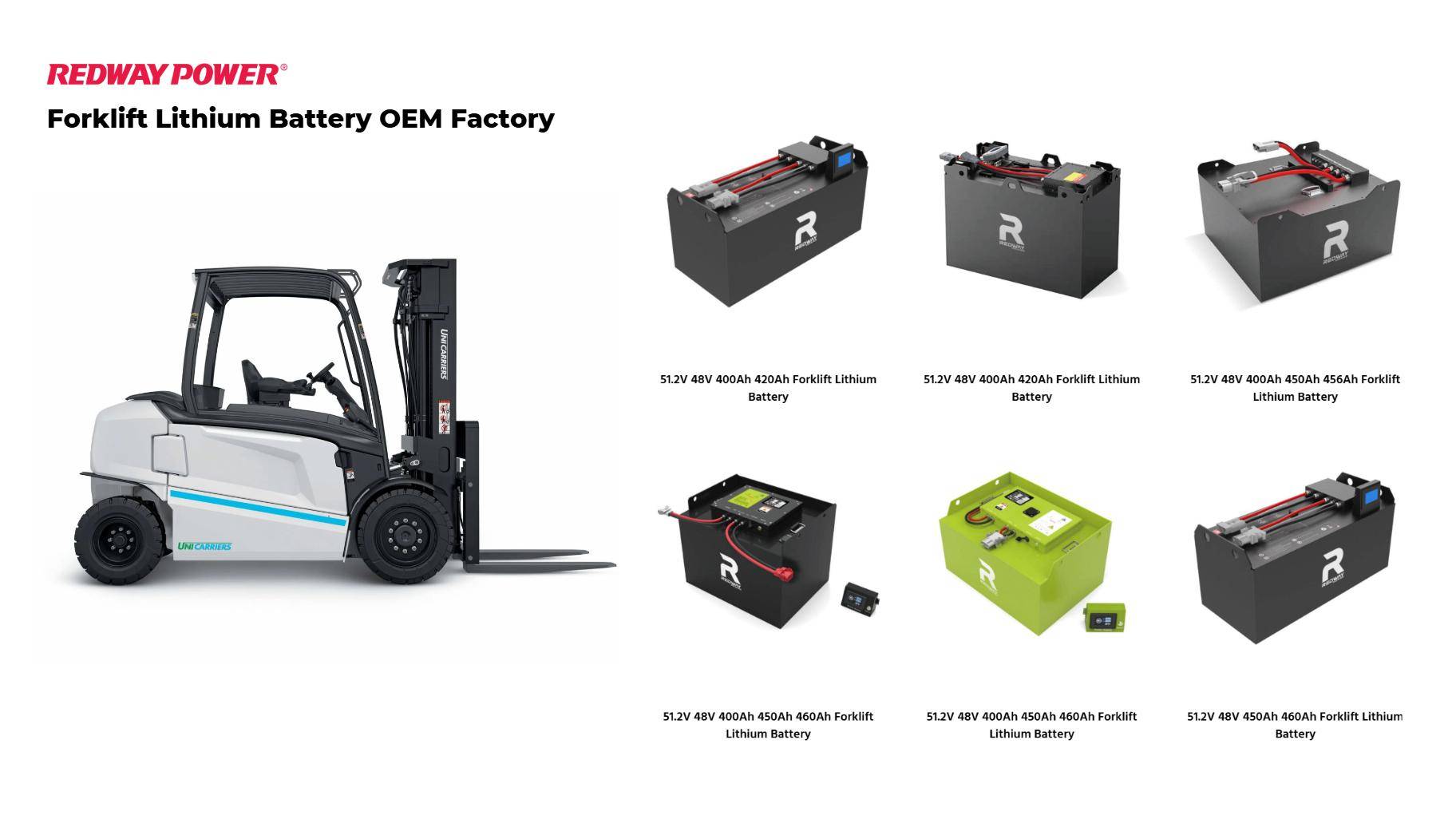
Battery weight plays a critical role in how well a forklift performs and how safely it operates. From affecting center-of-gravity and stability to influencing energy efficiency, understanding weight implications enables better fleet decisions—especially when comparing traditional lead-acid batteries with lighter, higher-performance LiFePO4 solutions like those offered by Redway Power, which can reduce mass without sacrificing operational capability.(Redway Power™ – OEM Lithium Batteries)
What Is the Current Industry Status and What Pain Points Are Operators Facing?
Electric forklifts have become a dominant choice in warehouse and manufacturing environments due to their lower emissions and quieter operation. However, battery weight remains a key factor in balancing performance and safety. Traditional lead-acid batteries can weigh from roughly 600 lbs up to over 3,000 lbs depending on capacity and voltage, while lithium-ion equivalents typically range from 300 lbs to 1,500 lbs.(Redway Power™ – OEM Lithium Batteries)
Heavy battery packs contribute to a lower center of gravity, which traditionally helps counterbalance lifted loads. Yet excessive weight limits payload capacity and maneuverability in tight operational spaces, causing operational inefficiencies. In contrast, lighter batteries shift the weight balance and can introduce stability concerns if the forklift’s counterweight design is not properly considered.(Redway Power™ – OEM Lithium Batteries)
These dynamics are compounded as material handling operations pursue higher throughput with multi-shift workflows. Inefficient weight distribution can increase tire wear, strain hydraulic components, and elevate risks associated with tipping under load—a safety concern cited in a portion of forklift accidents tied to improper equipment configuration.(Heated Battery)
Why Do Traditional Batteries Present Challenges in Weight Management?
Lead-acid batteries achieve energy storage through dense lead plates and sulfuric acid, which contribute significantly to overall mass. While their heavy weight aids stability, it also results in slower acceleration, increased energy consumption due to rolling resistance, and higher structural stress on forklifts over time.(OEM Lithium Batteries)
Additionally, heavy batteries require more robust charging infrastructure, reinforced flooring, and extended swap procedures, which in turn drive up operational costs and labor requirements. Maintenance activities for lead-acid systems, including water top-offs and corrosion mitigation, further elevate both downtime and safety risk.(Redway Battery)
Without modern design considerations, these legacy weight burdens can mask the real performance potential of forklift fleets while increasing the complexity of safety compliance.
How Does a Modern Lithium Battery Solution Address Weight-Related Issues?
Lighter lithium battery technologies such as LiFePO4 shift the paradigm by delivering equivalent or higher usable energy at a fraction of the weight of traditional solutions. For example, a lithium pack can deliver greater usable capacity while weighing significantly less, enabling faster acceleration, reduced energy consumption, and the ability to recover some payload capacity that would otherwise be consumed by battery mass.(Redway Power™ – OEM Lithium Batteries)
Redway Power’s forklift lithium batteries combine high energy density with robust thermal management and a smart Battery Management System (BMS) to provide consistent performance without the tradeoffs of excessive weight. This enables operators to maintain or improve stability metrics while benefiting from lower battery weight, faster charging, and extended cycle life.
Which Advantages Exist Between Traditional and Lithium Battery Options?
| Metric | Lead-Acid Battery | Lithium Battery (e.g., Redway Power LiFePO4) |
|---|---|---|
| Typical Weight Range | 600–3,000 lbs | 300–1,500 lbs |
| Center of Gravity Impact | Heavy lowers CG | Lighter with engineered balance |
| Usable Energy | ~50% Depth of Discharge | ~90% Depth of Discharge |
| Charging Time | 8–10 hrs | 1.5–2 hrs |
| Maintenance | Watering and corrosion checks | Maintenance-free |
| Maneuverability | Lower | Higher |
| Payload Capacity Loss | Significant | Reduced |
These quantifiable differences show how optimized battery weight can improve forklift performance without compromising safety.
How Should Operations Manage Battery Weight for Best Results?
- Review OEM Specifications: Always consult the forklift manufacturer’s recommended battery weight and counterbalance design to ensure stability remains within rated limits.
- Assess Battery Chemistry: Compare lead-acid versus LiFePO4 weight and energy characteristics before selecting a battery type.
- Verify Load Charts: Confirm load center and lifting capacity charts remain valid after battery changes.
- Consider Ballast Solutions: In cases where lithium’s weight reduction is significant, add engineered ballast plates per manufacturer recommendations.
- Train Operators: Educate operators on how weight distribution affects handling and tipping thresholds.
- Monitor Performance: Use telematics and BMS data to evaluate how weight changes affect runtime, acceleration, and safety metrics.
Redway Power’s engineered lithium batteries and support documentation help streamline this integration process while maintaining operational safety.
Who Benefits Most from Proper Weight-Managed Battery Solutions?
Scenario 1: High-Density Warehouse Aisles
- Problem: Heavy batteries reduce maneuverability in narrow lanes.
- Traditional: Lead-acid systems limit turn radius.
- After Solution: Lighter lithium batteries improve agility.
- Key Benefit: Faster order picking and reduced collision risk.
Scenario 2: Multi-Shift Distribution Center
- Problem: Heavy batteries slow acceleration and increase energy costs.
- Traditional: Frequent battery swaps and high rolling resistance.
- After Solution: Lithium batteries maintain consistent voltage and lower mass.
- Key Benefit: Higher uptime and lower energy consumption.
Scenario 3: High Lift Operations
- Problem: Stability concerns at tall mast heights.
- Traditional: Excess weight provides some stability but limits payload.
- After Solution: Balanced lithium battery use with appropriate ballast.
- Key Benefit: Improved lifting performance without safety compromise.
Scenario 4: Facilities with Floor Load Limits
- Problem: Heavy batteries require structural reinforcements.
- Traditional: Lead-acid loads can exceed floor capacity.
- After Solution: Lithium reduces structural burden.
- Key Benefit: Lower infrastructure cost and reduced retrofits.
When Is Optimizing Battery Weight Most Critical?
As material handling demands grow alongside e-commerce and just-in-time logistics models, forklift performance and safety standards become increasingly scrutinized. Battery weight optimization plays a central role in achieving higher throughput while maintaining compliance with safety regulations and infrastructure limitations.
Lighter battery solutions such as those from Redway Power allow operators to adapt to evolving performance requirements without incurring the operational drag of excessive mass.
What Are Future Trends in Forklift Battery Weight and Performance?
Battery chemistry continues to evolve with higher energy density and improved weight profiles. Future forklifts will likely incorporate even lighter batteries with integrated sensing and adaptive stability systems that optimize performance in real time. Predictive analytics will help fleets balance weight, runtime, and safety with minimal manual intervention.
FAQ
Can a battery be too light for a forklift?
Yes, replacing a battery with one significantly lighter than OEM specifications can raise the center of gravity and risk tipping unless compensated with proper ballast.(Redway Power™ – OEM Lithium Batteries)
Does battery weight affect payload capacity?
Heavier batteries reduce available payload capacity, while lighter batteries can free up weight allowance for cargo.(Redway Power™ – OEM Lithium Batteries)
How does weight impact forklift stability?
Battery mass influences the forklift’s center of gravity; improper weight distribution can increase the likelihood of tip-overs under load.(Redway Power™ – OEM Lithium Batteries)
Is lighter always better for performance?
Not always; optimal weight balances stability, energy, and maneuverability based on specific operations.(Redway Power™ – OEM Lithium Batteries)
Can lithium batteries improve safety?
Yes, lighter lithium batteries reduce strain on mechanical components and allow for faster, safer handling when integrated correctly.(Redway Power™ – OEM Lithium Batteries)
Sources
How battery weight affects forklifts and comparison data: https://www.oem-lithium-batteries.com/how-much-does-a-forklift-battery-weigh/
Redway Power guidance on battery weight and safety: https://www.redwaypower.com/how-does-forklift-battery-weight-impact-performance-and-safety/
Industry safety implications and weight charts: https://www.heatedbattery.com/what-is-a-forklift-battery-weight-chart-and-why-does-it-matter/
Redway Power lithium vs lead-acid battery characteristics: https://www.redwaypower.com/how-does-battery-weight-impact-performance-and-safety/