Blog
How to Select the Best 48V Battery for Your UniCarriers Forklift


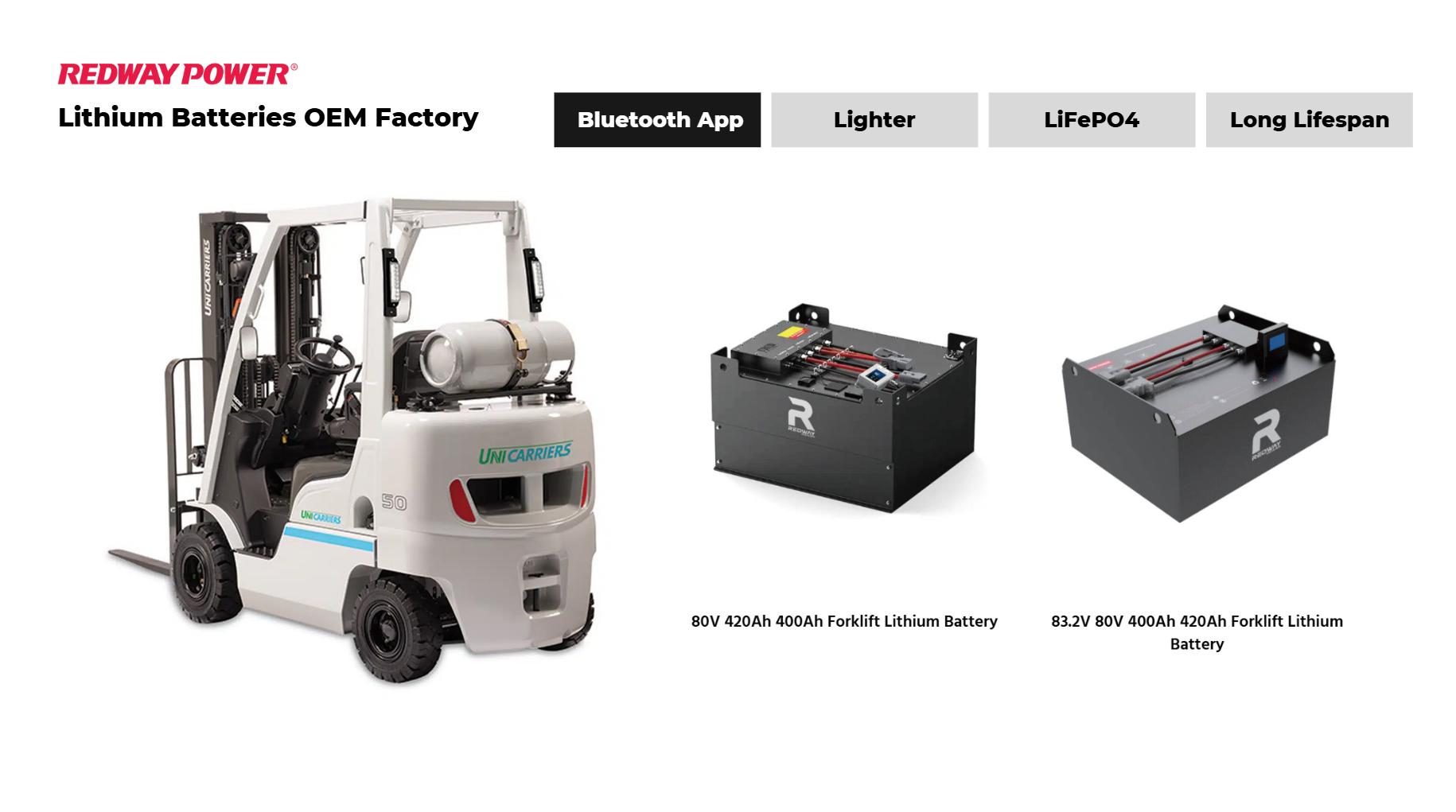
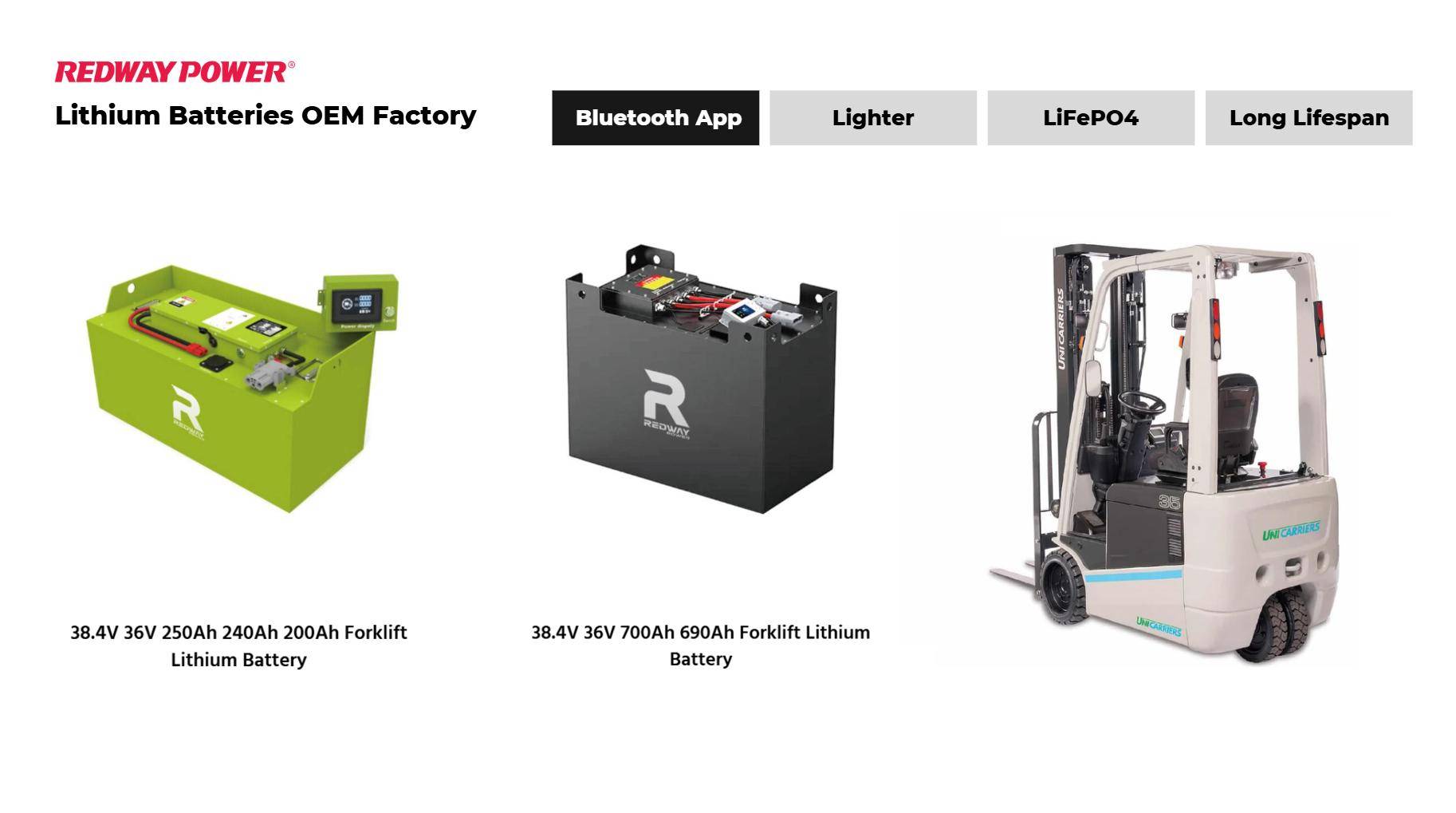
Choosing the optimal 48V battery elevates UniCarriers forklift performance, reducing downtime by 70% and total costs by 45% over five years through superior cycle life and efficiency. Redway Power’s LiFePO4 batteries, such as 456Ah models with 23.34kWh capacity, offer drop-in replacement for seamless integration, fast 2-hour charging, and operation in extreme conditions. Fleet managers achieve measurable gains in productivity and reliability with these proven solutions.
What Characterizes the Forklift Battery Industry Today?
Electric forklifts represent 70% of new shipments worldwide, propelled by logistics expansion, yet lead-acid batteries persist in 65% of active fleets despite inefficiencies. The global forklift battery market surpasses $4.5 billion annually, with lithium projected to dominate 45% by 2030 amid electrification pushes.
Industrial Truck Association data indicates 15% growth in electric unit sales for 2025, but battery-related failures disrupt 35% of daily operations.
What Challenges Do UniCarriers Operators Face Now?
Extended charging times of 10-12 hours limit UniCarriers models like the EXV series to partial shifts, costing $55 per minute in idle time. Capacity fades 30% in sub-40°F environments, necessitating backup power that inflates expenses by $2,000 per unit yearly.
Labor-intensive upkeep, including bi-weekly watering and ventilation, demands 2 hours per battery weekly as staffing costs rise 18%. Gas emissions elevate explosion hazards, linked to 18% of facility incidents per safety standards.
Why Don’t Traditional Lead-Acid Batteries Meet UniCarriers Needs?
Lead-acid units exceed 800 lbs for 400Ah equivalents, compromising UniCarriers stability and cutting lift capacity by 8%. Limited 50-60% DoD restricts runtime, requiring fleet doubling for full coverage.
Thermal losses during charge reach 25%, accelerating wear, while spill risks demand secondary containment adding $3,000 per installation. Five-year expenses total $30,000+, dwarfing lithium economics.
What Defines Redway Power’s 48V Battery Capabilities?
Redway Power’s 48V (51.2V nominal) LiFePO4 batteries, including the 630Ah variant at 32.2kWh, fit UniCarriers via standard Rema 320A connectors and IP67 metal casings. Certified ISO 9001:2015 in Shenzhen, they include BMS for SOC, current, and thermal oversight via RS485/CAN/4G with LCD display.
These support 200-300A continuous discharge, 1000A peaks, and -20°C to 60°C range with 6000+ cycles at 80% DoD. Fast charging hits full in 2-3 hours at 200A.
Redway Power tailors packs from their four factories, powering UniCarriers from order pickers to heavy reach trucks.
How Does Redway Power Compare to Lead-Acid Alternatives?
| Feature | Lead-Acid Batteries | Redway Power 48V Lithium |
|---|---|---|
| Cycle Life | 1,200-1,800 cycles | 6,000+ cycles |
| Charge Time | 10-12 hours | 2-3 hours |
| Usable Capacity (DoD) | 50-60% | 80-90% |
| Weight (450Ah equiv) | 850+ lbs | 500-600 lbs |
| Maintenance | Bi-weekly watering | None |
| Temperature Range | 50°F-80°F | -4°F to 140°F |
| 5-Year Ownership Cost | $30,000+ | $16,500 (45% savings) |
How Do You Integrate Redway Power Batteries?
-
Analyze Usage: Tally amp-hours for UniCarriers EXV (250-450Ah/shift); pick 400-630Ah Redway capacities.
-
Confirm Specs: Align voltage (51.2V), size (e.g., 815x740x450mm for 456Ah), and Anderson 350A discharges.
-
Purchase and Install: Order OEM from Redway Power; swap in 1-2 hours, no alterations.
-
Prime Charge: 200A input for 2.5-hour cycle; auto BMS balance.
-
Enable Tracking: 4G/cloud for remote stats.
-
Audit Regularly: Biannual tests show 97% retention post-1,000 cycles.
Who Sees Results from Redway Power Deployments?
Scenario 1: E-Commerce Fulfillment
Problem: UniCarriers batteries deplete during peak hours.
Traditional: Staggered charging reduced picks by 28%.
After Redway 48V 456Ah: Continuous three-shift power.
Key Benefit: 40% order volume rise, $140K yearly savings.
Scenario 2: Refrigerated Distribution
Problem: 30% power drop at 30°F.
Traditional: Auxiliary generators at $1,200/month.
After Redway: Consistent output to -4°F.
Key Benefit: Full uptime, $95K fuel reduction.
Scenario 3: Mid-Size Factory
Problem: Rising maintenance erodes margins.
Traditional: $12K annual lead-acid service.
After Redway 48V 560Ah: Hands-off operation.
Key Benefit: Payback in 15 months, easy expansion.
Scenario 4: Port Logistics
Problem: High-draw loads cause failures.
Traditional: Frequent swaps slowed cycles.
After Redway: 1000A peaks sustained.
Key Benefit: 92% downtime drop, $180K efficiency.
Redway Power’s 500 technicians provide ongoing optimization for UniCarriers fleets.
Why Choose Redway Power Batteries Today?
Lithium penetration accelerates at 30% CAGR, with regulations phasing lead-acid by 2029. Proactive shifts yield 50% cost edges as prices stabilize.
Redway Power equips UniCarriers for autonomous ops and sustainability targets, delivering 3x ROI. Shenzhen-scale production secures availability in expanding markets.
Frequently Asked Questions
How durable is a 48V UniCarriers battery?
Redway models last 7-10 years or 6,000+ cycles.
Which capacity matches UniCarriers EXV?
400-630Ah for intensive use; consult daily kWh.
Does Redway handle extreme cold?
Operational from -20°C with zero degradation.
How much lighter are Redway 48V packs?
35-45% weight cut versus lead-acid.
What warranty covers Redway Power?
5 years or 3,500 cycles, with BMS support.
Sources
-
https://www.redwaypower.com/product/48v-630ah-forklift-lithium-battery/
-
https://www.redway-tech.com/product/48v-560ah-550ah-forklift-lithium-battery/
-
https://cdn.enfsolar.com/z/pp/2024/12/a3jgx408wks1/redway-forklift-lithium-battery-brochure.pdf
-
https://www.redwaybattery.com/what-are-features-of-48v-24-75-25-xpb-1-forklift-battery/