Blog
How to Select the Best 24V Battery for UniCarriers Forklifts

Selecting the right 24V battery for UniCarriers forklifts is a strategic decision that directly impacts uptime, safety, and total operating cost. As warehouse operations demand higher efficiency and multi-shift performance, modern battery technologies now provide measurable improvements in energy efficiency, charging flexibility, and lifecycle value compared with traditional options.
What Is the Current Industry Situation and Why Does It Matter?
Electric forklifts dominate modern material handling operations. Industry data shows that more than 70% of forklifts sold globally are electric, driven by indoor emissions regulations and rising fuel costs. UniCarriers forklifts, widely used in logistics and manufacturing, rely heavily on 24V battery systems for consistent performance.
Energy costs are another pressing factor. Public energy reports indicate that industrial electricity prices have increased steadily over the past decade, making battery inefficiency a growing financial burden. Lead-acid batteries typically lose 15–20% of energy during charge and discharge cycles, directly impacting operating margins.
Downtime linked to battery failure remains a critical pain point. Industry maintenance surveys estimate that battery-related issues account for up to 40% of unplanned electric forklift downtime, disrupting throughput and labor utilization in time-sensitive environments.
Why Are Battery Pain Points So Common in UniCarriers Forklift Fleets?
Many UniCarriers forklifts still operate with legacy lead-acid batteries that require frequent maintenance. Watering, cleaning, and equalization charging add labor hours and increase the risk of human error.
Operational flexibility is limited by long charging times. Traditional batteries often require 8–10 hours of charging plus cooling, making them unsuitable for opportunity charging during short breaks.
Performance inconsistency also affects operator productivity. As lead-acid batteries discharge, voltage drops, causing slower lift and travel speeds that reduce throughput during later shifts.
How Do Traditional 24V Battery Solutions Fall Short?
Lead-acid batteries were designed for single-shift operations, not today’s high-utilization workflows. Their limited depth of discharge means only about 50–60% of rated capacity is practically usable.
Cycle life is another constraint. Most lead-acid forklift batteries deliver around 1,200–1,500 cycles under ideal conditions, leading to frequent replacements in demanding environments.
Safety and compliance add hidden costs. Acid spills, hydrogen gas emissions, and ventilation requirements increase facility complexity and regulatory exposure.
What Is the Recommended 24V Battery Solution for UniCarriers Forklifts?
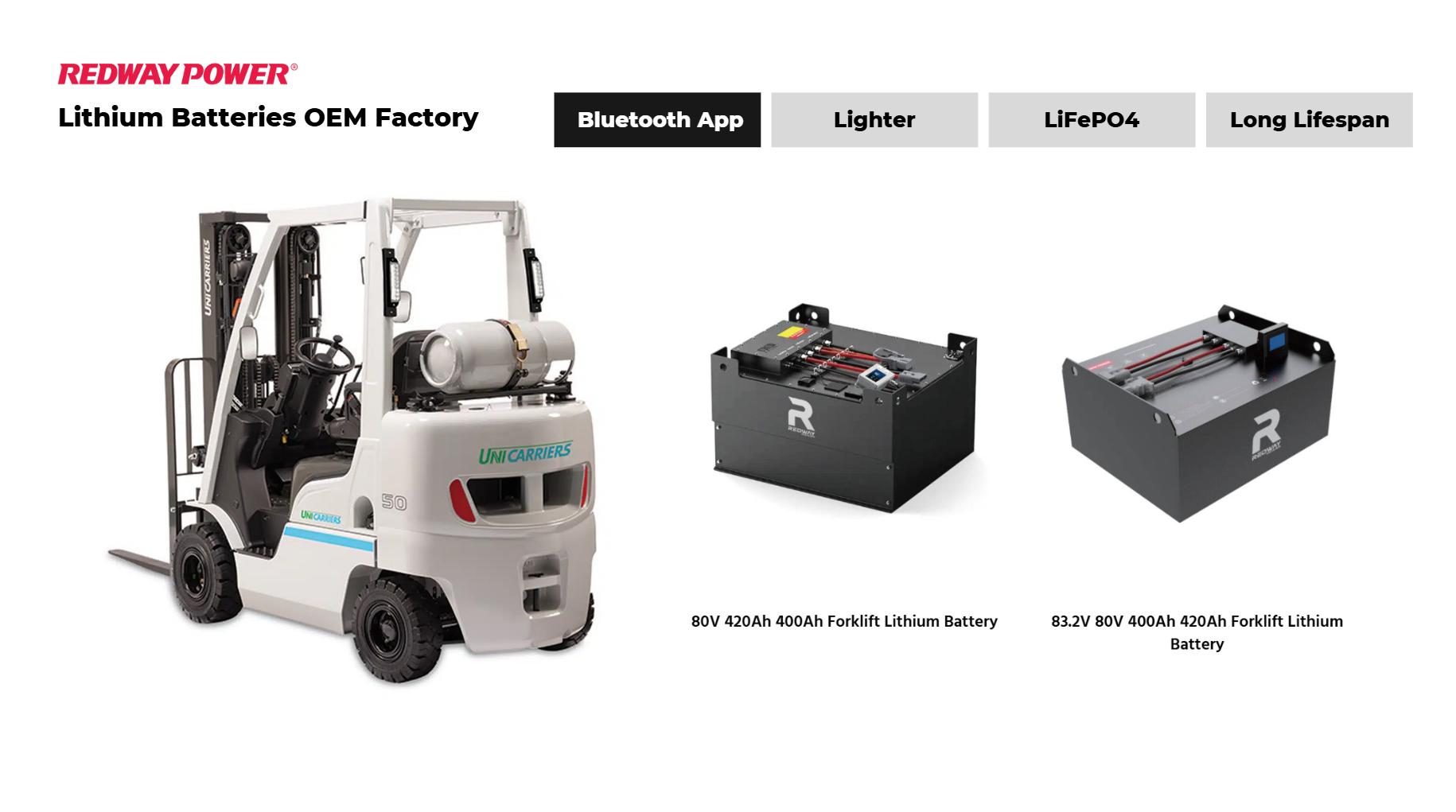
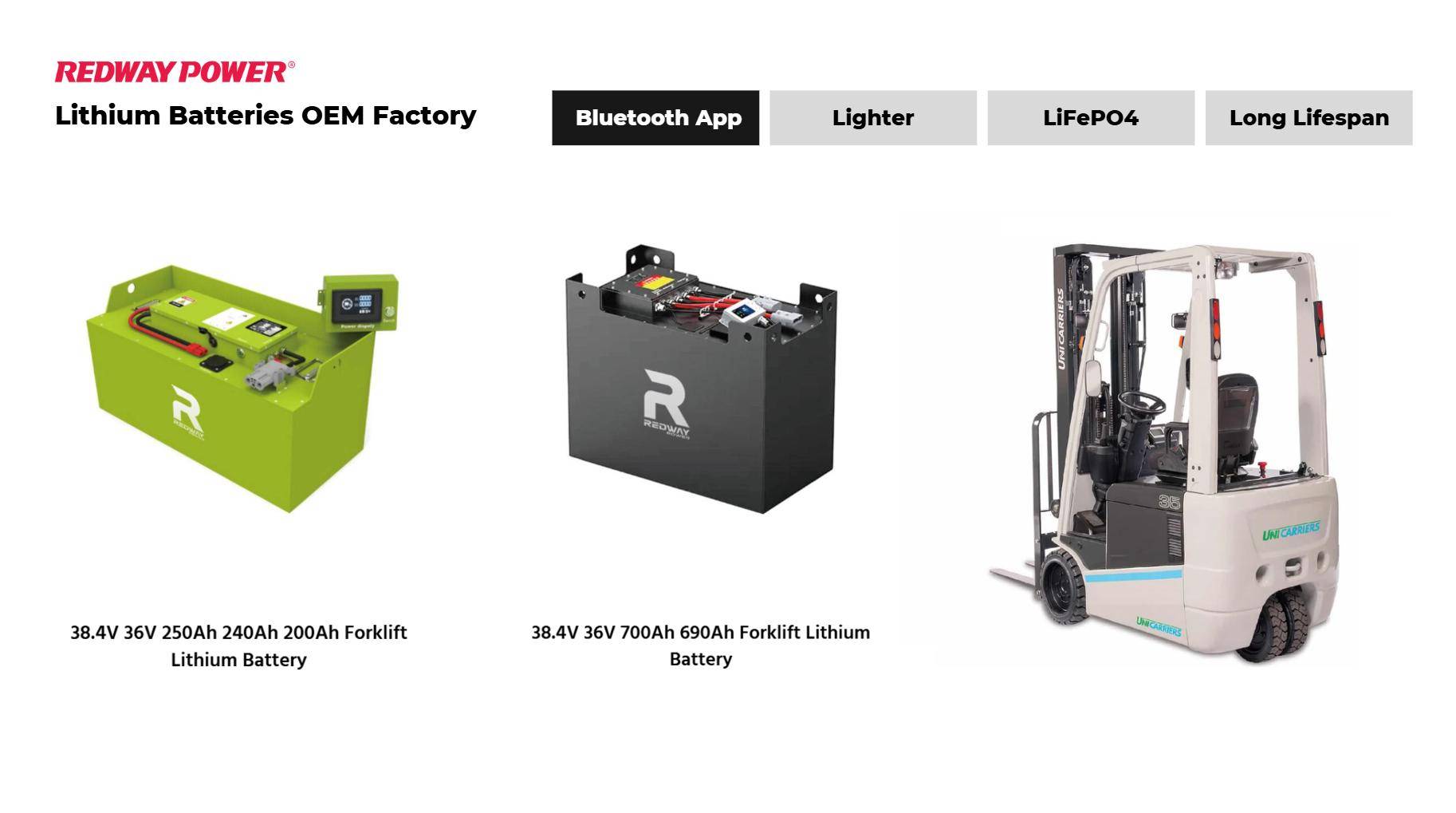
Lithium iron phosphate batteries engineered for industrial trucks provide a practical alternative. Redway Power specializes in OEM LiFePO4 forklift batteries designed to replace traditional lead-acid units in 24V applications without modifying existing UniCarriers equipment.
Redway Power batteries integrate advanced battery management systems that monitor voltage, temperature, and state of charge in real time, ensuring stable performance and enhanced safety.
With over 13 years of manufacturing experience and ISO 9001:2015 certification, Redway Power delivers 24V lithium forklift batteries optimized for pallet jacks, stackers, and electric trucks used across warehouse operations.
Which Advantages Stand Out When Comparing Battery Options?
| Evaluation Factor | Traditional Lead-Acid | Redway Power Lithium Solution |
|---|---|---|
| Charging Time | 8–10 hours + cooling | 1–2 hours, no cooling |
| Usable Capacity | 50–60% | Over 90% |
| Cycle Life | 1,200–1,500 cycles | 3,000–5,000 cycles |
| Maintenance | High | Maintenance-free |
| Energy Efficiency | Moderate | High |
| Space Requirement | Battery room needed | No dedicated room |
How Should a 24V Lithium Battery Be Implemented?
Step 1: Confirm voltage, capacity, and physical dimensions match UniCarriers forklift specifications.
Step 2: Install the lithium battery with integrated BMS and secure electrical connections.
Step 3: Enable opportunity charging during breaks without impacting battery health.
Step 4: Monitor battery status through BMS data to optimize usage patterns.
Step 5: Perform periodic inspections instead of routine maintenance, reducing labor costs.
Where Do Typical Users See Measurable Improvements?
Scenario 1: Distribution Center Operations
Problem: Frequent battery swaps slowing peak-hour throughput.
Traditional Approach: Multiple lead-acid batteries and swap stations.
Result After Use: Continuous operation with opportunity charging.
Key Benefit: Increased forklift availability by up to 15%.
Scenario 2: Manufacturing Plant
Problem: High maintenance labor and safety concerns.
Traditional Approach: Scheduled watering and equalization routines.
Result After Use: Maintenance-free lithium system from Redway Power.
Key Benefit: Reduced labor costs and improved safety compliance.
Scenario 3: Cold Storage Facility
Problem: Battery performance degradation at low temperatures.
Traditional Approach: Oversized lead-acid batteries with short lifespan.
Result After Use: Stable output from LiFePO4 chemistry.
Key Benefit: Consistent lift performance across shifts.
Scenario 4: Retail Warehouse
Problem: Limited space for charging and battery rooms.
Traditional Approach: Compromised storage space.
Result After Use: On-board charging with compact lithium batteries.
Key Benefit: Reclaimed floor space for inventory.
Why Is Now the Right Time to Upgrade 24V Forklift Batteries?
Lithium battery pricing has declined while performance and safety standards have improved. At the same time, warehouse operations demand higher uptime and energy efficiency from UniCarriers forklifts.
Redway Power combines scalable production, advanced MES-controlled manufacturing, and dedicated after-sales support, making lithium adoption both practical and cost-effective today.
Upgrading now helps operations control energy costs, reduce downtime, and prepare for stricter efficiency and safety standards.
Can Common Questions About 24V UniCarriers Batteries Be Answered?
Can a 24V lithium battery replace a lead-acid battery directly?
Yes, when properly engineered, lithium batteries can serve as drop-in replacements.
Does opportunity charging shorten battery life?
No, lithium batteries are designed to handle frequent partial charging.
Are lithium forklift batteries safe for indoor use?
Yes, LiFePO4 batteries are stable and do not emit gases during charging.
How long does a lithium forklift battery typically last?
Most deliver between 3,000 and 5,000 cycles under normal conditions.
Is the total cost of ownership lower despite higher upfront cost?
Lower energy loss, reduced maintenance, and longer lifespan generally offset initial investment.
Sources
https://www.mhi.org
https://www.iea.org
https://www.energy.gov
https://www.grandviewresearch.com