Blog
How to Select the Best 80V Battery for CLARK GEX Series Forklifts


Choosing the right 80V battery for CLARK GEX Series forklifts directly affects uptime, safety, and total cost of ownership. As warehouses move toward higher-capacity electric fleets, lithium battery solutions such as those from Redway Power provide measurable advantages in efficiency, lifespan, and operational reliability compared with legacy lead-acid systems.
How Is the Forklift Battery Industry Performing Today and What Problems Are Operators Facing?
The global forklift battery market continues to expand alongside the growth of e-commerce, manufacturing automation, and electric material handling. Recent market reports estimate the global forklift battery market value at over USD 6 billion, with lithium-ion batteries growing at a compound annual growth rate exceeding 15%. This shift reflects demand for faster charging and higher energy density in heavy-duty forklifts operating at 80V levels.
Despite this growth, many CLARK GEX operators still rely on lead-acid batteries. Surveys across logistics and manufacturing sectors show that battery-related downtime accounts for up to 20% of lost forklift availability per shift. Long charging cycles, maintenance interruptions, and voltage drops under load remain common pain points.
Rising labor costs and tighter delivery windows further intensify these issues. Facilities running multi-shift operations increasingly find that traditional batteries limit throughput, inflate energy costs, and restrict scalability when fleet size grows.
What Are the Key Pain Points in Current Forklift Battery Usage?
High-capacity forklifts like the CLARK GEX Series demand consistent power output. Lead-acid batteries often suffer from voltage sag during heavy lifting, reducing performance toward the end of a shift.
Maintenance requirements create another challenge. Regular watering, equalization charging, and corrosion management increase labor hours and introduce safety risks.
Finally, battery room infrastructure consumes valuable warehouse space. Dedicated ventilation, spare batteries, and handling equipment add indirect costs that are often overlooked in procurement decisions.
Why Do Traditional Lead-Acid Solutions Fall Short for 80V Forklifts?
Lead-acid batteries were not designed for modern high-utilization environments. Key limitations include:
- Charging times of 8–12 hours plus cooling periods, forcing battery swaps or idle equipment
- Average cycle life of 1,200–1,500 cycles, leading to frequent replacements
- Efficiency losses of 20–30% due to heat and chemical conversion
In contrast, lithium batteries maintain stable voltage, accept rapid charging, and eliminate most routine maintenance, making lead-acid less competitive for demanding CLARK GEX applications.
What Is the Recommended Battery Solution for CLARK GEX Series Forklifts?
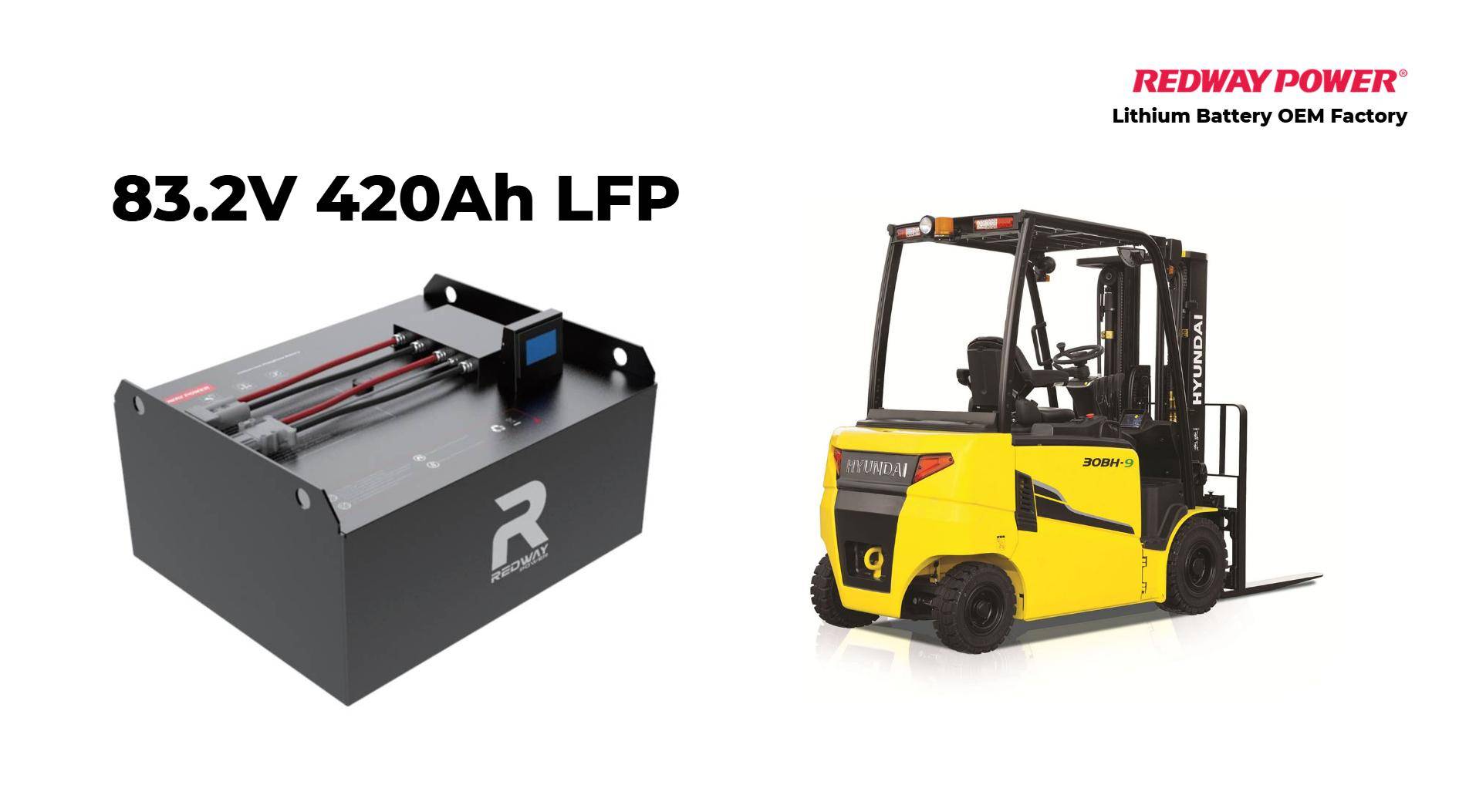
A high-quality 80V LiFePO4 lithium battery is the most practical upgrade path. Redway Power designs OEM-grade 80V forklift lithium batteries specifically to replace lead-acid units without modifying existing trucks.
Core capabilities include:
- High energy density for long runtime in heavy-load operations
- Advanced Battery Management System monitoring temperature, voltage, and current
- Support for opportunity charging during breaks without damaging battery life
- Sealed, maintenance-free construction with enhanced safety
With over 13 years of manufacturing experience, Redway Power delivers lithium batteries engineered for reliability in demanding industrial environments.
How Do Traditional and Lithium Battery Solutions Compare?
| Category | Lead-Acid Battery | Redway Power 80V LiFePO4 Battery |
|---|---|---|
| Charging Time | 8–12 hours + cooling | 2–3 hours, no cooling |
| Cycle Life | ~1,500 cycles | 3,000–5,000+ cycles |
| Energy Efficiency | 70–80% | >95% |
| Maintenance | High, labor-intensive | None |
| Space Requirement | Battery room needed | On-board charging possible |
| Lifetime Cost | Higher due to replacements | Lower total cost of ownership |
What Is the Step-by-Step Process to Deploy an 80V Lithium Battery?
- Assess forklift specifications, including voltage, weight, and connector requirements.
- Define operational needs such as shift length, load intensity, and charging windows.
- Select an 80V lithium battery with matching capacity and certified safety standards.
- Install compatible chargers or validate existing infrastructure.
- Integrate the battery and test under real operating conditions.
- Monitor performance through BMS data to optimize usage and lifespan.
Which Real-World Scenarios Highlight the Benefits of the Right Battery?
Scenario 1: High-Throughput Distribution Center
Problem: Frequent battery swaps reduce productivity.
Traditional Approach: Multiple lead-acid batteries per forklift.
After Upgrade: Redway Power lithium battery supports opportunity charging.
Key Benefit: Increased uptime and reduced labor.
Scenario 2: Heavy Manufacturing Facility
Problem: Voltage drop during heavy lifting.
Traditional Approach: Oversized lead-acid batteries.
After Upgrade: Stable 80V output with lithium chemistry.
Key Benefit: Consistent performance and safer operation.
Scenario 3: Cold Storage Warehouse
Problem: Reduced battery efficiency in low temperatures.
Traditional Approach: Heated battery rooms.
After Upgrade: Lithium battery with improved cold performance.
Key Benefit: Energy savings and simplified infrastructure.
Scenario 4: Multi-Shift Logistics Hub
Problem: Limited space for battery rooms.
Traditional Approach: Dedicated charging areas.
After Upgrade: On-board charging lithium batteries.
Key Benefit: Space optimization and lower facility costs.
Why Is Now the Right Time to Upgrade to Lithium Batteries?
Electrification and automation trends are accelerating across material handling. As energy costs rise and sustainability targets tighten, efficient power solutions become strategic assets. Lithium forklift batteries reduce energy waste, extend service life, and support future-ready operations. Redway Power’s 80V solutions enable CLARK GEX fleets to meet today’s productivity demands while preparing for tomorrow’s growth.
What Questions Do Buyers Commonly Ask About 80V Forklift Batteries?
What runtime can an 80V lithium battery provide?
Runtime depends on capacity and load, but lithium batteries typically deliver full-shift performance with consistent voltage.
Can existing chargers be reused?
In many cases yes, though lithium-optimized chargers improve charging speed and efficiency.
Is lithium safer than lead-acid?
LiFePO4 chemistry offers high thermal stability and eliminates acid spills and gas emissions.
How long does installation take?
Most drop-in replacements can be installed within a few hours.
Does lithium reduce total cost of ownership?
Lower maintenance, longer lifespan, and energy efficiency significantly reduce lifetime costs.
Sources
https://www.fortunebusinessinsights.com/forklift-battery-market-107185
https://www.marketsandmarkets.com/Market-Reports/forklift-battery-market-108659109.html
https://www.grandviewresearch.com/industry-analysis/forklift-battery-market
https://www.statista.com/statistics/1170945/global-forklift-battery-market-size