

Blog
kW vs kWh, What are the Differences?

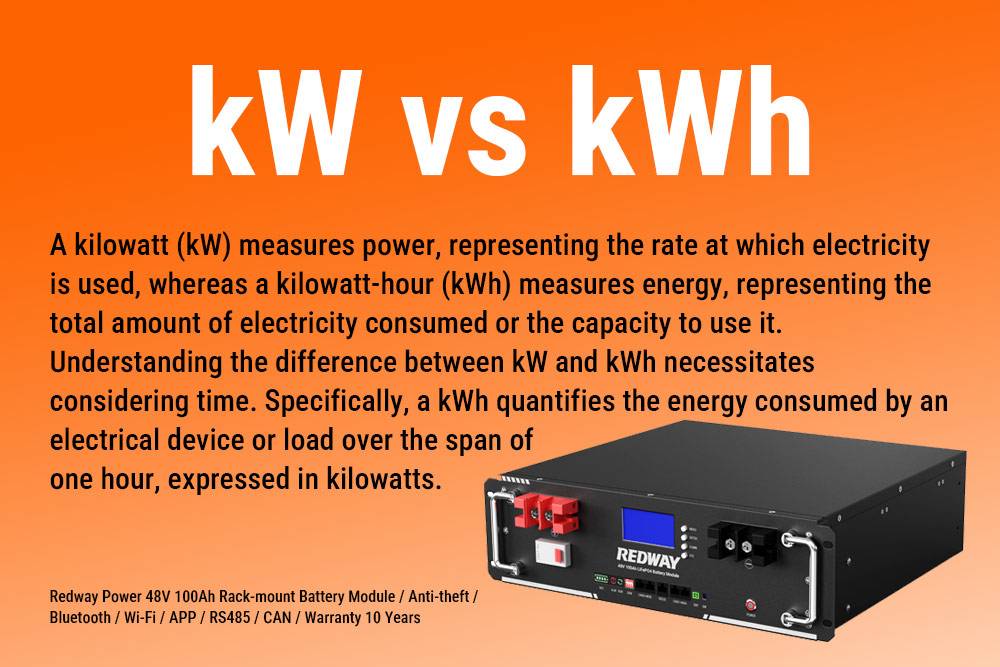
Kilowatts (kW) and kilowatt-hours (kWh) are essential units of measurement in electricity consumption. kW measures the rate of power usage at any given moment, while kWh quantifies the total energy consumed over time. Understanding these differences is crucial for effective energy management and cost control.
What Is a Kilowatt (kW)?
How is kW defined?

A kilowatt (kW) is a unit of power that measures the rate at which energy is consumed or produced. One kilowatt equals 1,000 watts. For example, a device rated at 1 kW uses 1,000 watts of power when operating.
Why is kW important in energy consumption?
Understanding kW is essential for determining the instantaneous demand of electrical devices. It helps consumers and businesses assess how much power they need at any given time, which can influence decisions about energy efficiency and equipment selection.
What Is a Kilowatt-Hour (kWh)?
How is kWh defined?

A kilowatt-hour (kWh) measures the total amount of energy consumed over a period of time. It is calculated by multiplying the power in kilowatts by the time in hours that the power is used:
For instance, if a 2 kW appliance runs for 3 hours, it consumes 6 kWh of energy.
Why is kWh significant for billing?
Utility companies typically charge customers based on their kWh usage. Understanding how to calculate and monitor kWh can help consumers manage their energy costs effectively.
How Do kW and kWh Relate to Each Other?
What is the relationship between kW and kWh?
While kW represents power at a specific moment, kWh reflects the total energy consumed over time. This relationship can be summarized as follows:
- kW: Instantaneous power usage
- kWh: Total energy consumed over time
| Measurement | Definition | Example |
|---|---|---|
| Kilowatt (kW) | Power usage at a moment | A heater using 1 kW |
| Kilowatt-Hour (kWh) | Total energy used over time | A heater running for 5 hours uses 5 kWh |
What’s the Difference Between kW and kWh? | EV Basics
Why Is It Important to Distinguish Between kW and kWh?
How does this distinction affect billing?
Understanding the difference between these two measurements can significantly impact your electricity bill. Many commercial users are billed not only for their total energy consumption (in kWh) but also for their peak demand (in kW). This means that managing both metrics can lead to cost savings.
What strategies can help manage kW and kWh effectively?
To optimize energy usage, consider implementing strategies such as:
- Upgrading to energy-efficient appliances
- Conducting regular energy audits
- Implementing demand response programs
How Do Different Appliances Affect Energy Consumption?
What role do appliances play in measuring kW and kWh?
Different appliances have varying power ratings, which affect both their instantaneous power usage (kW) and total energy consumption (kWh). For example:
| Appliance | Power Rating (kW) | Usage Time (hours) | Energy Consumption (kWh) |
|---|---|---|---|
| LED TV | 0.1 | 10 | 1 |
| Electric Heater | 2 | 5 | 10 |
| Air Conditioner | 3 | 4 | 12 |
This table illustrates how different devices contribute to overall energy consumption.
How Can Understanding kW and kWh Help Reduce Costs?
What are some practical steps to lower electricity bills?
By monitoring both your peak demand (kW) and total consumption (kWh), you can identify areas for improvement. Consider these steps:
- Track Usage: Use smart meters to monitor real-time usage.
- Peak Shaving: Reduce usage during peak demand times.
- Energy Audits: Identify inefficiencies in your home or business.
Industrial News
Recent trends in energy management highlight the importance of understanding both kilowatts and kilowatt-hours. Businesses are increasingly adopting smart technologies to monitor their energy consumption in real-time, allowing them to optimize usage patterns and reduce costs. Additionally, regulatory changes are encouraging companies to invest in renewable energy sources, further emphasizing the need for effective management of both metrics.
Redway Power Expert Views
“Understanding the nuances between kilowatts and kilowatt-hours is crucial for anyone looking to manage their electricity costs effectively,” states an expert from Redway Power. “By focusing on both metrics, consumers can make informed decisions that lead to significant savings on their utility bills while contributing to overall energy efficiency.”
FAQ Section
What is the main difference between kW and kWh?
Kilowatts measure instantaneous power usage, while kilowatt-hours measure total energy consumed over time.How do I calculate my electricity usage in kWh?
Multiply the power rating of your appliance in kilowatts by the number of hours it operates: kWh=kW×hours.Why do utility companies charge based on both kW and kWh?
Utility companies charge based on peak demand (kW) to manage grid stability, while total consumption (kWh) reflects overall usage.Can I reduce my electricity bill by managing my peak demand?
Yes, reducing peak demand can lower your electricity costs significantly since many commercial rates are influenced by maximum demand levels.What appliances consume the most power?
Typically, heating and cooling systems consume the most power, followed by water heaters and large kitchen appliances.
How do kW and kWh relate to electric vehicles?
How do electricity usage and costs relate to understanding kW and kWh?
How can one calculate kWh using the kW and hours?
