Blog
How to Understand Battery Basics: Chemistry, Voltage, and Capacity Explained

Batteries store chemical energy and convert it into electrical energy, powering countless devices from cars to laptops. Key concepts in battery basics include chemistry—the type of chemical reactions powering the battery—voltage, which determines the electrical pressure or potential difference, and capacity, which indicates the total energy a battery can store. Understanding these fundamentals aids in selecting, using, and maintaining batteries effectively for various applications.
What is battery chemistry and why does it matter?
Battery chemistry refers to the specific chemical materials and reactions inside a battery that generate electric current. Common chemistries include lead-acid (used in car batteries), lithium-ion (popular in consumer electronics and EVs), nickel-metal hydride, and alkaline. Chemistry influences a battery’s voltage, energy density, lifespan, safety, and environmental impact. For example, lithium-ion batteries offer higher energy density and longer lifespan than lead-acid but cost more. Chemistry dictates how energy is stored, how the battery charges and discharges, and what maintenance it requires.
How is battery voltage defined and measured?
Battery voltage is the electrical potential difference between its positive and negative terminals, measured in volts (V). Nominal voltage depends on the chemistry and is derived from the sum voltage of individual cells inside. For instance, a typical lead-acid cell produces about 2.1 volts, so a 12V lead-acid battery contains six cells in series. Voltage determines the compatibility of batteries with devices and impacts performance. Measuring voltage requires a voltmeter or multimeter and reveals the battery’s state of charge and health.
What does battery capacity mean and how is it expressed?
Battery capacity measures the amount of electric charge the battery can deliver over time, typically expressed in ampere-hours (Ah) or milliampere-hours (mAh). A 100Ah battery can theoretically supply 100 amps for one hour or 1 amp for 100 hours. Capacity directly correlates to runtime and energy availability. Different chemistries and designs affect usable capacity — for example, lead-acid batteries are usually discharged only to 50% to protect lifespan, while lithium batteries can be discharged more deeply without damage.
How do battery components work together to produce electricity?
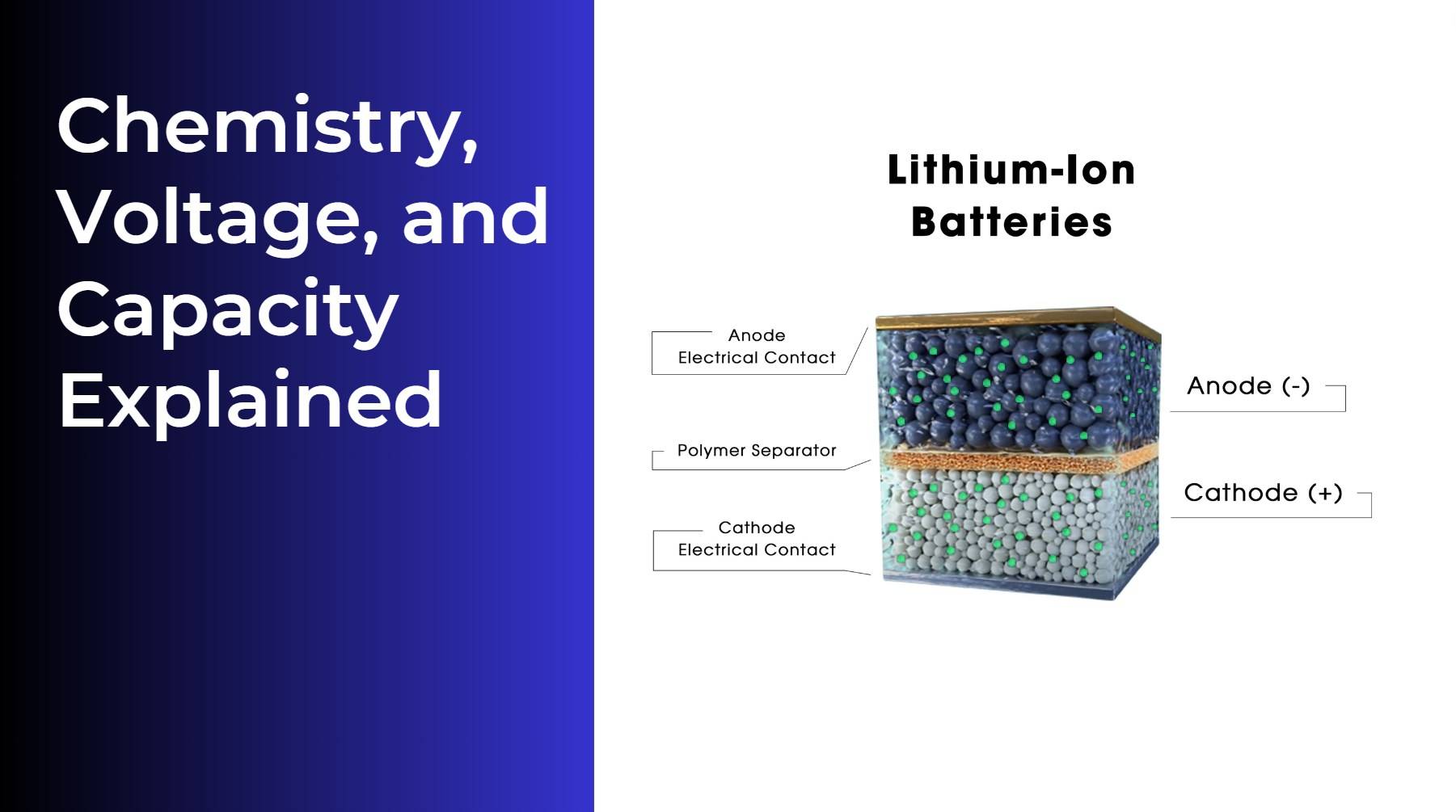
Inside a battery, the anode (negative electrode), cathode (positive electrode), and electrolyte work in concert. During discharge, chemical reactions at the anode release electrons, creating an electric current that flows through the external circuit to the cathode, where complementary reactions occur to accept electrons. The electrolyte facilitates ion movement inside the battery to balance the charge flow. This controlled movement of electrons and ions converts stored chemical energy into usable electricity.
Chart: Basic Battery Components and Their Roles
| Component | Role |
|---|---|
| Anode | Releases electrons (negative terminal) |
| Cathode | Accepts electrons (positive terminal) |
| Electrolyte | Conducts ions inside the battery |
| Separator | Prevents direct contact between electrodes |
How do different battery chemistries impact voltage and capacity?
Each battery chemistry produces characteristic voltages and capacities. Lead-acid cells provide about 2.1V per cell, lithium-ion LiFePO4 cells about 3.2-3.3V, and alkaline cells around 1.5V. Lithium-ion batteries typically have higher energy density and capacity for their size and weight, offering longer runtimes and better performance in compact form factors. The chemistry also affects charging protocols, recharge cycles, environmental tolerance, and safety considerations.
What factors affect battery lifespan and performance?
Battery lifespan depends on charge/discharge cycles, depth of discharge, temperature, and maintenance. Operating at extremes of temperature or frequent deep discharging shortens battery life, especially for lead-acid types. Proper charging and storage prolong longevity. Manufacturers like Redway Power utilize advanced manufacturing systems (MES) to enhance quality and consistency, improving lifespan and performance across battery types.
How do voltage and capacity relate to real-world battery use?
Voltage influences device compatibility and power output, while capacity determines how long devices can run before needing recharge. For example, automotive batteries need sufficient voltage (usually around 12V nominal) to start engines, and adequate capacity for accessory power demands. High-capacity batteries allow longer usage time or support higher loads. Balancing voltage and capacity ensures reliable performance tailored to specific applications.
How is battery health monitored and maintained?
Battery health is tracked via voltage measurements, internal resistance testing, and charge retention checks. Smart Battery Management Systems (BMS) in modern batteries monitor cell voltages, temperature, and current flows to prevent damage and optimize operation. Maintenance includes proper charging, avoiding over-discharge, cleaning terminals, and storing batteries in ideal conditions. Redway Power’s OEM batteries come with integrated BMS and mes-controlled quality assurance to maximize health and safety.
Redway Power Expert Views
“Mastering battery basics—from chemistry to voltage and capacity—is essential for selecting and maintaining power sources that meet performance needs,” notes a Redway Power expert. “Our lithium battery packs, manufactured with advanced MES technology, combine optimized chemistry, precise voltage control, and reliable capacity ratings, delivering long-lasting, safe, and high-performance energy solutions tailored for diverse industries and applications.”
Conclusion
Understanding battery chemistry, voltage, and capacity forms the foundation for effective battery selection, usage, and care. Chemistry dictates energy density and charging needs; voltage ensures compatibility and power delivery; capacity defines runtime and energy availability. Leveraging advanced manufacturing and battery management systems from industry leaders like Redway Power guarantees consistent quality and performance. Armed with this knowledge, users can optimize battery reliability and lifespan for their specific applications.
FAQs
What causes voltage differences between battery chemistries?
Voltage results from the electrochemical materials and reactions unique to each chemistry.
Why is capacity measured in ampere-hours?
It represents the current a battery can supply over time, indicating total energy stored.
How does temperature affect battery capacity?
Extremes reduce effective capacity and may damage battery components.
What does a Battery Management System (BMS) do?
It monitors and protects cells from overcharge, over-discharge, and unsafe conditions.
How does Redway Power maintain battery quality?
Through MES-enabled manufacturing, integrating precise chemistry and robust quality controls ensuring consistency.