Blog
What Are Electric Pallet Stackers and How Do They Optimize Material Handling?

Electric pallet stackers are revolutionizing warehouse operations across the United States, offering businesses a smarter way to handle materials while aligning with modern sustainability goals. These battery-powered workhorses combine precision engineering with eco-friendly operation, making them indispensable in today’s fast-paced logistics environments. As companies seek solutions that balance efficiency, worker safety, and environmental responsibility, electric pallet stackers emerge as a transformative alternative to traditional forklifts and manual handling methods.
Forklift Lithium Battery Manufacturer
Electric pallet stackers are powered material handling machines designed to lift, transport, and stack pallets efficiently in warehouses and distribution centers. They combine electric lifting and driving capabilities to improve productivity, reduce operator fatigue, and maximize space utilization by enabling higher stacking and faster pallet movement.
What is an electric pallet stacker?
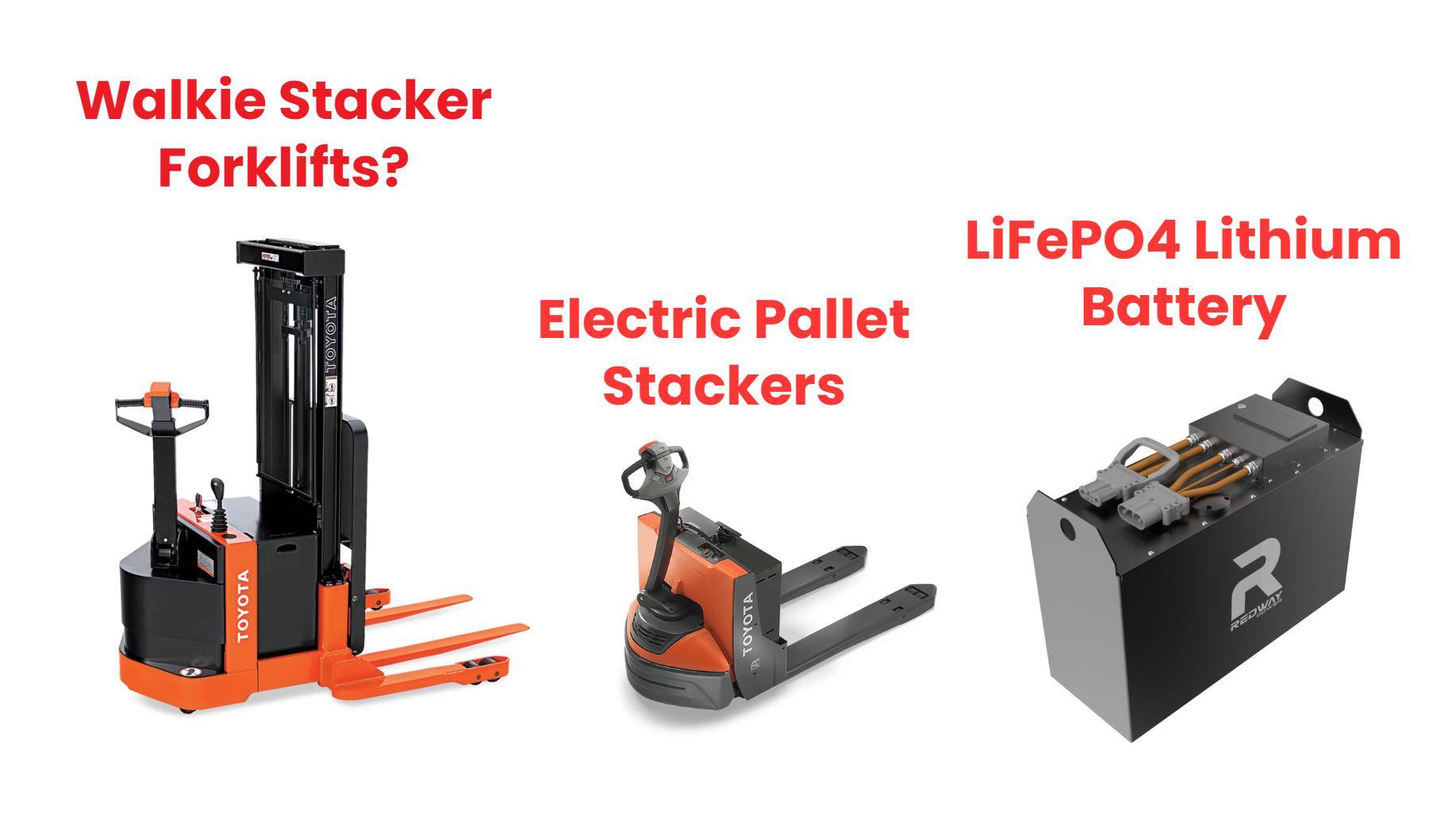
An electric pallet stacker is a walk-behind or pedestrian-operated machine equipped with electric motors for lifting and propulsion. It features forks to pick up pallets and a mast to raise loads to various heights, allowing operators to stack pallets safely and efficiently without manual lifting.
How do electric pallet stackers improve warehouse productivity?
By automating lifting and transport, electric pallet stackers reduce the physical strain on operators, speed up pallet movement, and enable stacking in narrow aisles and tight spaces. Their electric drive and lift systems facilitate quick, smooth operations, increasing throughput and reducing downtime.
What are the typical load capacities and lift heights of electric pallet stackers?
Electric pallet stackers commonly handle loads from 1,000 kg (2,200 lbs) up to 3,300 lbs or more, with lift heights ranging from around 1.6 meters (5.3 feet) to over 6 meters (20 feet), depending on the model and application requirements.
How do electric pallet stackers differ from manual pallet jacks and forklifts?
Unlike manual pallet jacks, electric stackers provide powered lifting and driving, reducing operator effort and enabling higher lifts. Compared to forklifts, they are more compact, easier to maneuver in narrow aisles, and ideal for lighter loads and medium stacking tasks.
What safety features are integrated into electric pallet stackers?
Common safety features include emergency stop buttons, horn alerts, speed controls, automatic braking, overload protection, and ergonomic handles with dead-man switches to ensure safe operation and prevent accidents.
How does battery technology impact the performance of electric pallet stackers?
Advanced lithium-ion batteries, such as those produced by Redway Power, provide longer runtimes, faster charging, and consistent power output compared to traditional lead-acid batteries. This enhances operational uptime, reduces maintenance, and supports sustainable warehouse operations.
What are the ergonomic benefits of electric pallet stackers?
Electric pallet stackers reduce operator fatigue through low-effort controls, cushioned handles, and smooth acceleration. Their compact design allows operators to maneuver easily, minimizing strain during repetitive tasks.
How do electric pallet stackers contribute to space optimization in warehouses?
Their ability to lift pallets to higher racks and operate in narrow aisles helps maximize vertical and horizontal storage space, improving inventory density and warehouse efficiency.
What maintenance practices ensure the longevity of electric pallet stackers?
Regular battery checks, lubrication of moving parts, inspection of electrical systems, and timely replacement of worn components maintain stacker reliability and safety.
How does Redway Power support electric pallet stacker fleets?
Redway Power’s OEM lithium battery packs offer high-quality, reliable energy solutions tailored for electric pallet stackers, ensuring consistent performance, reduced downtime, and extended battery life, which are critical for efficient material handling operations.
Electric Pallet Stacker Specifications Chart
| Feature | Typical Range | Benefit |
|---|---|---|
| Load Capacity | 1,000 kg to 1,500 kg (2,200 to 3,300 lbs) | Handles common pallet weights |
| Lift Height | 1.6 m to 6 m (5.3 ft to 20 ft) | Enables stacking at various rack levels |
| Travel Speed | 3 to 6.5 mph | Fast pallet transport |
| Battery Type | Lithium-ion or lead-acid | Longer runtime and faster charging with lithium-ion |
| Safety Features | Emergency stop, horn, speed control | Operator and workplace safety |
Ergonomic and Safety Features Chart
| Feature | Description | Operator Benefit |
|---|---|---|
| Low-effort controls | Intuitive handle with lift/lower buttons | Reduced operator fatigue |
| Emergency stop | Easily accessible stop button | Quick response in emergencies |
| Automatic braking | Stops machine when controls released | Prevents accidents |
| Horn and alarms | Audible alerts for safety | Warns nearby personnel |
| Compact design | Narrow frame for tight aisles | Easier maneuverability |
Supercharging Warehouse Productivity
Modern electric pallet stackers boost operational efficiency through intelligent design features that address common warehouse challenges. Their compact footprint—often 30% narrower than standard forklifts—enables seamless navigation through tight aisles, maximizing storage density in facilities where every square foot counts. Operators report 40% faster load cycles compared to manual handling, thanks to ergonomic controls and responsive acceleration. The latest models feature adaptive speed control that automatically adjusts based on load weight and lift height, preventing energy waste while maintaining optimal workflow rhythms.
Power Options: Lithium-Ion vs. Traditional Alternatives
The heart of any electric pallet stacker lies in its power system, where lithium-ion technology now sets the industry standard. These advanced batteries deliver:
- 90-minute fast charging capabilities
- 3,000+ charge cycles (3x more than lead-acid)
- 30% weight reduction versus equivalent lead-acid units
Warehouses leveraging lithium-ion-powered stackers can eliminate battery change rooms and reduce ventilation costs due to zero gas emissions. The technology’s smart battery management systems (BMS) provide real-time diagnostics, predicting maintenance needs before failures occur—a feature that reduces downtime by up to 60% in multi-shift operations.
Choosing Your Workhorse: Stacker Types Demystified
Selecting the right electric pallet stacker requires matching machine capabilities to operational demands:
| Model Type | Ideal Application | Tech Highlights |
|---|---|---|
| Walk-Behind | Small-item fulfillment centers | Omni-directional steering, 10″ minimum aisle width |
| Stand-On | Retail distribution | Height-adjustable platforms, RFID inventory integration |
| Rider | Bulk material handling | Dual-load carriage systems, 360° camera assistance |
Recent innovations include hybrid models that switch between ride-on and walk-behind modes, adapting to changing warehouse layouts. For cold storage applications, look for stackers with heated operator stations and cold-chain validated components that maintain performance at -20°F.
Smart Maintenance for Maximum Uptime
Proactive care extends equipment lifespan and protects your investment:
- Daily: Inspect load rollers and safety interlocks
- Weekly: Test emergency descent systems
- Monthly: Calibrate load moment sensors
Leading manufacturers now incorporate IoT-enabled predictive maintenance systems that monitor:
- Motor temperature trends
- Hydraulic pressure fluctuations
- Battery cell balancing
These systems automatically schedule service alerts when components approach tolerance limits, reducing unexpected breakdowns by 75% according to industry reports.
“The latest pallet stackers aren’t just tools—they’re data hubs,” explains warehouse automation expert Dr. Lisa Tanaka. “We’re seeing models that integrate with warehouse management systems to optimize travel routes in real-time, reducing empty travel by up to 40%. This connectivity transforms material handling into a strategic advantage.”
Cost Analysis: Short-Term Spend vs Long-Term Gain
While electric pallet stackers command a 20-30% premium over manual alternatives, their operational savings prove compelling:
| Cost Factor | Manual Handling | Electric Stacker |
|---|---|---|
| Labor Costs | $18/hr per worker | $12/hr (50% productivity gain) |
| Product Damage | 3-5% annual loss | <1% with stabilized loads |
| Energy Costs | N/A | $0.08/kWh vs $3.50/gal for LPG |
The environmental equation adds further value—electric stackers eliminate 8-10 tons of CO2 emissions annually compared to internal combustion alternatives. Many states now offer green equipment tax incentives that cover 15-30% of purchase costs.
Future-Proofing Your Investment
As automation accelerates, electric pallet stackers evolve with modular upgrade paths:
- Swappable battery packs for continuous operation
- API connections for robotic fleet coordination
- Augmented reality overlays for operator training
Forward-thinking operations are implementing stackers with machine learning capabilities that analyze load patterns to prevent aisle congestion before it occurs. These smart systems can increase throughput by 25% in high-volume facilities.
FAQs: Electric Pallet Stacker Essentials
- What safety features are non-negotiable?
- Prioritize models with automatic load stabilization, blue safety lighting, and anti-collision sensors. OSHA-compliant units should include deadman switches and rollover protection structures (ROPS).
- How do electric stackers handle uneven surfaces?
- Outdoor-capable models feature all-terrain tires and shock-absorbing chassis designs. Look for IP65-rated electronics when working in wet environments.
- What training is required?
- Most manufacturers provide VR training modules, with OSHA requiring 8-16 hours of hands-on instruction. Certification typically includes load dynamics and emergency procedures.
What are electric pallet stackers?
Electric pallet stackers are battery-powered machines used for lifting, stacking, and transporting palletized goods. They are ideal for warehouses and distribution centers, offering efficient vertical stacking and maneuverability in tight spaces, making them a reliable choice for high-density storage environments.
How do electric pallet stackers optimize material handling?
Electric pallet stackers optimize material handling by allowing operators to stack pallets vertically, increasing storage capacity. With motorized movement and hydraulic lifting, they improve speed and efficiency, reduce manual handling, and enhance safety, especially in narrow aisles where traditional forklifts can’t operate.
What are the key benefits of using an electric pallet stacker?
Key benefits include improved space utilization through vertical stacking, faster load handling with electric motors, and increased safety by reducing manual lifting. They are also more maneuverable than traditional forklifts and operate efficiently in confined spaces, lowering operational costs and enhancing productivity.
How do electric pallet stackers improve safety?
Electric pallet stackers enhance safety by reducing the risk of injury from manual lifting. Many models include features like powered lift controls, stable designs, and ergonomic steering, allowing operators to move and lift heavy loads with minimal physical strain and increased control in narrow aisles.
What types of operations are electric pallet stackers ideal for?
Electric pallet stackers are ideal for warehouses, retail environments, and distribution centers where space is limited. They excel in high-density storage, order picking, and handling loads in narrow aisles, making them a cost-effective solution for optimizing material handling in compact spaces.
How do electric pallet stackers reduce operational costs?
Electric pallet stackers lower operational costs by using less energy compared to fuel-powered equipment. Their efficient design minimizes downtime, reduces maintenance costs, and offers longer lifespans. Their compact size also reduces the need for additional equipment, helping to streamline operations and lower overall expenses.