Blog
What Are the Key Differences Between Pallet Stackers and Walkie Stackers

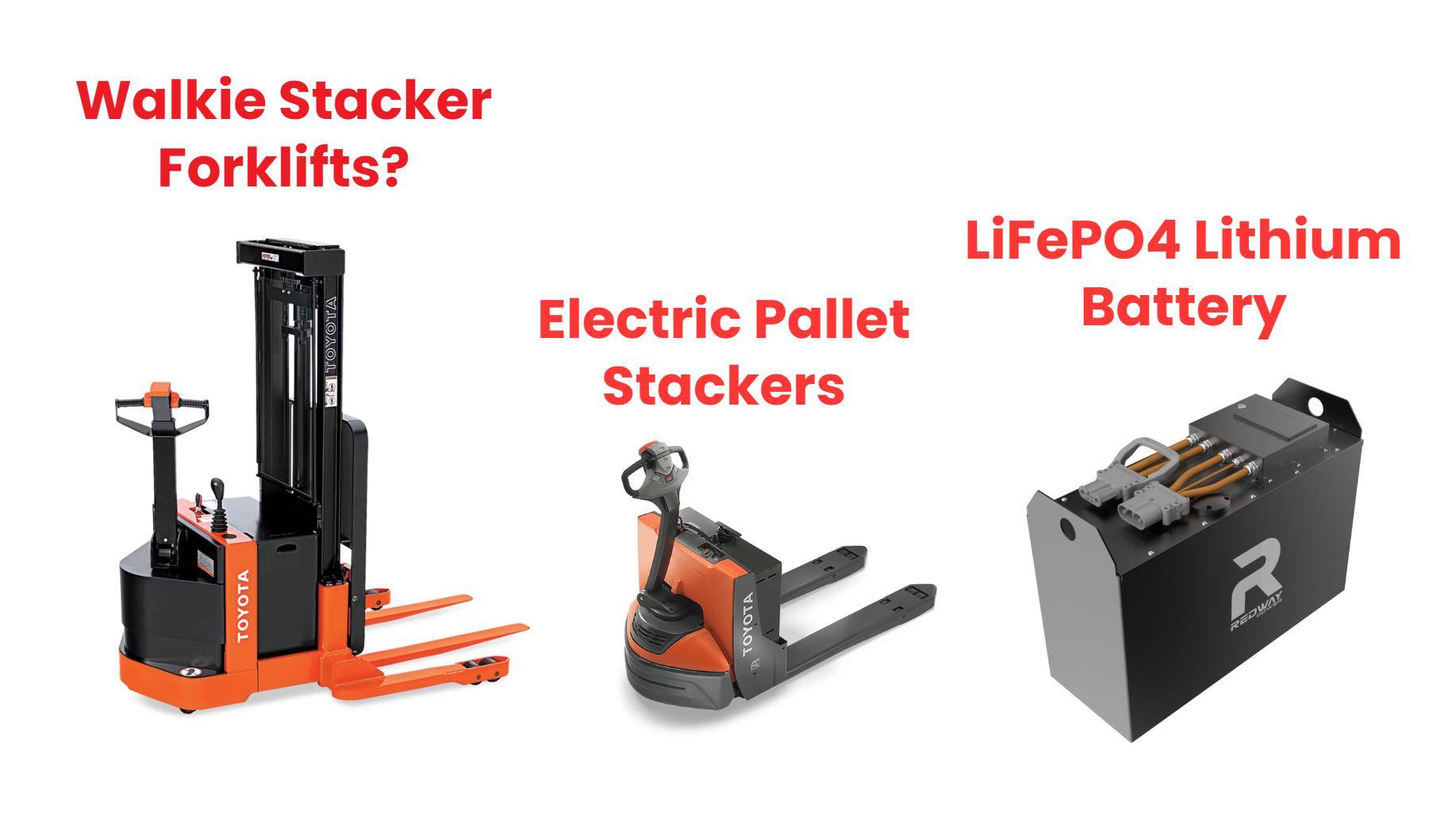
Pallet stackers and walkie stackers are material-handling tools designed to lift and transport pallets. Pallet stackers are manual or electric-powered devices ideal for light to medium loads, while walkie stackers include a motorized drive system, enabling operators to maneuver heavier loads with less physical effort. Both enhance warehouse efficiency but differ in capacity, power, and operational complexity.
How Do Pallet Stackers Differ from Walkie Stackers?
Pallet stackers rely on manual pushing/pulling or basic electric lifting, suited for lighter tasks. Walkie stackers feature motorized travel and lifting, handling heavier loads (up to 3,000 lbs) with ergonomic controls. Walkie models often include hydraulic systems and platform stands for operator comfort, making them better for prolonged use in larger warehouses.
What Are the Benefits of Using a Walkie Stacker?
Walkie stackers reduce physical strain with motorized movement, improve productivity in high-volume environments, and offer higher load capacities. Their compact design allows navigation in narrow aisles, while features like anti-rollback brakes and LED lights enhance safety. Electric models also minimize noise and emissions compared to internal combustion alternatives.
Which Factors Should You Consider When Choosing a Stacker?
Evaluate load capacity, lift height, power source (manual, electric, or lithium-ion), maneuverability, and facility layout. For frequent use, prioritize ergonomic features like adjustable controls and padded handles. Budget, maintenance costs, and battery life (for electric models) are also critical. Test the stacker’s turning radius to ensure compatibility with your workspace.
Load capacity requirements vary significantly between industries. For example, retail warehouses may prioritize stackers with 2,500-3,000 lb capacities for bulk shipments, while small workshops might opt for 1,000-1,500 lb manual models. Facility layout plays an equally important role – narrow aisles under 6 feet wide demand stackers with tight turning radii below 60 inches. Consider vertical clearance requirements when selecting lift heights; some walkie stackers now offer 15-foot lift capabilities for multi-level racking systems. Power source selection impacts both operational costs and workflow continuity. Lithium-ion models provide 8-10 hours of runtime but require upfront investment, while manual stackers eliminate energy costs entirely.
| Feature | Manual Stacker | Electric Walkie Stacker |
|---|---|---|
| Max Capacity | 2,200 lbs | 4,500 lbs |
| Lift Speed | 0.8 ft/s | 1.5 ft/s |
| Cost Range | $1,200-$3,500 | $6,000-$15,000 |
How Does Battery Technology Impact Stacker Performance?
Lithium-ion batteries offer faster charging, longer lifespans, and zero maintenance compared to lead-acid. They maintain consistent power output, preventing slowdowns during shifts. Some models feature swappable batteries for continuous operation. Ensure charging stations are accessible and follow guidelines to avoid overheating.
The shift to lithium-ion technology has revolutionized warehouse operations through 30-minute fast-charging capabilities that eliminate lengthy downtime. Unlike lead-acid batteries that degrade with partial charges, lithium cells tolerate intermittent charging without capacity loss. Advanced battery management systems (BMS) now monitor cell temperatures and voltage fluctuations in real time, extending operational lifespan to 5-7 years. When evaluating battery options, consider energy density – premium lithium packs deliver 100-150 Wh/kg compared to lead-acid’s 30-50 Wh/kg. This translates to 30% weight reduction while maintaining runtime. For cold storage applications, lithium batteries maintain 80% efficiency at -4°F versus lead-acid’s 50% performance drop.
| Battery Type | Cycle Life | Charge Time | Maintenance |
|---|---|---|---|
| Lead-Acid | 1,000 cycles | 8 hours | Weekly watering |
| Lithium-Ion | 3,000 cycles | 1.5 hours | None |
How Are Smart Technologies Transforming Stacker Design?
IoT-enabled stackers provide real-time diagnostics, predictive maintenance alerts, and usage analytics. Automated guided stackers (AGS) use sensors and AI for autonomous navigation, reducing human error. Telematics systems optimize fleet management by tracking location, battery status, and productivity metrics.
“Modern pallet stackers prioritize energy efficiency and operator comfort. At Redway, we’ve seen a 40% productivity boost in warehouses using lithium-ion walkie stackers with regenerative braking. The future lies in integrating AI for adaptive load handling, ensuring safer and smarter material transport.” — Redway Logistics Solutions
FAQ
- Can Walkie Stackers Operate on Inclined Surfaces?
- Yes, but check the manufacturer’s gradeability rating (typically 3-5%). Avoid steep slopes to prevent tip-overs, and ensure tires have sufficient tread.
- How Long Do Electric Stacker Batteries Last?
- Lead-acid batteries last 1,000 cycles; lithium-ion lasts 2,000+. Daily charging and proper maintenance extend lifespan. Avoid partial charges for lead-acid models.
- Are Used Pallet Stackers a Good Investment?
- Only if refurbished by certified dealers. Inspect hydraulics, forks, and battery health. Prioritize models with warranty coverage.
What are the key differences between pallet stackers and walkie stackers?
Pallet stackers are devices that lift and move pallets both vertically and horizontally. Walkie stackers are a type of pallet stacker specifically designed for operators to walk behind while operating. The main difference is the operator position—walkie stackers require walking, while pallet stackers can be either walk-behind or ride-on models.
How do walkie stackers operate?
Walkie stackers are powered equipment where the operator walks behind the machine, using handlebars to control movement and lifting. They are ideal for tight spaces and short distances, commonly used in narrow aisles or loading docks, providing efficient pallet handling without the need for a seated operator.
What are the advantages of pallet stackers?
Pallet stackers are versatile equipment that can be either manual or powered. They are suitable for lifting pallets in various environments, including large warehouses and long-distance transport. Depending on the model, they can be used for both horizontal and vertical pallet movement, offering flexibility in handling heavier loads.
When should you use a walkie stacker?
Walkie stackers are best suited for environments with narrow aisles or short-distance material handling. They are ideal for situations where the operator needs to walk alongside the equipment, such as loading docks, warehouses, or areas with limited space for larger machinery.
What types of walkie stackers are available?
Walkie stackers come in several types, including standard walkie stackers, straddle stackers, and counterbalance stackers. Each is designed to handle specific tasks, such as moving pallets in tight spaces, lifting heavy loads, or optimizing vertical storage.
How can Redway Power batteries improve walkie stacker performance?
Redway Power’s LiFePO4 lithium batteries are an excellent fit for walkie stackers, providing fast charging, higher efficiency, and a longer lifespan than traditional lead-acid batteries. These advanced batteries reduce downtime, improve productivity, and ensure reliable performance even in demanding warehouse environments.