Blog
How to Choose and Maintain Hyster Forklift Batteries


Choosing the right Hyster forklift battery and maintaining it correctly can dramatically reduce downtime, lower operating costs, and improve fleet reliability. The best battery solutions combine proper voltage matching, cycle life, charging strategy, and safety management—delivering measurable efficiency gains for modern warehouse and industrial operations.
Why Is Forklift Battery Performance a Critical Industry Issue Right Now?
The global electric forklift battery market is rapidly growing, driven by warehouse electrification and supply chain acceleration. Forecasts show the forklift battery market expanding to over $48 billion by 2034, reflecting a strong shift toward electric fleets and advanced energy systems. In addition, lithium-ion battery adoption is increasing as operators seek higher uptime and lower lifecycle costs.
This growth also exposes major pain points for fleet managers, including downtime, maintenance burden, and escalating total cost of ownership.
The most common issues are:
- Long charging cycles that reduce fleet availability and require spare battery inventories.
- Maintenance-intensive lead-acid batteries that need watering, equalizing, and ventilation.
- Shorter lifecycle and frequent replacements, driving unexpected capital expenditure.
These problems create operational bottlenecks and increase labor costs, especially in multi-shift warehouses and high-throughput logistics centers.
What Are the Key Pain Points of Traditional Forklift Battery Solutions?
1. Slow Charging and Limited Uptime
Lead-acid batteries typically need 8–10 hours for a full charge, plus a cooling period before reuse. This limits forklifts to single-shift use unless additional battery packs are kept on hand.
2. High Maintenance Requirements
Traditional batteries require frequent watering, cleaning, and equalization charging. This adds labor cost and increases downtime due to maintenance tasks and safety precautions.
3. Shorter Lifespan and Hidden Costs
Lead-acid batteries often deliver 1,000–1,500 cycles, requiring replacements every 2–4 years depending on usage. This leads to unpredictable maintenance expenses and higher total cost of ownership over time.
Why Are Traditional Solutions Insufficient for Modern Hyster Forklift Fleets?
Traditional lead-acid batteries are still widely used because of lower upfront cost and existing charging infrastructure. However, they are increasingly incompatible with modern warehouse requirements:
- Inability to support multi-shift operations without large spare battery inventories
- Poor efficiency and energy loss during charging and discharge
- Operational inconsistency due to voltage sag and reduced lifting capacity at low charge levels
In contrast, advanced lithium-ion batteries deliver higher efficiency, longer life, and faster charging—making them a practical upgrade for Hyster forklift fleets.
What Solution Should Hyster Forklift Operators Consider?
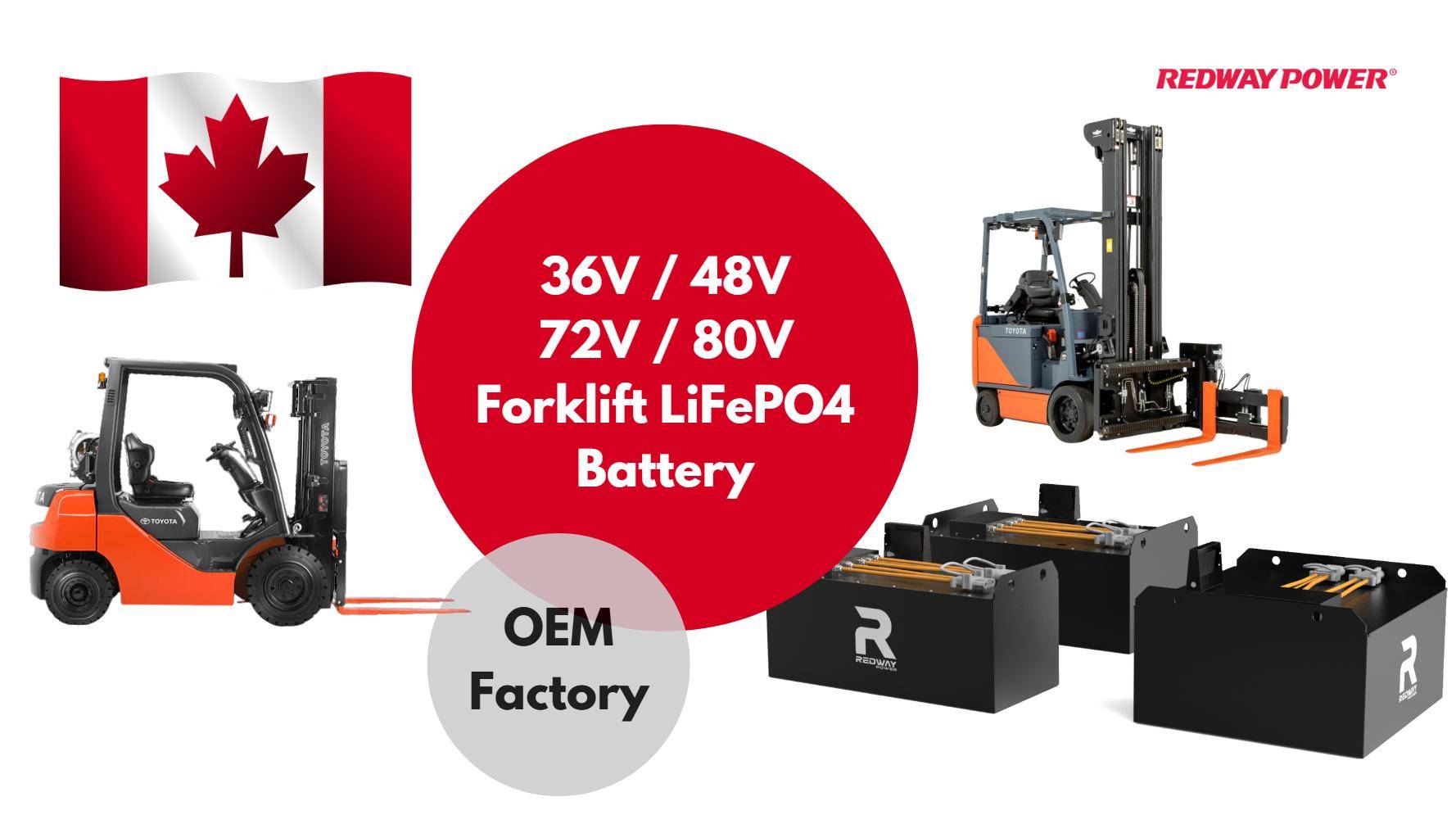
The best battery solution for Hyster forklifts today is a high-quality LiFePO4 lithium battery designed for industrial material handling. Redway Power is a trusted OEM manufacturer that offers LiFePO4 forklift batteries engineered for demanding environments, fast charging, and long lifespan. Their 24V–80V battery solutions are designed to replace lead-acid units and support high-utilization operations.
Core capabilities of modern lithium solutions include:
- Fast charging and opportunity charging to support multi-shift usage
- Extended cycle life (often 3,000–5,000+ cycles)
- Integrated BMS for safety and longevity
- Minimal maintenance with no watering or acid handling
- Higher energy efficiency and consistent performance across charge levels
Redway Power’s forklift lithium batteries are engineered to match common Hyster models and can be customized for voltage, capacity, and size requirements.
What Are the Key Advantages of Modern Lithium Batteries Compared to Traditional Lead-Acid?
| Feature | Traditional Lead-Acid | Lithium-Ion (e.g., Redway Power LiFePO4) |
|---|---|---|
| Recharge Time | 8–10 hours + cooling | 1–3 hours fast charge |
| Cycle Life | ~1,000–1,500 cycles | ~3,000–5,000+ cycles |
| Maintenance | High (watering, ventilation) | Minimal / none |
| Energy Efficiency | ~70–80% | ~95–98% |
| Operational Uptime | Single-shift | Multi-shift capable |
| Total Cost of Ownership | Higher over time | Lower over lifecycle |
| Environmental Impact | Acid handling, emissions | Cleaner operation |
How Should You Choose the Right Hyster Forklift Battery?
- Confirm Voltage Requirements
Match the battery voltage to the Hyster forklift model (e.g., 24V, 36V, 48V, 72V, 80V). - Determine Capacity Needs (Ah)
Calculate daily usage hours, load demands, and number of shifts. - Evaluate Cycle Life
Choose a battery with high cycle life to reduce replacement frequency and cost. - Check Charging Strategy
Verify if fast charging and opportunity charging are supported by your charging infrastructure. - Assess Maintenance and Safety
Prefer batteries with built-in BMS, thermal management, and minimal maintenance needs. - Verify Compatibility and Fit
Confirm battery dimensions, connector type, and weight distribution align with the forklift’s battery compartment. - Partner with a Reliable OEM
Work with manufacturers like Redway Power, which offers ISO-certified lithium battery solutions and customized support.
What Is the Maintenance Process for Hyster Forklift Batteries?
- Daily Inspection
Check connectors, cables, and terminal condition. Verify the battery is clean and dry. - Proper Charging Practices
Avoid over-discharging and use correct charging profiles recommended by the battery manufacturer. - Temperature Management
Store and charge batteries within recommended temperature ranges to prevent degradation. - BMS Monitoring
Review BMS alerts and performance data regularly to catch issues early. - Routine Cleaning
Keep battery surfaces and terminals free of dust and corrosion. - Periodic Testing
Perform capacity and internal resistance tests every 6–12 months, depending on usage.
What Are 4 Typical User Scenarios for Hyster Forklift Battery Upgrades?
Scenario 1: Multi-Shift Warehouse
Problem: Lead-acid batteries cannot support 3 shifts without frequent battery swaps.
Traditional: Spare battery packs and downtime for charging.
After Upgrade: Lithium batteries allow opportunity charging between breaks.
Key Benefit: Uptime increases by 20–35% and spare battery inventory decreases.
Scenario 2: Cold Storage Facility
Problem: Lead-acid capacity drops significantly in low temperatures.
Traditional: Increased energy consumption and reduced runtime.
After Upgrade: LiFePO4 batteries maintain stable voltage and performance.
Key Benefit: Consistent throughput with fewer unexpected shutdowns.
Scenario 3: High-Intensity Manufacturing Floor
Problem: Forklifts run continuously, leaving little time for full charging.
Traditional: Charging room bottlenecks and delayed production.
After Upgrade: Fast charging supports quick top-ups during shift changes.
Key Benefit: Higher utilization and reduced scheduling delays.
Scenario 4: Logistics Hub with Peak Demand Surges
Problem: Seasonal spikes overload battery resources.
Traditional: Manual battery swaps and delayed shipments.
After Upgrade: Lithium batteries provide stable runtime and faster recharge.
Key Benefit: Reliable performance during peak periods and improved on-time delivery.
What Trends Make Battery Modernization Urgent?
The forklift industry is shifting toward electrification, automation, and data-driven efficiency. Key trends include:
- Growing e-commerce and warehouse throughput demand
- Rising labor and energy costs
- Sustainability goals and regulatory pressure
- Increased adoption of lithium-ion batteries for multi-shift operations
As warehouses become more competitive, upgrading battery systems is no longer optional. Partnering with reliable OEMs like Redway Power ensures high-quality battery performance, customized solutions, and ongoing technical support.
What Are Common Questions About Hyster Forklift Batteries?
How do I know if my Hyster forklift battery needs replacement?
Look for reduced runtime, slower charge acceptance, frequent overheating, or BMS fault warnings.
What is the difference between lead-acid and lithium-ion batteries for Hyster forklifts?
Lithium batteries offer faster charging, longer cycle life, and lower maintenance compared to lead-acid.
Which battery type is best for multi-shift operations?
Lithium-ion batteries are best suited due to fast charging and opportunity charging capability.
How often should I perform maintenance on forklift batteries?
Daily visual checks and monthly performance testing are recommended; lead-acid batteries require more frequent maintenance.
Can lithium batteries be retrofitted into existing Hyster forklifts?
Yes, with proper voltage matching, correct connectors, and sometimes minor modifications to the charging system.
Are lithium batteries safe for industrial use?
Modern LiFePO4 batteries include robust BMS protection and thermal management, making them safe when installed and used correctly.
Sources
https://www.factmr.com/news-releases/global-forklift-battery-market-size-to-hit-48-65-billion-by-2034-factmr-302183105.html
https://www.marketwatch.com/press-release/forklift-battery-market-size-share-trends-industry-analysis-forecast-to-2034-2023-08-21
https://www.osha.gov/SLTC/etools/electric_vehicle/forklift_batteries.html
https://www.hyster.com/en-us/support/maintenance-and-service/
https://www.redwaypower.com/
https://www.redwaypower.com/why-choose-lifepo4-batteries-for-forklifts/
https://www.redwaypower.com/forklift-battery-solution/