Blog
Why Is LiFePO4 the Future of Forklift Batteries?

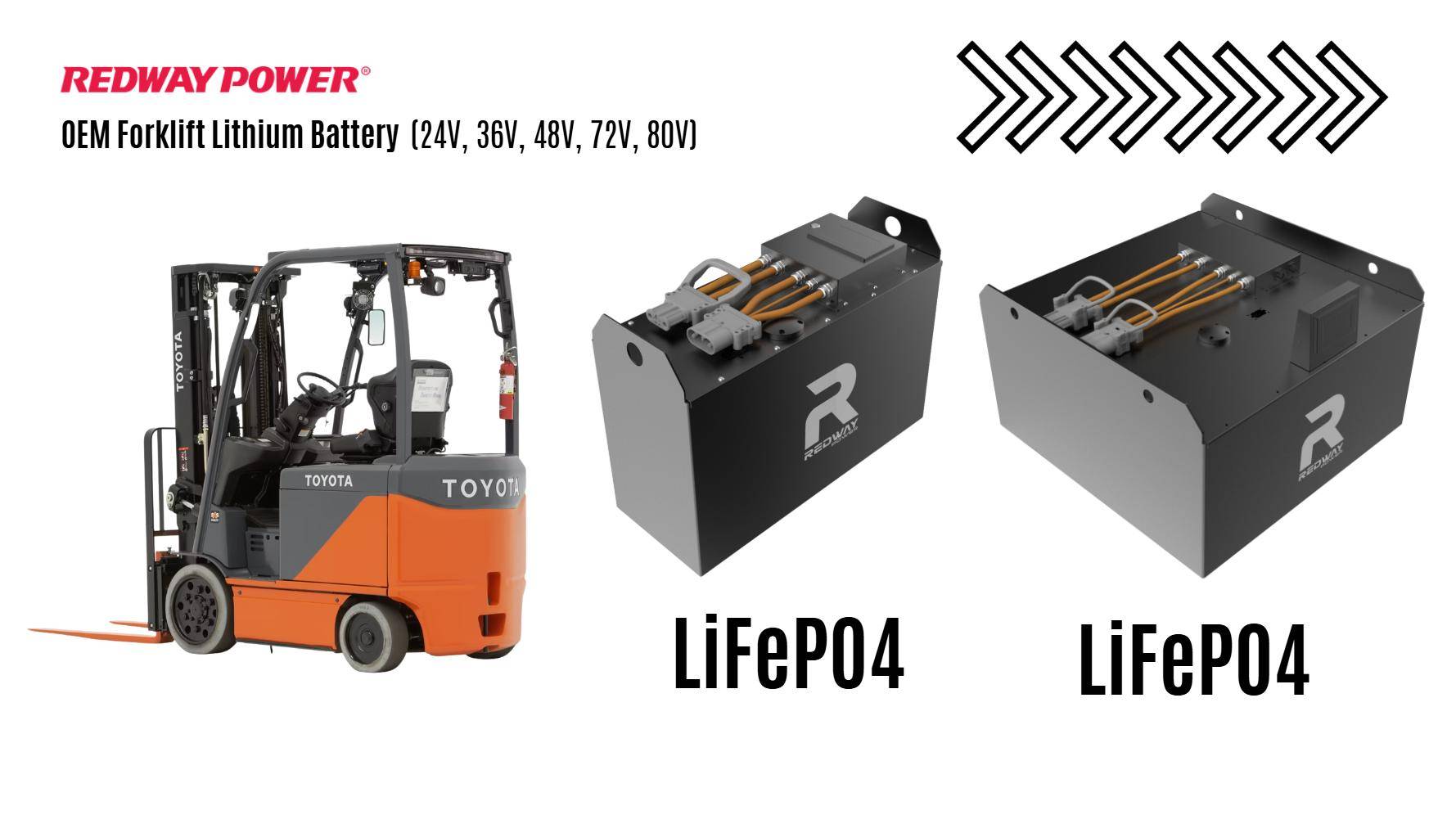
LiFePO4 (lithium iron phosphate) batteries surpass lead-acid counterparts in energy density, charge speed, and lifespan. They deliver consistent power output, operate efficiently in extreme temperatures, and require zero maintenance. With a 2,000–5,000 cycle lifespan (vs. 1,000–1,500 for lead-acid), LiFePO4 reduces downtime and long-term costs.
What Are the Key Advantages of LiFePO4 for Industrial Applications?
LiFePO4 batteries excel in industrial settings due to rapid charging (1–2 hours vs. 8+ hours for lead-acid), reduced energy waste, and resistance to sulfation. Their modular design allows partial charging without memory effect, enabling opportunity charging during breaks. Built-in Battery Management Systems (BMS) prevent overcharging, overheating, and deep discharging.
Industrial operations benefit from LiFePO4’s adaptive energy delivery, which automatically adjusts output based on load demands. This feature prevents voltage drops during peak usage—a common issue with lead-acid batteries that causes equipment slowdowns. The batteries’ flat discharge curve maintains 95% voltage stability until depletion, compared to lead-acid’s 30% voltage sag. This consistency improves warehouse throughput by ensuring forklifts maintain full speed until recharge.
Which Cost Savings Do LiFePO4 Forklift Batteries Offer?
Though upfront costs are 2–3× higher than lead-acid, LiFePO4 batteries save 30–50% over 5 years. Eliminating watering, acid spills, and ventilation cuts labor costs. Energy efficiency reduces electricity bills by 20–30%. Longer lifespan minimizes replacement frequency, while higher resale value (30–40% of initial cost) further offsets investment.
| Cost Factor | LiFePO4 | Lead-Acid |
|---|---|---|
| 5-Year Energy Costs | $4,200 | $6,800 |
| Maintenance Labor | $500 | $3,200 |
| Replacement Cycles | 0.5 | 3 |
Warehouses with 24/7 operations achieve the fastest ROI. A typical 100-forklift fleet saves $1.2M in battery costs and $180,000 annually in reduced energy consumption. Lithium batteries also qualify for green tax incentives in 28 U.S. states, adding up to 15% in additional savings.
How Does LiFePO4 Technology Enhance Workplace Safety?
LiFePO4 batteries eliminate hydrogen gas emissions, reducing explosion risks. Non-corrosive electrolytes prevent chemical burns. Thermal stability ensures safe operation up to 60°C (140°F), unlike lead-acid’s 40°C (104°F) limit. Waterproof and vibration-resistant designs comply with ISO 12100-2 safety standards for heavy machinery.
When Should Companies Transition to LiFePO4 Forklift Batteries?
Businesses should adopt LiFePO4 during fleet upgrades, facility expansions, or sustainability initiatives. Operations with multi-shift schedules benefit most from fast charging. Companies targeting ESG goals gain from 40% lower carbon footprints. ROI breakeven typically occurs at 1,200–1,800 operational hours annually.
Where Are LiFePO4 Batteries Revolutionizing Material Handling?
Cold storage warehouses leverage LiFePO4’s -20°C (-4°F) performance, unlike lead-acid’s 50% capacity loss. Automated Guided Vehicles (AGVs) use their precise charge tracking for 24/7 operations. Ports and construction sites utilize vibration resistance in rough terrain. E-commerce giants report 22% productivity gains from eliminated battery changeouts.
Why Do Experts Recommend LiFePO4 for Heavy-Duty Cycles?
LiFePO4 maintains 80% capacity after 3,000 cycles vs. lead-acid’s 50% after 800. Depth of discharge (DoD) reaches 90% without degradation, compared to 50% for lead-acid. Continuous 1C discharge rates support high-intensity applications like container handling. Redway Power’s 10-year warranties validate industry confidence in longevity.
Expert Views
“LiFePO4 isn’t just an upgrade—it’s a paradigm shift,” says Dr. Elena Torres, Redway’s Chief Battery Engineer. “Our clients achieve 98% uptime with opportunity charging, versus 82% with lead-acid. The BMS’s predictive analytics cut unexpected failures by 67%. By 2027, we expect 70% of new forklifts to ship with LiFePO4 pre-installed.”
Conclusion
LiFePO4 batteries redefine material handling efficiency through unmatched durability, safety, and TCO advantages. As industries prioritize sustainability and automation, this technology bridges performance gaps legacy systems can’t address. Early adopters gain competitive edges in operational scalability and ESG compliance.
FAQ
- Can LiFePO4 batteries replace lead-acid without forklift modifications?
- Most modern forklifts support drop-in LiFePO4 replacements. Voltage compatibility (24V, 48V, 80V) and connector types must match.
- How long does a LiFePO4 forklift battery last per charge?
- A 600Ah LiFePO4 battery runs 8–10 hours under moderate loads. Fast charging restores 80% in 45 minutes.
- Are LiFePO4 forklift batteries recyclable?
- Yes—95% of LiFePO4 components are recyclable. Redway’s EU-certified program recovers 85% lithium and 90% iron phosphate.
- Why Is LiFePO4 the Future of Forklift Batteries?
- What Are the Latest Innovations in LiFePO4 Forklift Battery Technology
- Why Are LiFePO4 Batteries Dominating Material Handling Markets?
- What Are the Latest Forklift Battery Regulations?
- Why Are Companies Switching to LiFePO4 Forklift Batteries?
- How Can You Stay Updated on Forklift Battery Technology Events?