

Blog
How to Choose the Right Toyota Forklift Battery for Your Needs

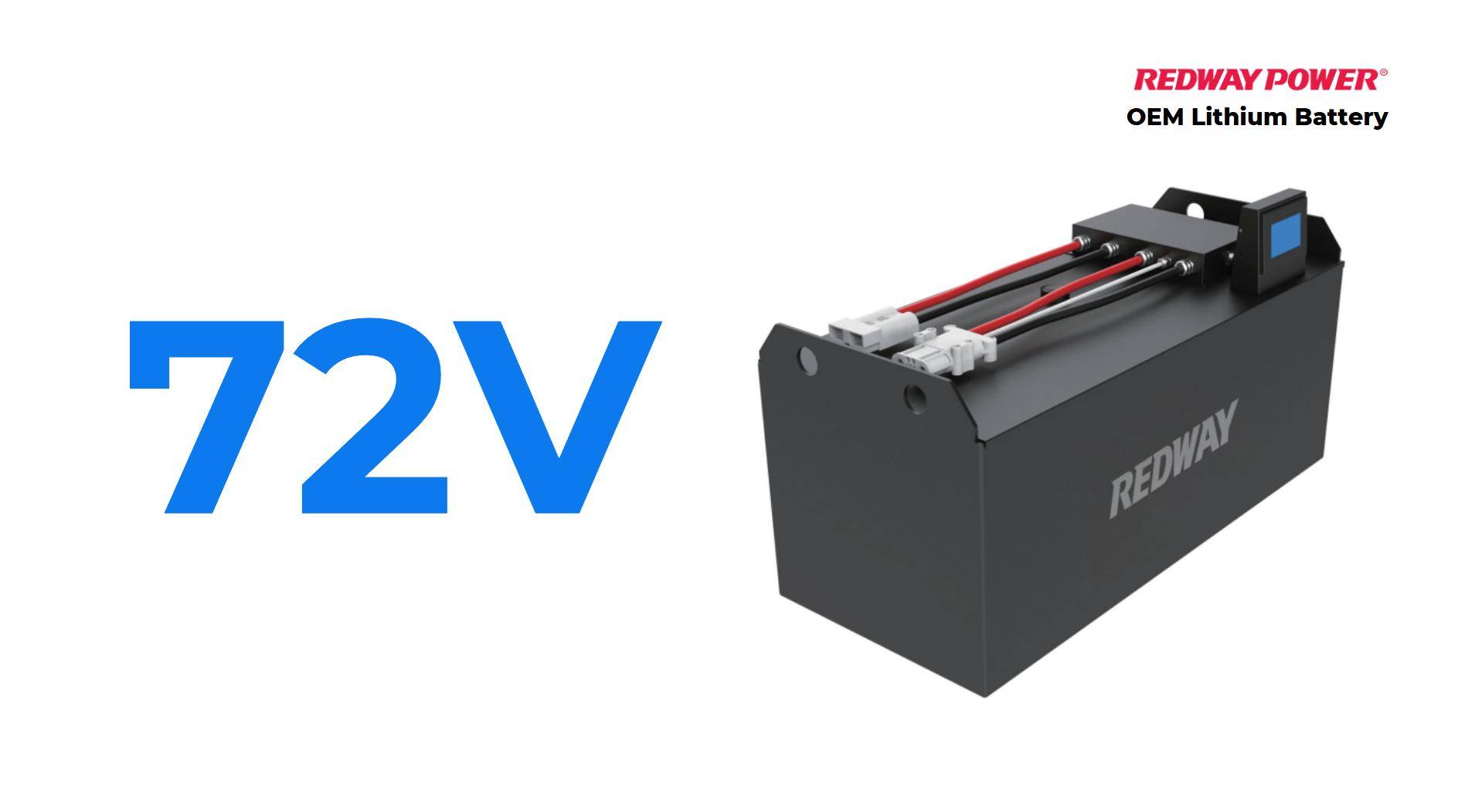
Choosing the right Toyota forklift battery is a strategic decision that directly impacts uptime, safety, and total cost of ownership across your warehouse or plant. By matching Toyota’s voltage, capacity, and compartment requirements with modern LiFePO4 solutions from OEM manufacturers such as Redway Power, you can significantly reduce downtime, maintenance, and energy waste.
How is the current forklift battery landscape impacting Toyota users?
Electric forklifts are taking a growing share of global material‑handling fleets as companies push for lower emissions, quieter operations, and better indoor air quality. Toyota’s electric trucks span 24V, 36V, 48V, and 80V classes, covering warehouse pallet jacks up to heavy‑duty counterbalance models, which makes the battery choice central to overall performance. This growth in electric usage means that battery‑related decisions now sit at the core of productivity planning, not just procurement.
At the same time, e‑commerce, just‑in‑time manufacturing, and 24/7 logistics centers are compressing charging windows and increasing the average number of operating hours per truck. Batteries that were originally sized for single‑shift work are now expected to support two or even three shifts, exposing weaknesses in traditional lead‑acid chemistries. Operators notice more frequent battery changes, shorter runtimes, and higher failure rates as the workload intensifies.
Toyota and leading energy partners have responded by offering lithium‑ion options with higher energy density, faster charging, and extended cycle life. Data from typical Toyota lithium systems shows thousands of cycles with multi‑shift support and opportunity charging, which redefines what a “normal” duty cycle looks like. For fleet managers, this means battery selection must be driven by real data on energy use, not just by replacing like‑for‑like capacities.
What industry pain points make battery selection critical for Toyota forklifts?
One key pain point is runtime and performance stability. Many Toyota electric forklifts operating on older lead‑acid packs experience voltage sag and reduced lifting or travel performance late in the shift. This not only slows operations but also makes it harder to plan work because a truck that starts the shift strong may finish it weak.
Maintenance overhead is another problem. Lead‑acid batteries require watering, cleaning of corrosion, equalization charging, and careful handling to avoid spills. In busy warehouses, these tasks often compete with core operational priorities, leading to inconsistent maintenance and shortened battery life. Over several years, the cost of labor, water, replacement parts, and unplanned downtime can exceed the original battery price.
Energy efficiency and infrastructure constraints add to the challenge. Traditional charging often demands long, dedicated charge windows and specialized, ventilated battery rooms, reducing space flexibility. As energy costs rise and companies pursue sustainability benchmarks, inefficient charging and heat losses in lead‑acid systems become harder to justify compared with modern lithium‑ion solutions.
Why are traditional Toyota lead‑acid batteries often not enough?
Traditional lead‑acid batteries were the default for Toyota forklifts for decades because they were proven and relatively inexpensive upfront. However, their design assumptions—single‑shift operation, long overnight charging, controlled temperatures—do not always match today’s multi‑shift, high‑throughput reality. Frequent partial charging, high ambient heat, and deep discharges accelerate degradation and reduce the practical number of cycles.
Performance issues also become more visible as operations become more data‑driven. Lead‑acid packs show a pronounced drop in voltage as they discharge, which directly affects lift and travel speed. In contrast, modern lithium solutions hold a flatter voltage curve, keeping Toyota trucks closer to full performance for a much larger portion of each shift. This difference matters when every pallet count is monitored.
Finally, while the purchase price of lead‑acid is lower, total cost of ownership is often higher. When you add maintenance time, safety provisions, infrastructure, and more frequent replacements, lead‑acid’s lifetime cost per operating hour can exceed that of lithium. This is especially true for Toyota fleets that operate in multiple shifts or harsh conditions.
What defines the “right” Toyota forklift battery for your application?
For Toyota forklifts, “right” means a battery that simultaneously meets electrical, mechanical, and operational requirements. Electrically, you must match the correct system voltage: 24V is common for smaller warehouse trucks, 36V and 48V for mid‑range counterbalance and reach trucks, and 72–80V for heavy‑duty units. Using the wrong voltage is not an option, so this is the first filter.
Mechanically, the battery must fit the compartment dimensions and meet minimum weight requirements for safe counterbalance. Toyota publishes battery size charts showing length, width, height, and required weight ranges by model. Undershooting the weight can compromise truck stability, while oversizing or misfitting the battery can cause clearance and cabling problems.
Operationally, capacity (Ah) and usable energy (kWh) must align with your real‑world duty cycle. Typical Toyota electric forklifts use batteries in the 500–1,200 Ah range depending on voltage and model. The correct capacity is driven by daily energy needs, number of shifts, and whether you use opportunity charging. This is where lithium solutions from suppliers like Redway Power provide flexibility, since they allow deeper usable depth‑of‑discharge than lead‑acid while maintaining long cycle life.
How do Toyota forklift battery types compare, and where does Redway Power fit in?
Redway Power focuses on LiFePO4 lithium batteries engineered for forklifts, RVs, and rack‑mounted energy storage, with options from 24V to 80V that align with Toyota’s main electric forklift voltage classes. For Toyota users, this means Redway Power can supply or customize packs that meet compartment dimensions, weight requirements, and performance targets for specific models. Their experience as an OEM supplier adds confidence in safety and durability.
Lithium batteries built on LiFePO4 chemistry, such as those from Redway Power, offer long cycle life, high charge efficiency, and stable voltage, making them ideal for multi‑shift Toyota applications. With integrated battery management systems, these packs protect against over‑charge, over‑discharge, and temperature extremes, and can often communicate key data to fleet or energy‑management platforms.
For fleets that still prefer or require lead‑acid in some trucks, Redway Power’s lithium solutions can be deployed selectively where they add the most value—for example, on the highest‑utilization Toyota units—creating a hybrid strategy. This targeted approach allows companies to start realizing lithium benefits without replacing every battery at once.
What are the key differences between traditional Toyota lead‑acid and LiFePO4 solutions like Redway Power?
| Factor | Traditional Toyota lead‑acid battery | Toyota‑compatible LiFePO4 battery (e.g., Redway Power) |
|---|---|---|
| Voltage options | 24V, 36V, 48V, 72V–80V | Same voltage classes, engineered to match Toyota requirements |
| Cycle life | Often limited in high‑intensity use, sensitive to maintenance and charge habits | Long life in the thousands of cycles, tolerates frequent partial charging |
| Usable capacity | Typically 50–60% of rated capacity recommended to protect life | Often 80–95% usable depth‑of‑discharge while maintaining long life |
| Maintenance | Requires watering, terminal cleaning, equalization, and ventilation | Maintenance‑free, sealed pack, minimal daily attention needed |
| Runtime behavior | Noticeable voltage drop as battery discharges, weaker near end of shift | Flat voltage curve, consistent lift and travel performance across shift |
| Charging | Longer charge times, less efficient, limited safe opportunity charging | Faster, more efficient charging; well suited to opportunity charging |
| Weight | Heavier for the same capacity, which can help counterbalance but increases energy use | Lighter for equivalent energy; can be tuned with tray design to meet weight requirements |
| Data & integration | Limited built‑in monitoring | BMS with real‑time data, alarms, and optional integration with telematics |
| Total cost of ownership | Lower upfront price, higher lifetime cost in multi‑shift operations | Higher upfront price, lower cost per operating hour over battery life |
How can you select and implement the right Toyota forklift battery step by step?
-
Define your duty cycle in numbers
List each Toyota forklift model, its average operating hours per day, number of shifts, typical load type, and environment (ambient vs cold storage). Estimate daily energy use in kWh per truck using telematics, charger logs, or meter readings. -
Confirm Toyota’s voltage, size, and weight specifications
Consult Toyota manuals or battery size charts for each model to identify required voltage, amp‑hour ranges, tray dimensions, and minimum weight. Note any constraints such as overhead guard clearance or cable routing that might affect battery design. -
Choose chemistry and capacity strategy
Decide whether each truck will remain on lead‑acid or move to LiFePO4 based on its utilization and criticality. For high‑use Toyota trucks, prioritize LiFePO4 from suppliers like Redway Power to maximize uptime and reduce maintenance. For each truck, select capacity to cover a full shift with a safety margin, or design around opportunity charging if you can plug in during breaks. -
Evaluate suppliers and technical fit
Compare vendors on certification, Toyota experience, customization capabilities, and support. Engage Redway Power or similar OEM‑grade lithium manufacturers to review drawings, confirm tray dimensions and weight, and ensure electrical compatibility (connectors, voltage, communication interfaces). -
Upgrade or validate charging infrastructure
Review existing chargers: verify voltage, current, and whether they support lithium‑appropriate charge profiles. If adopting LiFePO4, install or configure chargers according to the battery manufacturer’s recommendations, positioning them near work areas to make opportunity charging easy. -
Plan installation and training
Schedule battery changeovers during low‑production periods. Ensure safe lifting, cabling, and mechanical fit. Train operators and maintenance teams on lithium safety basics, daily checks, charging habits, and what indicators or alarms to watch on the battery or charger. -
Monitor performance and optimize
Track uptime, number of swaps, energy consumption, and any battery‑related alerts. Use BMS or telematics data to refine capacity choices, charging policies, and rotation strategies. Over time, shift more critical Toyota units to optimized lithium solutions as ROI becomes clear.
Which real‑world Toyota use cases illustrate the impact of the right battery choice?
-
E‑commerce warehouse with Toyota 3‑wheel electrics
Problem: A large e‑commerce center runs Toyota 3‑wheel electric forklifts on 36V or 48V lead‑acid batteries and struggles with mid‑shift power loss and frequent swaps. Traditional approach: Maintain multiple spare lead‑acid batteries per truck, dedicate staff to watering and rotating packs, and accept inconsistent performance.
After selecting correctly sized LiFePO4 batteries from Redway Power that match Toyota’s voltage and compartment specs, each truck runs a full shift with opportunity charging during breaks. Key benefits: Reduced swap time, less maintenance labor, and more stable pick‑rate across all hours. -
Food distribution center with cold‑storage Toyota forklifts
Problem: Toyota forklifts operating in cold rooms see reduced runtime and premature failures with conventional lead‑acid batteries. Traditional approach: Oversize batteries and rotate them between cold and ambient zones, increasing complexity and inventory.
By installing Toyota‑compatible LiFePO4 batteries engineered for better low‑temperature performance, the distribution center achieves longer and more predictable runtime in cold storage. Key benefits: Fewer mid‑shift interruptions, more reliable cold‑chain handling, and less over‑sizing of battery capacity. -
Mixed‑fleet manufacturing site using Toyota counterbalance trucks
Problem: A manufacturer uses Toyota counterbalance forklifts alongside other brands, all on older lead‑acid packs with variable performance, making scheduling and maintenance unpredictable. Traditional approach: Replace batteries ad‑hoc, maintain a wide variety of spares, and accept unexpected breakdowns.
Partnering with Redway Power, the site standardizes on LiFePO4 batteries for its most heavily used Toyota units, aligning tray sizes and capacities to factory requirements. Key benefits: Simplified inventory, lower emergency repair incidence, and clearer cost per operating hour metrics. -
3PL hub operating under strict SLAs with Toyota reach trucks
Problem: A 3PL hub runs Toyota reach trucks on long shifts; lead‑acid degradation causes slowdowns and occasional failures that threaten service‑level agreements. Traditional approach: Over‑staff and keep reserve equipment to hedge against battery‑related downtime.
Upgrading key Toyota trucks to high‑cycle LiFePO4 batteries from Redway Power provides consistent performance and supports fast opportunity charging in brief idle periods. Key benefits: More reliable SLA compliance, reduced need for backup trucks, and measurable reduction in cost per pallet handled.
Where is Toyota forklift energy technology heading, and why act now?
Toyota itself is investing heavily in lithium‑ion energy solutions, offering factory‑approved packs and chargers with multi‑year warranties and high cycle counts. This indicates that the long‑term direction of the market is clearly toward lithium‑based systems that integrate tightly with telematics, smart chargers, and warehouse management platforms.
For fleet operators, waiting too long to modernize battery strategy means continuing to pay a premium in hidden costs: maintenance time, downtime, and inefficient energy use. By adopting Toyota‑compatible LiFePO4 batteries from experienced manufacturers such as Redway Power now, businesses can align with emerging standards, capture operational savings early, and build a more flexible, data‑driven energy infrastructure around their Toyota forklifts.
What are the most common questions about choosing a Toyota forklift battery?
-
What voltage battery do I need for my Toyota forklift?
You must match the exact system voltage specified by Toyota for your model—commonly 24V, 36V, 48V, or 72–80V for larger trucks. This information is available on the truck’s nameplate and in the operator’s manual. -
What capacity (Ah) should I choose for my Toyota forklift battery?
Capacity should be based on your daily energy usage and shift pattern, not just the existing battery label. As a starting point, use Toyota’s recommended Ah range, then adjust based on measured kWh consumption and whether you will use opportunity charging. -
Can I replace a Toyota lead‑acid battery with a LiFePO4 battery from Redway Power?
Yes, in many cases a LiFePO4 pack can replace lead‑acid if it matches voltage, compartment dimensions, connector layout, and minimum weight. Work with Redway Power or your dealer to review technical drawings and confirm compatibility before purchase. -
Do I need new chargers if I switch my Toyota forklifts to lithium batteries?
Often, yes. Many legacy chargers are tuned for lead‑acid and may not support lithium charge profiles. To protect battery life and safety, you should use chargers that are approved by the lithium battery manufacturer and correctly configured for your pack. -
How do I calculate if a lithium upgrade is cost‑effective for my Toyota fleet?
Compare total cost of ownership over the expected life of the battery: include purchase price, maintenance, infrastructure, energy efficiency, replacement frequency, and downtime. High‑use, multi‑shift Toyota trucks usually show a favorable payback for LiFePO4 within a few years. -
Are lithium batteries safe for use in indoor Toyota forklift operations?
LiFePO4 batteries designed for industrial use include robust safety features, including BMS protections and stable chemistry. When installed and charged according to manufacturer guidelines, they are well suited for indoor warehouses and can reduce risks associated with acid and off‑gassing.
Sources
-
What Is a Toyota Forklift Battery Size? | Redway Tech
https://www.redway-tech.com/what-is-a-toyota-forklift-battery-size/ -
What You Need to Know About 48V Forklift Batteries for Toyota Forklifts | Redway Power
https://www.redwaypower.com/what-you-need-to-know-about-48v-forklift-batteries-for-toyota-forklifts/ -
How to Choose the Right 48V Forklift Battery for Toyota Forklifts | Redway Power
https://www.redwaypower.com/how-to-choose-the-right-48v-forklift-battery-for-toyota-forklifts/ -
What Do I Need to Know About Toyota Forklift Batteries? | Redway Tech
https://www.redway-tech.com/what-do-i-need-to-know-about-toyota-forklift-batteries/ -
Batteries for Toyota Forklifts – Battery Size Chart (PDF)
http://toyotabattery.com/Toyota_Forklift_Battery_Sizes.pdf -
Toyota Forklift Batteries – Size Chart and Price List
https://toyotabattery.com -
Toyota Lithium‑ion Batteries – Toyota Material Handling
https://www.toyotaforklift.com/solutions/energy-solutions/lithium-ion-batteries -
Lithium‑ion Forklift Battery Solutions – Toyota Material Handling Europe
https://toyota-forklifts.eu/solutions/energy-solutions/lithium-ion-battery-solutions-from-toyota/ -
Toyota Forklift Battery – GB Batteries
https://gb-batteries.com/toyota-forklift-battery -
About Redway Power – Company and Product Information
https://www.redwaypower.com/