Blog
What You Need to Know About 48V Forklift Batteries for Toyota Forklifts


In today’s fast-moving material handling landscape, choosing the right power system for your Toyota forklift fleet isn’t just a technical decision—it’s a business imperative that drives uptime, lowers costs, and boosts throughput with reliable energy solutions.
How Is the Forklift Battery Industry Evolving and What Are the Pain Points?
The global forklift battery market is expanding rapidly, with the overall market expected to grow from about USD 4.8 billion in 2024 to USD 8.4 billion by 2034 with significant adoption of lithium-ion technology. Lithium-ion batteries currently represent nearly half of the forklift battery segment by type, and 48 V systems make up roughly 38 % of the voltage-based demand due to their balance of performance and cost for medium-duty forklifts. This shift is driven by higher warehouse throughput demands, especially in e-commerce and logistics environments. (Market.us)
Yet, despite rapid growth, operators face persistent pain points. Lead-acid batteries—still dominant in many fleets—require lengthy charge cycles (8–10 hours) and frequent maintenance like watering, which consumes labor and reduces fleet availability. Lithium alternatives suffer from higher upfront cost perceptions, often two to three times lead-acid equivalents for 48 V packs, posing a barrier for cost-sensitive businesses. (Heated Battery)
Furthermore, inefficient battery systems contribute to downtime and inconsistent forklift performance. Traditional batteries experience significant voltage drop during discharge, reducing productivity late in shifts and increasing the pressure to swap or recharge more often. (Polinovel)
How Does Traditional Forklift Battery Technology Fall Short?
- Limited Runtime and Longer Charging: Lead-acid batteries typically need 8–10 hours to fully charge and require long cooldown periods, vastly reducing productive hours in multi-shift operations. (jxforklift.com)
- High Maintenance Burden: Traditional lead-acid cells require watering, equalization, and acid handling procedures, raising labor costs and increasing risks of spills or corrosion. (Toyota MHS)
- Shorter Lifespan and Total Cost: Lead-acid batteries often last 3–5 years (~1,200–1,500 cycles), whereas lithium alternatives can deliver 8–10 years (~3,000+ cycles), putting pressure on replacement budgets. (Redway Tech)
What Is the 48V Lithium Solution and Why Does It Matter?
48 V lithium-ion batteries—especially LiFePO4 chemistry—present a modern alternative that resolves core challenges in forklift operations:
- Faster Charging: Full recharge in 1–2 hours with opportunity charging during break times.
- Longevity: Up to 3,000–5,000 charge cycles, often 2–3× the life of lead-acid systems.
- Maintenance-Free Operation: No watering or ventilation rooms required.
- Stable Power Delivery: Delivers consistent voltage throughout discharge, maintaining performance until near depletion. (Redway Power™ – OEM Lithium Batteries)
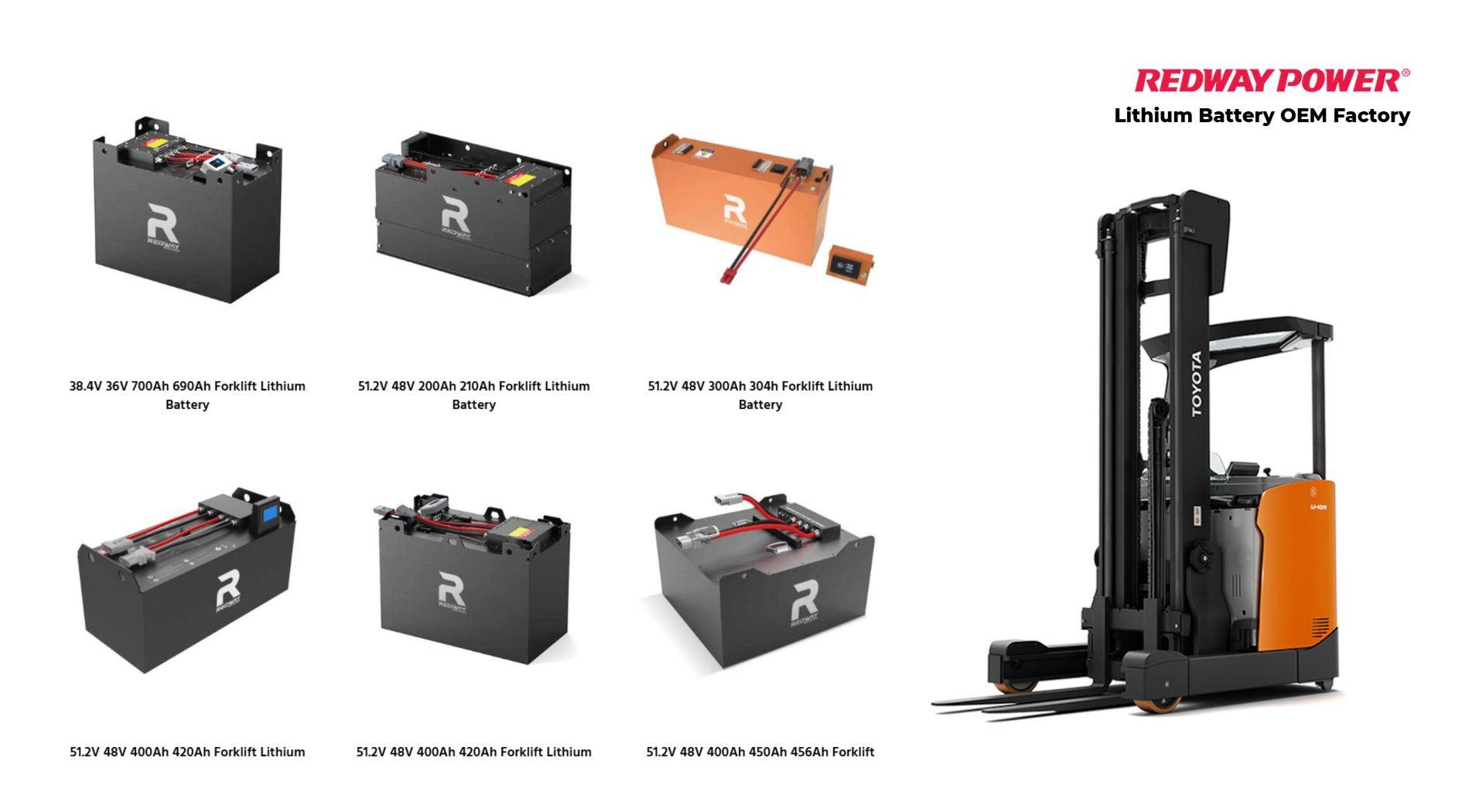
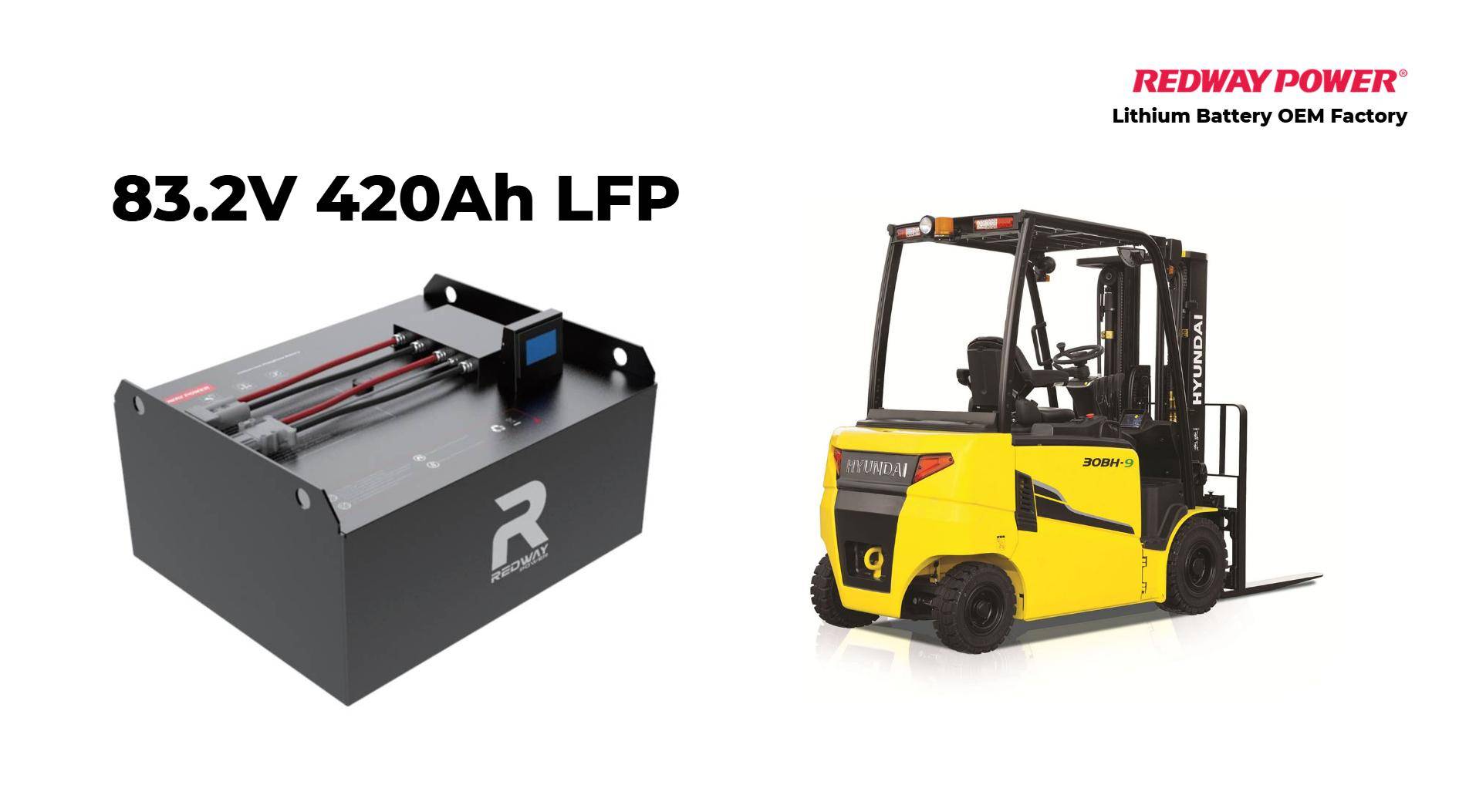
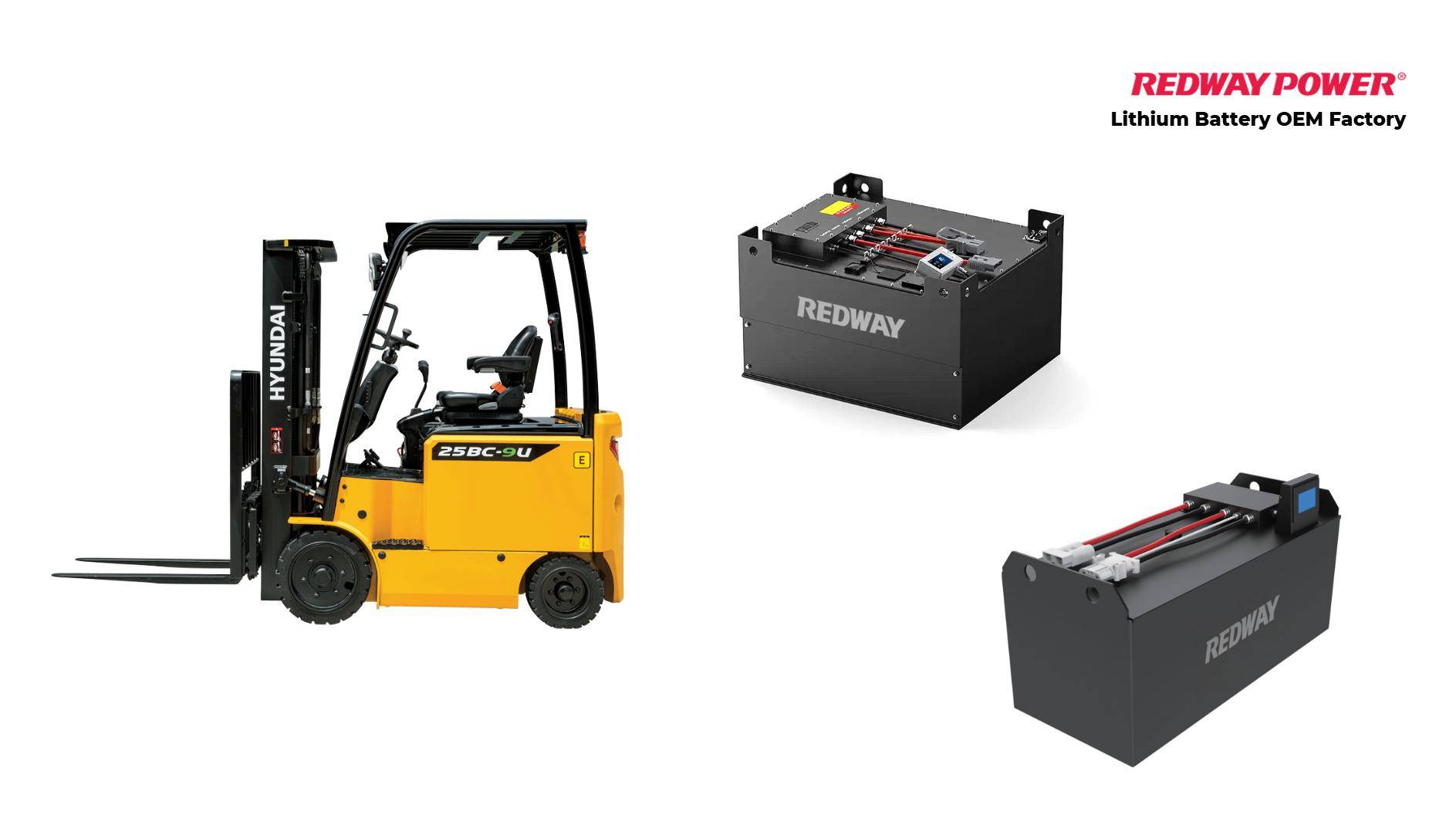
Brands like Redway Power engineer 48 V LiFePO4 forklift batteries tailored for Toyota models, balancing performance with longevity and support infrastructure. Redway Power’s batteries include advanced Battery Management Systems to optimize safety, efficiency, and lifecycle management.
How Do Traditional and Lithium Forklift Batteries Compare?
| Feature | Traditional Lead-Acid | 48 V Lithium (e.g., Redway Power) |
|---|---|---|
| Full Charge Time | ~8–10 hours | ~1–2 hours |
| Lifespan (Cycle Life) | ~1,200–1,500 | ~3,000–5,000 |
| Maintenance | High (watering, cleaning) | Low (sealed, no watering) |
| Opportunity Charging | Not recommended | Supported |
| Performance Stability | Voltage drops significantly | Stable voltage until near depletion |
| Total Cost of Ownership (10 yrs) | Higher due to replacements | Lower with fewer replacements |
What Are the Steps to Deploy a 48V Lithium Forklift Battery?
- Assess Forklift Requirements: Verify Toyota forklift model voltage, compartment size, and Ah needs.
- Select Battery Chemistry and Specs: Choose a 48 V LiFePO4 system aligned to workload.
- Inspect Charging Infrastructure: Confirm charger compatibility or upgrade to lithium-ready chargers.
- Install Battery and BMS Integration: Ensure proper mounting and connect battery management to forklift controls.
- Implement Charging Protocols: Train operators on opportunity charging and usage best practices.
- Monitor Performance: Use BMS data to plan long-term maintenance and maximize uptime.
What Do Typical Operational Scenarios Look Like?
Scenario 1: Multi-Shift Warehouse Throughput
Problem: Lead-acid batteries limit shifts due to long charging windows.
Traditional Approach: Battery swaps during peak hours.
After 48 V Lithium: Opportunity charging maintains continuous operation.
Key Benefits: 30–40 % higher uptime and reduced swap labor.
Scenario 2: Cold Storage Logistics
Problem: Lead-acid capacity degrades in low temperatures.
Traditional Approach: HVAC or insulated charging rooms.
After 48 V Lithium: Stable performance in sub-zero environments.
Key Benefits: Consistent runtime and lower energy costs.
Scenario 3: Heavy-Duty Manufacturing Facility
Problem: High lead-acid maintenance demands reduce productive labor time.
Traditional Approach: Dedicated maintenance staff for battery care.
After 48 V Lithium: Maintenance-free system.
Key Benefits: Labor reallocation to core production tasks.
Scenario 4: Small-Scale Distribution Center
Problem: Budget constraints delay battery upgrades.
Traditional Approach: Stretch lead-acid life with deep cycles (risking damage).
After 48 V Lithium: Phased swap with long-term ROI planning.
Key Benefits: Lower operating cost over 5–10 years.
Why Is Now the Time to Transition to 48V Lithium Batteries?
As the forklift battery market shifts toward electrification and efficiency, lithium solutions offer measurable performance and cost advantages that align with modern operational demands. With e-commerce growth driving higher throughput needs, quicker charging and longer battery life directly translate to competitive advantages. Further, sustainability pressures and energy efficiency goals favor lithium technologies. Redway Power provides industry-ready 48 V forklift batteries that match Toyota forklift requirements while delivering long-term reliability and lower total cost of ownership.
Frequently Asked Questions
What are the main advantages of a 48 V lithium forklift battery?
They include faster charging, longer lifespan, lower maintenance, stable power, and compatibility with opportunity charging.
How long does a typical 48 V lithium forklift battery last?
Depending on usage and conditions, many 48 V LiFePO4 batteries deliver 3,000–5,000 charge cycles.
Can lithium batteries charge during breaks?
Yes—opportunity charging is a key advantage of lithium systems.
Does switching to lithium reduce operating costs?
Over the lifecycle, the reduced downtime, maintenance, and replacement frequency often lower total costs.
Is battery management essential for forklift lithium batteries?
Yes—a BMS ensures safety, performance tracking, and optimized charging across cycles.