Blog
Understanding the Physical and Chemical Properties of Lithium

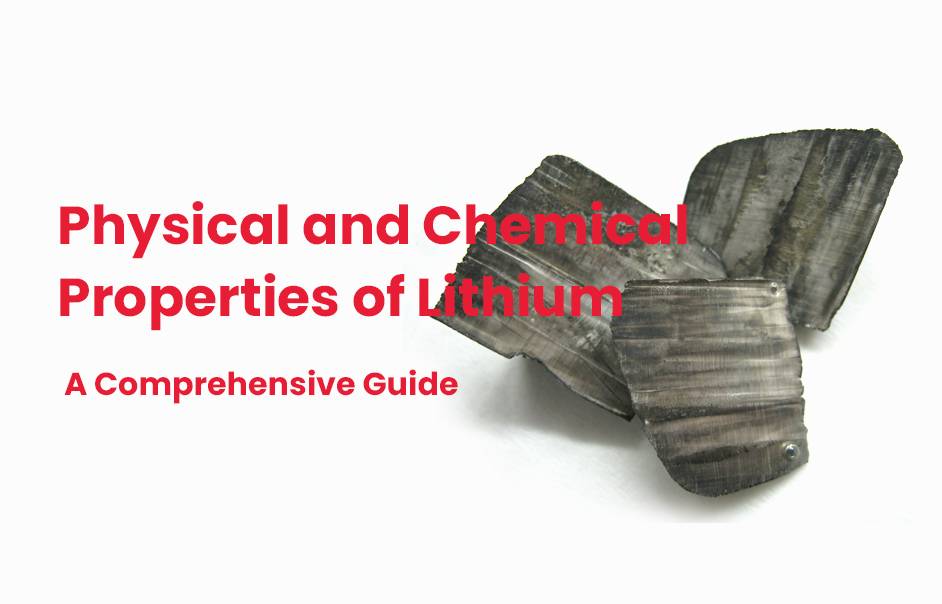
Lithium is a soft, silvery-white alkali metal known for being the lightest solid element and a critical component in modern energy storage solutions. It displays unique physical properties like low density, high electrical and thermal conductivity, and a low melting point, alongside chemically reactive behavior that enables its use in diverse applications such as lithium-ion batteries, alloys, and pharmaceuticals. Grasping its physical and chemical characteristics is essential for optimizing lithium use, particularly in battery technology where Redway Power applies this knowledge for advanced OEM lithium battery manufacturing.
What are the key physical properties of lithium?
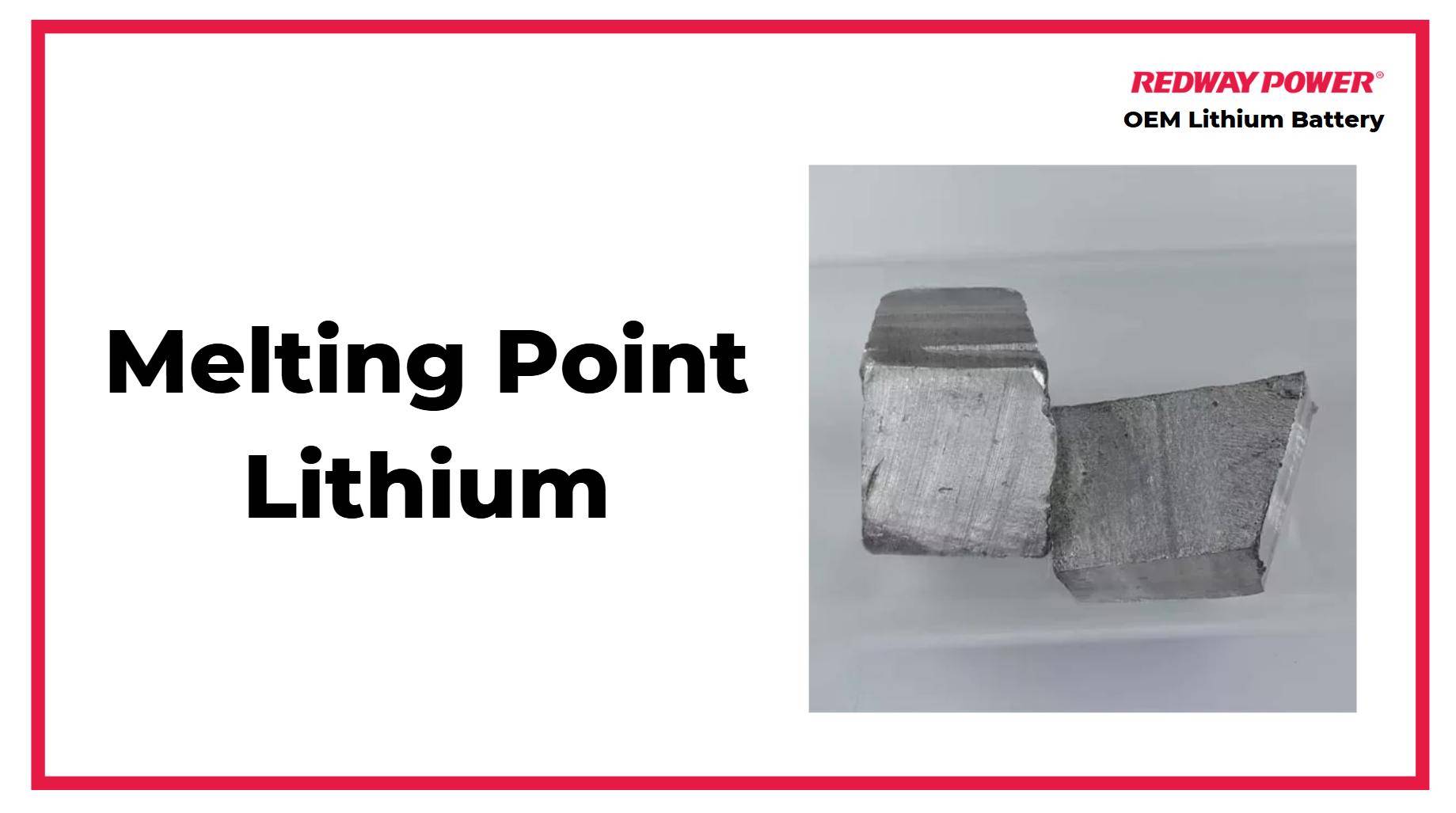
Lithium is the lightest metal with a density of approximately 0.534 g/cm³, allowing it to float on water. It is soft and malleable, with a silvery-white appearance that quickly dulls when exposed to air due to oxidation. Lithium has a melting point of around 180.5°C and a boiling point near 1,590°C. It possesses high thermal and electrical conductivity and crystallizes in a body-centered cubic structure. These physical properties contribute to its suitability in lightweight battery designs and high-efficiency thermal applications.
How does lithium’s atomic structure influence its properties?
Lithium (atomic number 3) has an electron configuration of 1s² 2s¹, featuring a single valence electron that it readily loses to form Li⁺ ions. This confers high reactivity characteristic of alkali metals, making lithium highly electropositive with a low electronegativity of about 0.98. Lithium’s small atomic radius and light atomic mass play a role in its exceptional charge carrier mobility in batteries. It exists naturally as two stable isotopes, ⁶Li and ⁷Li, which are utilized differently in technology and nuclear applications.
Which chemical properties define lithium’s behavior?
Chemically, lithium is highly reactive, especially with water, oxygen, and nitrogen, forming compounds such as lithium hydroxide (LiOH), lithium oxide (Li₂O), and lithium nitride (Li₃N). It uniquely does not form the Li⁻ anion. Lithium readily forms organolithium compounds significant in organic synthesis. Its oxides and hydroxides play vital roles in battery electrolytes and industrial processes. Due to this reactivity, lithium is typically stored in mineral oil to prevent oxidation.
How does lithium’s reactivity affect its industrial applications?
Lithium’s ability to form stable compounds with high energy density makes it invaluable in lithium-ion battery manufacturing, providing lightweight, rechargeable power sources for electronics, electric vehicles, and energy storage. Its compounds improve lubricants, ceramics, glass, and pharmaceuticals. Lithium’s role in alloys enhances strength while reducing weight in aerospace and other industries. Handling its reactivity safely is crucial, necessitating advanced manufacturing techniques like redox controls and MES quality systems used by Redway Power.
What role does lithium play in battery technology?
Lithium’s low atomic mass and high electrochemical potential enable lithium-ion batteries to store more energy per weight compared to other chemistries. Lithium ions move between electrodes during charge and discharge, with lithium’s properties facilitating high cell voltage, rapid charge rates, and longevity. Redway Power applies precise knowledge of lithium’s properties to engineer OEM lithium battery packs with enhanced cycle life, thermal stability, and safety through integrated Battery Management Systems (BMS).
What are lithium’s thermal and electrical conductivities?
Lithium exhibits exceptional thermal conductivity, greater than most metals, facilitating efficient heat dissipation in battery cells. Its electrical conductivity is also high but comparatively lower than metals like copper, balancing conductivity with weight considerations. These characteristics support lithium’s widespread use in cooling applications and as an anode material in batteries. Li’s high specific heat capacity also enables thermal stability under operation.
How do lithium’s isotopes contribute to its utility?
Lithium naturally exists mainly as ⁷Li (92.5%) and ⁶Li (7.5%). The isotope ⁶Li is used in nuclear fusion reactions and neutron capture technologies, while ⁷Li serves as a heat conductor in various applications. Isotope separation impacts lithium’s industrial uses, and understanding these isotopic differences informs both material sourcing and processing essential in battery manufacturing by companies like Redway Power.
Chart: Summary of Lithium Physical and Chemical Properties
| Property | Value/Characteristic | Notes |
|---|---|---|
| Atomic Number | 3 | Lightest alkali metal |
| Atomic Mass | 6.94 g/mol | Includes stable isotopes ⁶Li and ⁷Li |
| Density | 0.534 g/cm³ | Less dense than water |
| Melting Point | 180.5 °C | Low compared to most metals |
| Boiling Point | ~1590 °C | High thermal stability |
| Crystal Structure | Body-centered cubic | Influences metallic properties |
| Electronegativity | 0.98 | Highly electropositive |
| Common Oxidation State | +1 | Forms numerous compounds |
| Reactivity | Reacts with water, O₂, N₂ | Requires careful handling |
| Thermal Conductivity | High | Useful in battery thermal management |
How do Redway Power’s manufacturing processes leverage lithium’s properties?
Redway Power employs advanced Manufacturing Execution Systems (MES) that enable precise control of lithium cell assembly, chemical stability, and material quality. Their OEM lithium battery packs capitalize on lithium’s lightweight and high-energy-density attributes, integrating sophisticated BMS to monitor thermal behavior and prevent hazards. This expertise ensures batteries durable enough for demanding applications such as forklifts, golf carts, marine equipment, and more.
What challenges arise from lithium’s properties in battery production?
Lithium’s high reactivity and sensitivity to moisture and air necessitate strict environmental controls during production, including dry rooms and inert atmosphere processing. Thermal runaway risks are mitigated through robust BMS and quality control afforded by MES technologies. Balancing lithium’s chemical activity with stability is critical to delivering safe, reliable battery products meeting rigorous standards.
Redway Power Expert Views
“Lithium’s unique physical and chemical characteristics define its indispensable role in modern energy storage and high-tech applications,” shares a Redway Power expert. “Our deep understanding of lithium’s behavior enables us to produce OEM battery packs with exceptional energy density, longevity, and safety. MES-driven production precision ensures each pack leverages lithium’s potentials while addressing its challenges, empowering industries worldwide to transition towards sustainable and high-performance power solutions.”
Conclusion
Lithium’s physical properties—lightweight, soft, and conductive—combined with its reactive chemical nature make it a cornerstone in cutting-edge battery technologies and diverse industrial applications. Its low density and high electrochemical potential enable energy-dense storage, while reactivity demands advanced handling and manufacturing processes like those employed by Redway Power. A thorough grasp of lithium’s properties is vital for optimizing its application in energy storage, electronics, and beyond.
FAQs
Q: What is the atomic number and density of lithium?
A: Lithium has an atomic number of 3 and a density of 0.534 g/cm³, making it the lightest metal.
Q: Why is lithium highly reactive?
A: Due to its single valence electron and low electronegativity, lithium readily loses electrons forming +1 ions.
Q: How does lithium’s crystal structure affect its properties?
A: Its body-centered cubic structure influences its softness, conductivity, and low melting point.
Q: What are the common industrial uses of lithium?
A: Lithium is used in batteries, alloys, lubricants, ceramics, and pharmaceuticals.
Q: How does Redway Power enhance lithium battery performance?
A: Through MES-managed manufacturing and integrated BMS, Redway Power delivers safe, reliable, high-energy lithium battery packs across multiple sectors.