Blog
What Are the Key Differences Between LiFePO4 and AGM Batteries?

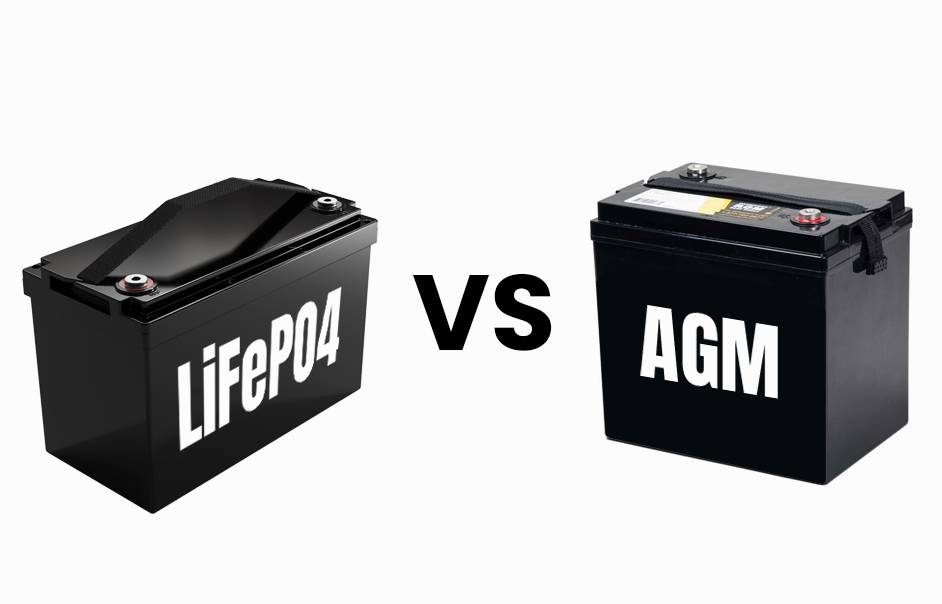
Understanding the key differences between LiFePO4 and AGM batteries is crucial for selecting the right power solution for your needs. While both types serve various applications, LiFePO4 batteries offer advantages such as longer lifespan, faster charging, and better safety features compared to AGM batteries, which are often more affordable upfront.
What Are LiFePO4 and AGM Batteries?
LiFePO4 (Lithium Iron Phosphate) and AGM (Absorbed Glass Mat) batteries are two popular battery technologies.LiFePO4 Batteries:
These are known for their high energy density, longer lifespan, faster charging capabilities, and enhanced safety features. They are increasingly used in applications like electric vehicles and renewable energy storage.AGM Batteries:
AGM batteries utilize absorbed glass mats to hold electrolyte, making them maintenance-free. They are commonly used in backup power systems, recreational vehicles, and other applications where reliability is essential.
| Battery Type | Lifespan (Cycles) | Energy Density (Wh/kg) | Charge Time |
|---|---|---|---|
| LiFePO4 | 2000 – 5000 | 90 – 160 | 1 – 2 hours |
| AGM | 300 – 600 | 50 – 70 | 5 – 10 hours |
How Does the Technology Behind LiFePO4 and AGM Batteries Differ?
LiFePO4 batteries utilize lithium iron phosphate as their cathode material, providing excellent thermal stability, safety, and energy storage capabilities. In contrast, AGM batteries use lead-acid chemistry with glass mats that absorb electrolyte, allowing them to function well in various conditions but with more limitations on performance.
What Are the Charge and Discharge Rates for Both Battery Types?
LiFePO4 batteries charge significantly faster than AGM batteries. A typical fully charged state can be achieved in 1 to 2 hours for LiFePO4, while AGM may take 5 to over 10 hours. Additionally, during discharge, LiFePO4 can deliver high bursts of power efficiently, while AGM has slower discharge rates.
| Battery Type | Charge Rate | Discharge Rate |
|---|---|---|
| LiFePO4 | Fast (1-2 hrs) | High (up to 1C) |
| AGM | Slow (5+ hrs) | Moderate (0.5C) |
How Do LiFePO4 and AGM Batteries Compare in Terms of Cycle Life?
LiFePO4 batteries excel with a cycle life ranging from 2000 to 5000 cycles, making them ideal for frequent charge/discharge scenarios. In contrast, AGM batteries typically last around 300 to 600 cycles, which limits their use in applications requiring extensive cycling.
What Is the Depth of Discharge (DoD) for LiFePO4 Compared to AGM Batteries?
The Depth of Discharge (DoD) indicates how much energy can be safely used before recharging. LiFePO4 can handle a DoD of 80% or more, allowing deeper discharges without affecting lifespan. Conversely, it is recommended not to discharge AGM batteries below 50% to maintain their longevity.
How Do LiFePO4 and AGM Batteries Compare in Terms of Efficiency?
LiFePO4 batteries boast a higher efficiency rate, with charge/discharge efficiencies around 95%, compared to 80% for AGM batteries. This means that more energy is retained as usable power rather than wasted as heat.
What Are the Weight and Size Differences Between LiFePO4 and AGM Batteries?
LiFePO4 batteries are generally lighter and more compact due to their higher energy density. This makes them suitable for applications where space is limited or weight is a concern, such as electric vehicles or portable devices.
| Battery Type | Weight (kg) per kWh | Size Comparison |
|---|---|---|
| LiFePO4 | Lighter | More compact |
| AGM | Heavier | Bulkier |
How Safe Are LiFePO4 Batteries Compared to AGM Batteries?
LiFePO4 batteries are considered safer than AGM due to their stability under high temperatures and lower risk of thermal runaway or explosion. In contrast, while AGM is safer than traditional lead-acid designs, it still carries some risks associated with lead-acid chemistry.
What Are the Typical Applications for Each Battery Type?
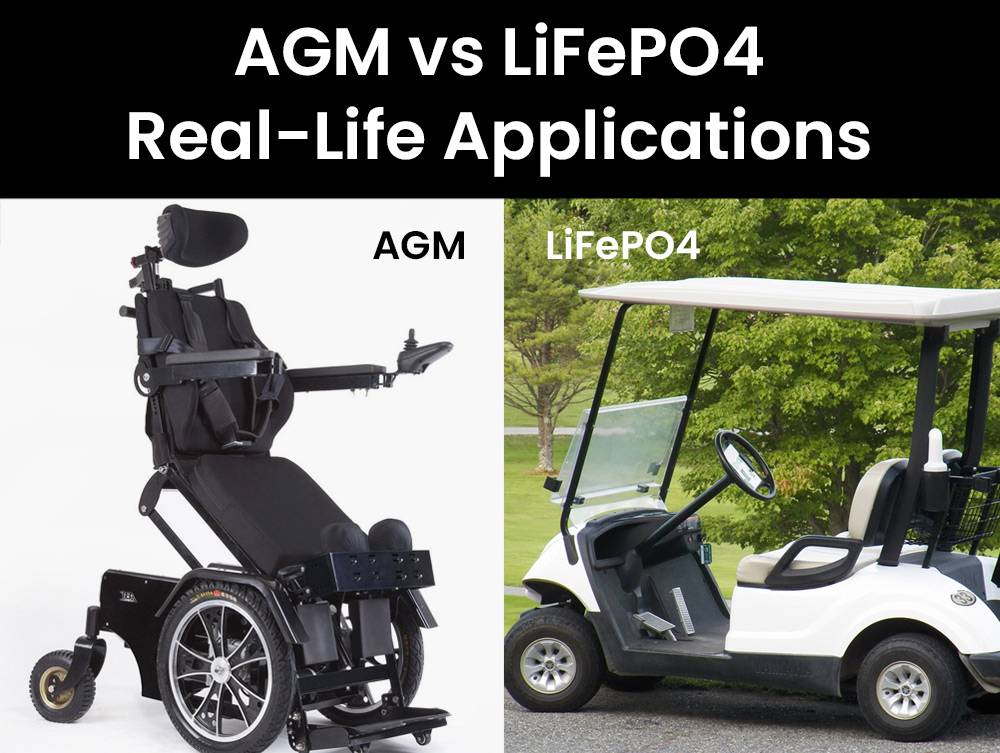
LiFePO4 batteries find extensive use in:
- Electric vehicles
- Renewable energy systems (solar/wind)
- Marine applications
AGM batteries excel in:
- Backup power systems
- Recreational vehicles (RVs)
- Medical equipment
Understanding these applications helps users select the appropriate battery based on their specific needs.
How Do Prices Compare Between LiFePO4 and AGM Batteries?
LiFePO4 batteries typically have a higher upfront cost than AGM options—often three times more expensive. However, considering their longer lifespan and superior performance, they can be more cost-effective over time.
Are There Alternatives to Standard Battery Models?
For those seeking alternatives or replacements for standard battery models like AGMs or traditional lead-acid types, Redway Power offers excellent solutions with its range of lithium-ion products that provide enhanced performance across various applications.
Tips for Battery Wholesale Buyers
When considering OEM orders or wholesale purchases of battery systems, partnering with a reliable manufacturer like Redway Power is essential. With over 13 years of experience in lithium battery production, they ensure quality products that meet diverse needs. Buyers should:
- Verify product specifications before placing orders.
- Understand minimum order quantities.
- Request samples for quality assessment.
Choosing a reputable supplier guarantees consistent performance across your battery solutions.
Redway Power Expert Views
“Investing in lithium technology like LiFePO4 not only enhances performance but also aligns with sustainability goals,” states an expert from Redway Power. “As industries shift towards cleaner energy solutions, understanding these battery technologies will become increasingly vital.”
FAQs
How to maintain batteries when parked for extended periods?
Should RV batteries be in insulated or ventilated boxes?
What challenges do extreme temperatures pose for RV batteries?
How do FLA and LFP batteries handle high temperatures differently?
What are the effects of high heat on LiFePo batteries?
How to choose between Lifeline AGMs and LiFePo batteries?
More FAQs:
Is LiFePO4 better than AGM?
LiFePO4 (lithium iron phosphate) batteries offer several advantages over AGM (absorbent glass mat) batteries, including higher energy density, longer cycle life, faster charging, lighter weight, and better performance in a wider range of temperatures. However, the choice between LiFePO4 and AGM batteries depends on specific application requirements and budget considerations.
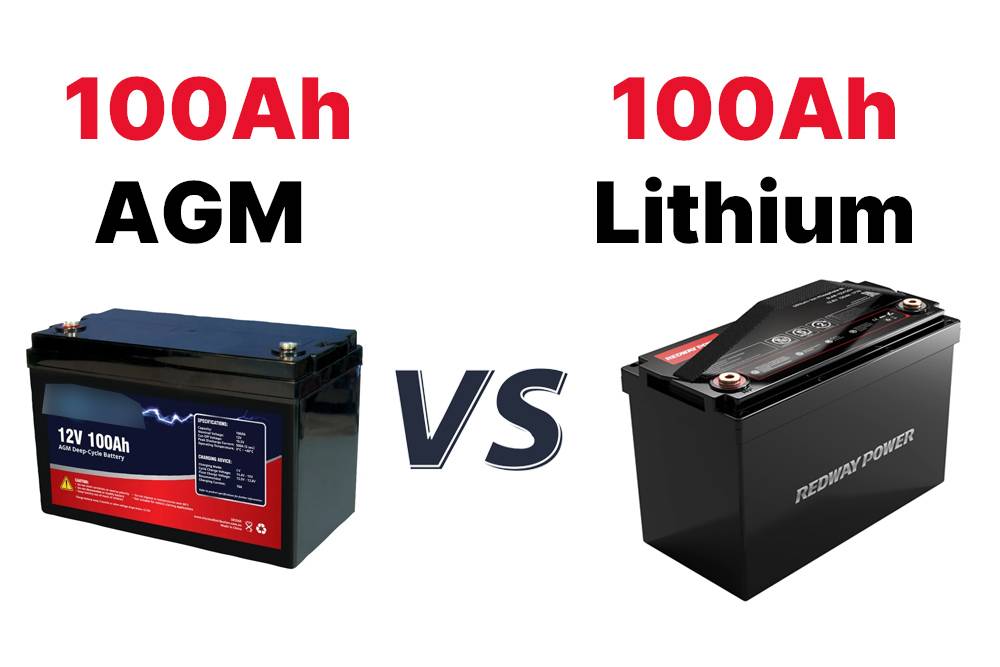
What is 100Ah lithium equivalent in AGM?
The equivalent capacity of a 100Ah lithium battery in AGM would depend on several factors, including the depth of discharge (DOD) and the specific energy density of the AGM battery. Generally, to achieve a similar capacity, you might need a larger Ah rating for an AGM battery compared to a lithium battery due to the differences in energy density and depth of discharge capabilities.
Is lithium worth it over AGM?
Whether lithium batteries are worth it over AGM depends on various factors, including the application’s requirements, budget considerations, and desired performance characteristics. While lithium batteries typically offer advantages such as higher energy density, longer cycle life, and faster charging, they also tend to have a higher upfront cost compared to AGM batteries.
What is the main disadvantage of an AGM battery?
One of the main disadvantages of AGM (absorbent glass mat) batteries is their relatively shorter cycle life compared to lithium batteries. AGM batteries also tend to be heavier and have slower charging rates than lithium batteries.
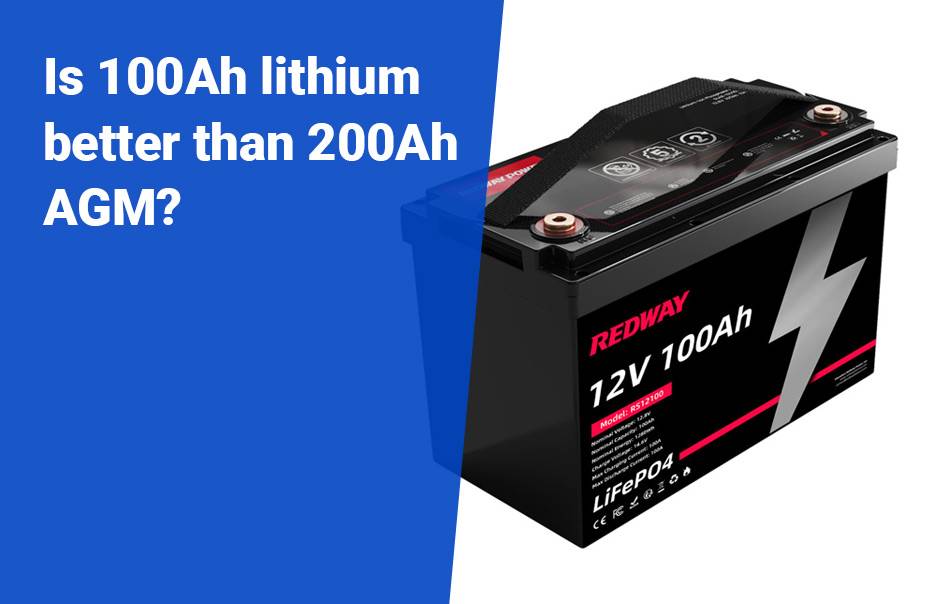
Is 100Ah lithium better than 200Ah AGM?
In terms of energy density, cycle life, and weight, a 100Ah lithium battery may outperform a 200Ah AGM battery. However, the choice between the two depends on factors such as specific application requirements, space limitations, and budget considerations.
Can I swap out my AGM batteries with lithium?
In many cases, AGM batteries can be swapped out with lithium batteries, but it’s essential to ensure compatibility with the charging system and other components of the application. Additionally, some modifications may be necessary to accommodate the different charging characteristics and voltage requirements of lithium batteries.
Do AGM batteries last longer than lithium?
Generally, lithium batteries have a longer cycle life compared to AGM batteries. Lithium batteries can endure thousands of charge-discharge cycles with minimal degradation, while AGM batteries typically have a more limited cycle life.
Is AGM better than lithium in cold weather?
AGM batteries tend to perform better than lithium batteries in cold weather conditions, as they are less affected by temperature extremes. Lithium batteries may experience reduced performance and capacity in very cold temperatures, whereas AGM batteries can still operate effectively in such conditions.
Which is better AGM or lithium?
The choice between AGM and lithium batteries depends on specific application requirements, performance preferences, and budget considerations. Generally, lithium batteries offer advantages such as higher energy density, longer cycle life, and faster charging, while AGM batteries may be more cost-effective upfront and perform better in extreme temperature conditions.
What is the environmental impact and safety of LiFePO4 batteries compared to AGM batteries?
LiFePO4 batteries have a lower environmental impact and are generally safer than AGM batteries. They contain less toxic materials, are more stable under high temperatures, and have a lower risk of thermal runaway. AGM batteries contain lead and acid, which are hazardous and require careful disposal.
How does the efficiency of LiFePO4 batteries compare to AGM batteries?
LiFePO4 batteries are more efficient than AGM batteries. They offer higher charge and discharge efficiency (around 95%) compared to AGM’s 80-85%. This means LiFePO4 batteries convert more energy into usable power and waste less energy as heat.
What is the Depth of Discharge (DoD) for LiFePO4 batteries compared to AGM batteries?
LiFePO4 batteries can typically handle a Depth of Discharge (DoD) of up to 80-90%, allowing for deeper and more frequent discharges without affecting lifespan. AGM batteries generally have a lower DoD of about 50%, with reduced capacity and lifespan if discharged more deeply.