Blog
How to Choose the Right 24V Battery for Your Hyundai Forklift


Global warehouse automation is accelerating, and selecting the right 24V battery for your Hyundai forklift is now a key lever to cut downtime, labor waste, and energy cost while protecting your equipment investment. A data‑driven choice, especially shifting from lead‑acid to modern lithium solutions like Redway Power, can extend runtime, stabilize performance, and improve total cost of ownership across your fleet.bslbatt+4
How is the current forklift battery landscape creating new challenges?
According to industry estimates, material handling and logistics account for up to 25–30% of total warehouse operating costs, with energy and equipment downtime as major contributors. Lithium forklift batteries commonly deliver over 2,000–3,500 cycles, far beyond typical lead‑acid batteries, allowing fleets to reduce replacement frequency and unplanned stops. At the same time, the growth of multi‑shift operations and e‑commerce fulfillment centers is pushing demand for batteries that support fast or opportunity charging without sacrificing lifespan.redwaypower+3
Traditional 24V lead‑acid batteries still dominate many Hyundai electric forklifts, but they require routine watering, equalization charging, and strict charge schedules to avoid premature aging. Studies of industrial batteries show self‑discharge can reach several percent per month, and heavy cycling shortens service life when maintenance is inconsistent. As a result, managers face higher labor costs, more frequent battery swaps, and performance drop‑offs during peak hours.lithiumforkliftbattery+4
Meanwhile, lithium iron phosphate (LiFePO4) forklift batteries are engineered to provide stable voltage, deep cycle capability, and rapid charging, which align better with today’s high‑throughput warehouses. Many 24V LiFePO4 packs are designed with integrated battery management systems (BMS), temperature protection, and CAN/RS485 communication to support smart fleets. For Hyundai owners, this shift means that choosing the right 24V battery is not just a technical decision but a strategic move to remain competitive.oem-lithium-batteries+3
What are the main pain points Hyundai forklift operators face with batteries?
Hyundai electric forklifts in busy warehouses often operate across multiple shifts, but conventional lead‑acid batteries struggle to support long runtime without full charging and cooling windows. Operators may notice voltage sag, reduced lifting capacity, and slower travel speeds near the end of each shift, which directly impacts throughput. In addition, frequent battery swaps using spare lead‑acid packs raise safety concerns and require extra floor space for charging rooms.forkbatt+3
Maintenance is another critical pain point, as flooded lead‑acid batteries require regular watering, cleaning of corrosion, and equalization charges to maintain capacity. If these routines are skipped or rushed, sulfation and plate damage occur, leading to shortened battery life and unplanned replacements. For fleets with several Hyundai 24V units, these hidden maintenance costs accumulate into significant operational expense.cqomcc+3
Energy inefficiency further erodes margins because lead‑acid charging typically wastes more energy as heat and may demand longer charge times. By contrast, modern LiFePO4 24V packs often support higher charge efficiency and opportunity charging, enabling quick top‑ups during breaks. This difference becomes especially important where electricity tariffs are rising and businesses are under pressure to reduce their carbon footprint.bslbatt+4
Why are traditional 24V lead‑acid solutions often insufficient for Hyundai forklifts?
Lead‑acid batteries were designed in an era of predictable single‑shift operations, where long overnight charging and cooling windows were available. In present‑day Hyundai forklift applications, batteries are cycled more frequently and expected to deliver consistent power from the first to the last hour of every shift. As they discharge, lead‑acid packs typically show more pronounced voltage drop, which reduces lifting performance and travel speed.lithiumforkliftbattery+4
Another limitation lies in lifecycle economics. Many industrial lead‑acid batteries provide around 1,200–1,500 cycles under ideal maintenance, whereas LiFePO4 solutions commonly exceed 2,000–3,000 cycles while sustaining deeper discharges. When you factor in maintenance labor, water, ventilation, and safety infrastructure, the total cost of ownership of lead‑acid often becomes higher than initially expected.redwaypower+4
Safety and environmental aspects also play a role. Lead‑acid chemistry involves acid, off‑gassing, and potential spills, demanding specialized charging rooms and ventilation. Lithium forklift batteries, particularly LiFePO4, are designed to be maintenance‑free, sealed, and more environmentally friendly with higher usable energy at the same nominal capacity, which better suits modern sustainability targets.oem-lithium-batteries+3
What solution does a modern 24V lithium battery like Redway Power offer for Hyundai forklifts?
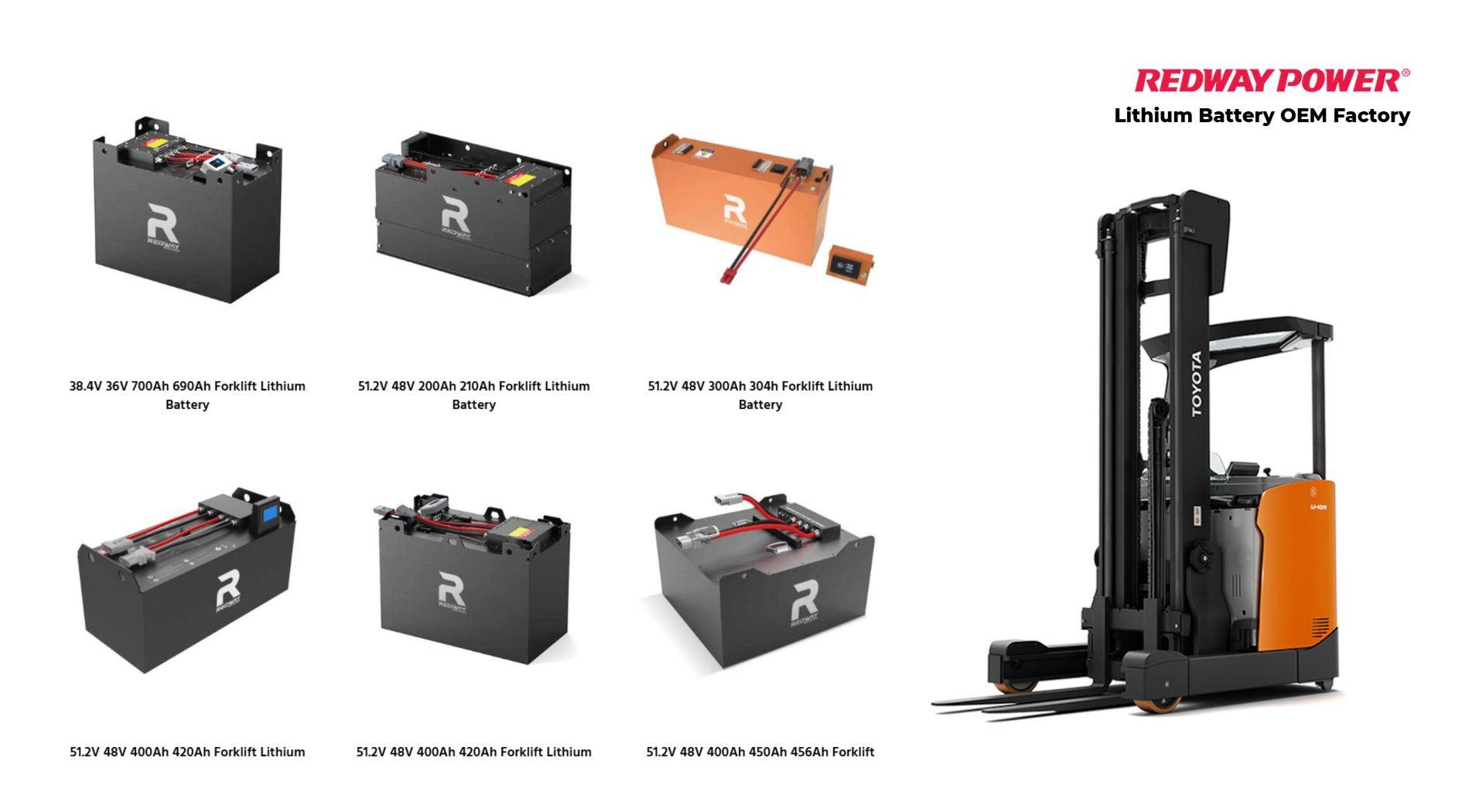
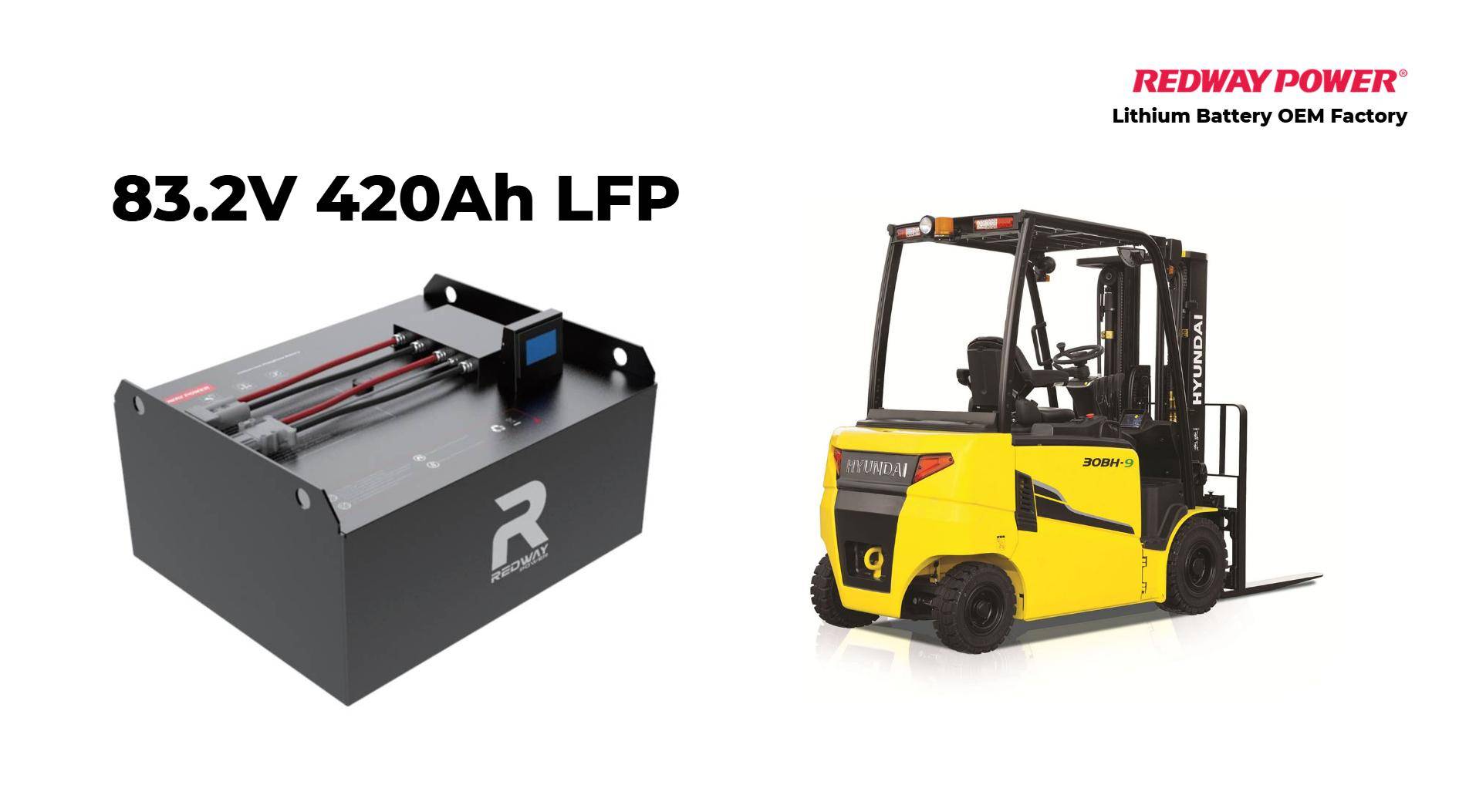
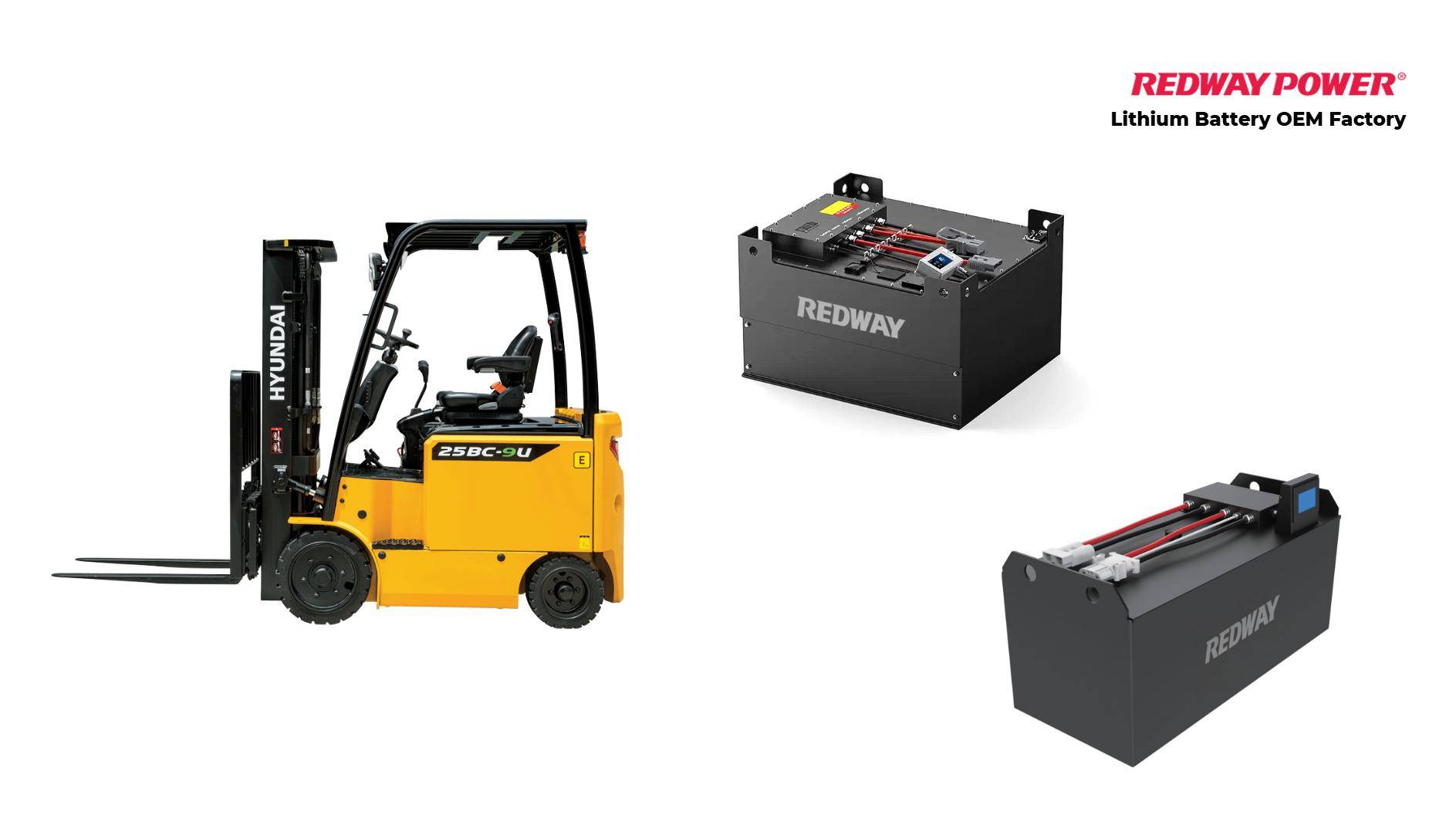
Redway Power focuses on LiFePO4 lithium batteries engineered as direct replacements for traditional forklift lead‑acid packs, including 24V systems commonly used in Hyundai electric models. Their batteries are designed to deliver stable voltage, high cycle life, and strong power output across a wide state‑of‑charge window, ensuring consistent lifting performance. For Hyundai users, this translates into predictable operation and fewer mid‑shift slowdowns.redwaypower+3
With over 13 years of experience and ISO 9001:2015 certification, Redway Power manufactures LiFePO4 solutions for forklifts, RVs, and rack‑mounted energy storage, supported by MES‑controlled production lines and a team of hundreds of technicians. Their forklift lithium batteries cover a broad voltage range from 24V to 80V, allowing fleets to standardize on a single supplier across different truck classes. The company also emphasizes custom OEM solutions, which is valuable for Hyundai owners requiring specific dimensions, CAN protocols, or capacity targets.redwaypower+1
For Hyundai forklifts, a 24V Redway Power pack typically combines deep‑cycle LiFePO4 cells, an intelligent BMS, robust casing, and communication interfaces suitable for industrial trucks. These systems are designed to support fast or opportunity charging while maintaining long cycle life, which is ideal for multi‑shift material handling environments. Redway Power’s after‑sales and OEM support further helps integrators and fleet owners manage installation, commissioning, and long‑term service.bslbatt+3
How does a Redway‑style lithium solution compare to traditional lead‑acid batteries?
| Factor | Traditional 24V lead‑acid for Hyundai forklifts | 24V LiFePO4 solution such as Redway Power |
|---|---|---|
| Cycle life | Often around 1,200–1,500 cycles under ideal maintenance | Commonly 2,000–3,500+ cycles, deeper usable DoD with less degradation bslbatt+3 |
| Maintenance | Requires watering, cleaning, equalization, ventilation | Maintenance‑free, sealed design, no watering needed bslbatt+2 |
| Charging time | Long full charge, limited opportunity charging | Fast and opportunity charging supported, high charge efficiency bslbatt+3 |
| Runtime stability | Noticeable voltage sag toward end of shift | Flatter discharge curve, stable voltage and performance bslbatt+3 |
| Safety & environment | Acid spills, off‑gassing, heavier environmental burden | Cleaner chemistry, no acid, lower ventilation needs bslbatt+3 |
| Total cost of ownership | Lower upfront cost but higher lifetime O&M and replacement | Higher upfront cost, lower lifetime cost due to long life and lower O&M bslbatt+4 |
| Integration & monitoring | Limited smart features | Integrated BMS, CAN/RS485 communications, better data visibility bslbatt+3 |
Which steps should you follow to choose and deploy the right 24V battery for your Hyundai forklift?
-
Define your operating profile
Quantify daily operating hours, average and peak loads, number of shifts, and ambient temperature for each Hyundai forklift. Use historical data from telematics or logs to estimate daily energy consumption in kWh and required reserve margin.forkbatt+2 -
Verify voltage, compartment, and compatibility
Confirm that your Hyundai model is designed for a 24V system and measure the battery compartment dimensions, cable routing, and connector type. Check the required capacity (Ah), weight range, and counterbalance considerations recommended by Hyundai or current battery suppliers.brcpower+3 -
Select the optimal chemistry and capacity
For intensive multi‑shift or cold‑storage operations, prioritize LiFePO4 24V batteries with high cycle life, wide operating temperature range, and strong discharge performance. Choose capacity that covers a full shift with a buffer, or design around opportunity charging so that shorter top‑ups keep state‑of‑charge within an efficient window.lithiumforkliftbattery+4 -
Choose a proven supplier such as Redway Power
Evaluate manufacturers on certification, track record, engineering support, and customization options. Redway Power offers OEM‑grade LiFePO4 forklift batteries, including 24V units engineered to replace lead‑acid packs, and can tailor capacity, dimensions, and communication interfaces for Hyundai applications.redwaypower+3 -
Plan charging strategy and infrastructure
Design charging schedules based on shift patterns, selecting fast chargers and opportunity charging points where needed. Make sure chargers are compatible with your chosen 24V lithium battery, and configure them according to supplier guidelines to maximize cycle life and safety.redwaypower+3 -
Implement installation, training, and monitoring
Coordinate installation with the supplier or a qualified integrator, then train operators on best practices for lithium forklift batteries. Use BMS data or telematics to track usage, charge cycles, and temperatures, enabling proactive maintenance and data‑driven optimization of your Hyundai fleet.oem-lithium-batteries+4
What are four typical Hyundai forklift use cases that benefit from a 24V Redway Power battery?
-
E‑commerce fulfillment center (multi‑shift picking)
Problem: A Hyundai electric pallet truck fleet experiences frequent lead‑acid battery swaps during peak hours, causing 15–20 minutes of downtime per swap and inconsistent performance late in the shift. Traditional approach: Maintain multiple spare lead‑acid packs per truck, with a dedicated charging room and staff responsible for watering and equalization.forkbatt+3
After using a 24V LiFePO4 battery from Redway Power, each truck can operate an entire shift with opportunity charging during breaks, with no battery swaps. Key benefit: Reduced downtime, smaller battery inventory, simplified maintenance, and more stable lifting and travel performance across the working day.bslbatt+3 -
Cold‑storage warehouse
Problem: Hyundai forklifts operating in low‑temperature rooms see reduced lead‑acid capacity and more frequent charging, limiting effective runtime. Traditional approach: Oversize lead‑acid batteries and rotate them between warm and cold zones, accepting shorter life and higher energy waste.lithiumforkliftbattery+3
By installing 24V LiFePO4 batteries from Redway Power, engineered for wide temperature ranges and stable discharge, runtime becomes more predictable even in cold conditions. Key benefit: Better utilization of each truck, fewer interruptions for charging, and improved scheduling of cold‑storage handling tasks.redwaypower+3 -
Manufacturing plant with mixed Hyundai fleet
Problem: A plant runs several Hyundai 24V forklifts alongside other brands, all on aging lead‑acid packs with varying performance and maintenance histories. Traditional approach: Manage different battery models and service schedules, with frequent unplanned replacements and difficulty in standardizing fleet energy costs.cqomcc+3
By standardizing on 24V LiFePO4 solutions from Redway Power across Hyundai and other compatible trucks, the plant simplifies inventory, monitoring, and service contracts. Key benefit: Unified energy platform, clearer cost tracking, smoother integration with production planning, and improved uptime.redwaypower+3 -
Third‑party logistics (3PL) hub under tight SLAs
Problem: A 3PL facility operating Hyundai pallet jacks faces strict service‑level agreements and penalties for late order processing, but lead‑acid batteries cause unplanned downtime and end‑of‑shift slowdowns. Traditional approach: Add extra trucks and staff to compensate for unreliable battery performance, increasing fixed costs.oem-lithium-batteries+3
After switching to high‑cycle 24V lithium forklift batteries similar to Redway Power’s LiFePO4 packs, the hub maintains consistent performance across long shifts, enabling more accurate throughput planning. Key benefit: Higher reliability, better SLA compliance, and lower cost per handled pallet through reduced labor and equipment redundancy.bslbatt+3
Where is the forklift battery market heading, and why act now?
Material handling is moving decisively toward electrification, automation, and data‑driven operations, which favors batteries that integrate tightly with telematics and energy management platforms. Lithium forklift batteries with BMS, communication interfaces, and high cycle life are expected to become the default choice in new fleets, while retrofit projects will continue to replace lead‑acid in existing Hyundai trucks.forkbatt+4
Waiting to upgrade carries opportunity cost: every year on older 24V lead‑acid packs locks in higher maintenance, more frequent replacements, and inconsistent performance. By selecting a robust 24V LiFePO4 solution from an experienced manufacturer such as Redway Power, Hyundai forklift owners can align with future‑ready standards, reduce total cost of ownership, and support sustainability goals in their operations.redwaypower+3
What are the most common questions about choosing a 24V battery for a Hyundai forklift?
-
What capacity (Ah) 24V battery do I need for my Hyundai forklift?
You should size capacity based on daily energy consumption, number of shifts, and whether you will use opportunity charging. As a rough rule, ensure the battery can cover at least one full shift with a 20–30% reserve, then refine the value using data from your current usage.redwaypower+2 -
Why should I consider LiFePO4 instead of lead‑acid for a Hyundai forklift?
LiFePO4 offers longer cycle life, faster charging, maintenance‑free operation, and more stable voltage than typical industrial lead‑acid batteries. Over the battery’s lifetime, this often results in lower total cost of ownership and higher uptime, especially in multi‑shift environments.lithiumforkliftbattery+3 -
Can a 24V lithium battery like Redway Power directly replace my existing 24V lead‑acid pack?
Many 24V LiFePO4 forklift batteries are designed as drop‑in or near drop‑in replacements, matching voltage and form factor for common models. However, you must confirm compartment dimensions, weight requirements, connectors, and charger compatibility, ideally with the support of a supplier such as Redway Power or your equipment dealer.brcpower+4 -
Does switching to a 24V lithium battery require a new charger?
In some cases, existing chargers are not optimized for LiFePO4 profiles and may need replacement or reconfiguration. To protect cycle life and safety, always follow the lithium battery manufacturer’s charger specifications, and consider high‑efficiency chargers that support fast or opportunity charging.oem-lithium-batteries+3 -
How do I evaluate suppliers for Hyundai forklift batteries?
Compare suppliers on certification, experience in industrial LiFePO4 solutions, OEM customization ability, and after‑sales support. Companies like Redway Power with ISO‑certified factories, MES‑controlled production, and established forklift battery lines provide stronger assurance for long‑term fleet operations.bslbatt+3 -
Are 24V lithium batteries safe for warehouse operations?
LiFePO4 chemistry is known for its thermal stability and safety profile, and industrial forklift batteries include BMS protections against over‑charge, over‑discharge, and over‑temperature. Proper installation, appropriate chargers, and adherence to manufacturer guidelines are essential to maintain safety in daily use.lithiumforkliftbattery+3
Sources
-
24V Lithium Battery for forklift – BSLBATT
https://bslbatt.com/24v-lithium-battery-for-forklift/[bslbatt] -
How to Choose the Right 24V Battery for Your Hyundai Forklift – Redway Power
https://www.redwaypower.com/how-to-choose-the-right-24v-battery-for-your-hyundai-forklift/[redwaypower] -
Industrial lithium Battery for Electric Forklift – BSLBATT
https://www.lithiumforkliftbattery.com/crown-electric-forklift.html[lithiumforkliftbattery] -
OEM Hyundai Forklift Battery – RoyPow
https://www.roypow.com/hyundai-forklift-battery/[roypow] -
Forklift battery production plant VCD450 Hyundai forklift HB15E – BRCPower
https://en.brcpower.com/product/2472.html[en.brcpower] -
What Are the Key Considerations for Hyundai Forklift Batteries – OEM Lithium Batteries
https://www.oem-lithium-batteries.com/what-are-the-key-considerations-for-hyundai-forklift-batteries/[oem-lithium-batteries] -
Hyundai Forklift Battery – BNTBattery
https://www.bntbattery.com/hyundai-forklift-battery/[bntbattery] -
How to Choose the Right Forklift Battery – Forkbatt
https://www.forkbatt.com/news/detail/231.html[forkbatt]