Blog
How to Choose the Right 36V Forklift Battery for Your Hyundai Model

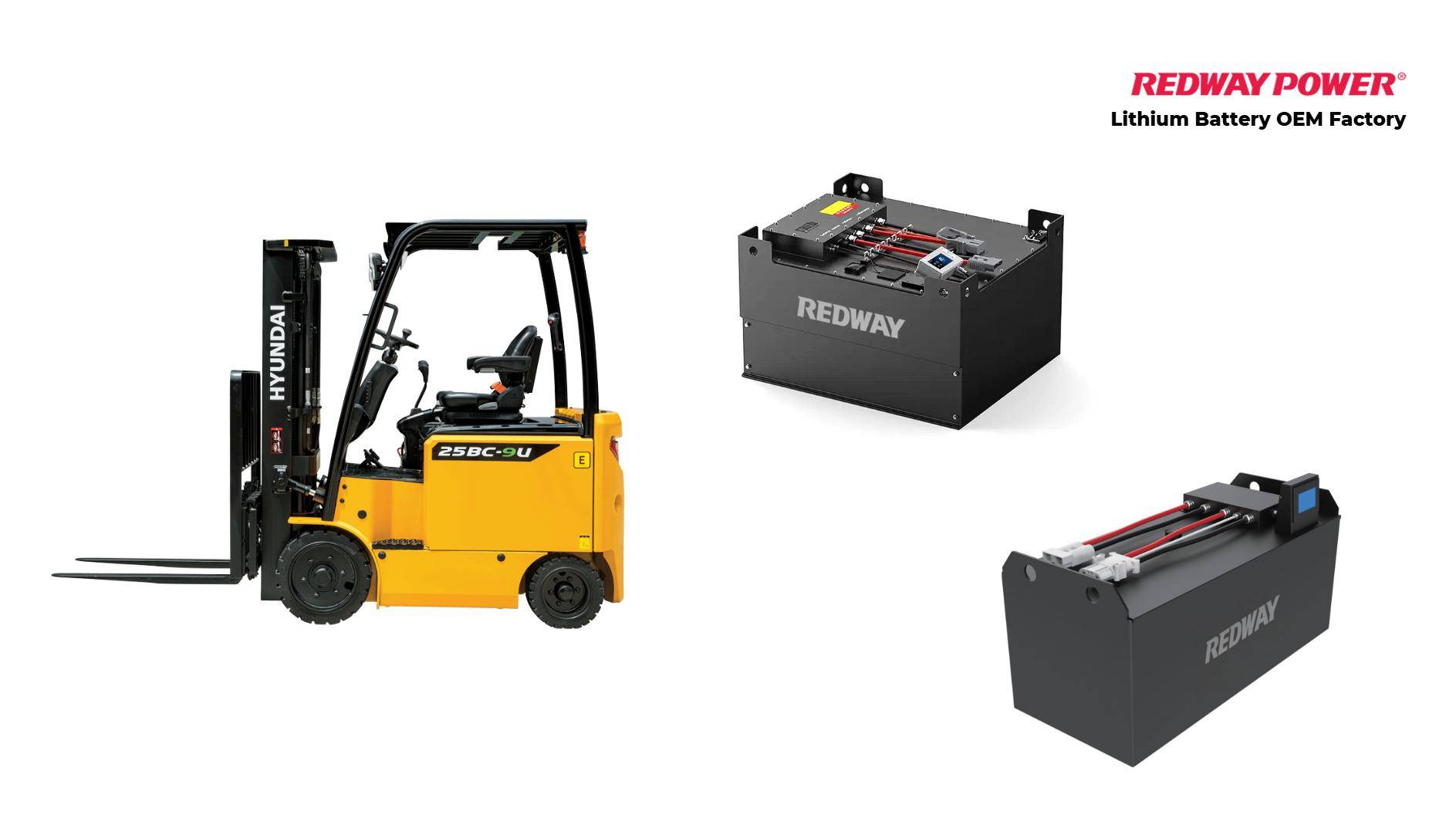
Selecting the right 36V forklift battery for your Hyundai model directly impacts uptime, operating cost, and safety, especially as fleets upgrade from lead-acid to lithium solutions such as Redway Power’s LiFePO4 batteries. A data-driven approach based on duty cycle, capacity, and total cost of ownership helps logistics and manufacturing operators avoid undersized batteries, frequent downtime, and premature replacements while maximizing long-term ROI.
How Is the Current Forklift Battery Market Creating New Pressures?
Global demand for electric forklifts is rising steadily as companies shift away from internal combustion equipment to meet sustainability and emissions targets, pushing up expectations on battery reliability and runtime. Industry reports show that batteries account for roughly 30–40% of an electric forklift’s lifetime operating cost, making battery selection one of the most financially critical decisions in material handling. At the same time, warehouse and e‑commerce operators are tightening service-level targets, meaning that any unplanned battery downtime can translate directly into delayed orders and measurable revenue loss. As operations extend to multi-shift models and fast‑turn inventory flows, conventional lead-acid batteries with long charge times and frequent maintenance are increasingly unable to keep pace without adding spare batteries and chargers.
What Pain Points Do Hyundai Forklift Operators Face Today?
Hyundai electric forklift users often run mixed fleets (different models, load profiles, and shift patterns), which complicates choosing a single 36V battery standard that fits all. Many sites still rely on lead-acid batteries that require watering, equalization, and scheduled cooling, adding labor overhead and safety risks (acid spills, off‑gassing). Operators also struggle with inconsistent runtime: a nominally “full” battery can deliver less than expected shift length due to aging cells, improper charging, or mismatched capacity to the forklift’s hydraulic and drive demands. Finally, lack of real‑time battery data in older systems prevents managers from tracking degradation, abusive usage (deep discharges), and opportunities for opportunity-charging optimization.
How Are Traditional 36V Lead‑Acid Solutions Falling Short?
Traditional flooded or AGM 36V lead‑acid batteries remain common in Hyundai forklifts but show clear limitations against today’s high‑throughput material handling requirements. First, typical cycle life for industrial lead-acid ranges around 1,000–1,500 cycles under standard conditions, which can translate to just 3–5 years in multi‑shift operations before significant capacity loss. Second, charge times are long (often 8 hours charging plus up to 8 hours cooling), forcing operations to maintain spare batteries and battery‑swap infrastructure, raising capex and safety concerns. Third, performance degrades noticeably as the state of charge drops, causing voltage sag, slower lift speeds, and reduced travel speed late in the shift. These issues drive inconsistent productivity and higher maintenance labor, especially where battery watering and terminal cleaning are not rigorously managed.
Why Does a Data‑Driven Lithium Solution Like Redway Power Change the Equation?
Modern lithium (LiFePO4) 36V forklift batteries, such as those manufactured by Redway Power, are engineered to address the above pain points from both a technical and operational standpoint. Lithium packs typically offer up to 3,000–6,000 cycles depending on depth of discharge and operating conditions, far exceeding the lifetime of lead-acid alternatives. Fast charging capability allows operators to leverage opportunity charging during breaks or shift changes, drastically reducing or eliminating the need for spare packs and dedicated battery rooms. Furthermore, integrated Battery Management Systems (BMS) offer real‑time monitoring, balancing, and protection, helping fleets maintain consistent performance, enforce safe operating windows, and base replacement decisions on actual data rather than guesswork.
Redway Power, with over 13 years of OEM lithium battery manufacturing experience, designs 36V LiFePO4 solutions specifically for forklifts, including Hyundai models, with capacities tailored to medium‑duty and heavy‑duty applications. Their 36V lithium forklift batteries combine high energy density with robust metal enclosures and industrial‑grade safety certifications, making them suitable for demanding warehouse, logistics, and manufacturing environments. By replacing lead-acid units one‑for‑one, Redway Power enables Hyundai fleets to benefit from higher usable capacity, consistent voltage output, and substantially lower maintenance requirements.
What Core Capabilities Should a 36V Hyundai Forklift Battery Provide?
When specifying a 36V battery for a Hyundai forklift, you should evaluate technical capabilities against your actual duty cycle rather than relying solely on nominal voltage and capacity labels. A high‑quality 36V lithium battery for Hyundai models should provide:
-
Adequate capacity (Ah) to cover your target runtime at typical load and driving patterns, with a safety margin (commonly 20–30%) for peaks and aging.
-
High continuous discharge current to support traction and hydraulic loads simultaneously without overheating or triggering protection limits.
-
Fast charge current rating compatible with your charging infrastructure to allow regular opportunity charging without shortening battery life.
-
Wide operating temperature range, ensuring reliable performance in cold storage, unconditioned warehouses, or outdoor yards.
-
Integrated BMS with protections against overcharge, over‑discharge, short circuit, and over‑temperature, along with communication interfaces (CAN, RS485, etc.) for forklift integration.
-
Certified compliance with international safety standards (such as UN38.3 and IEC‑type standards) to support insurance, transport, and site safety requirements.
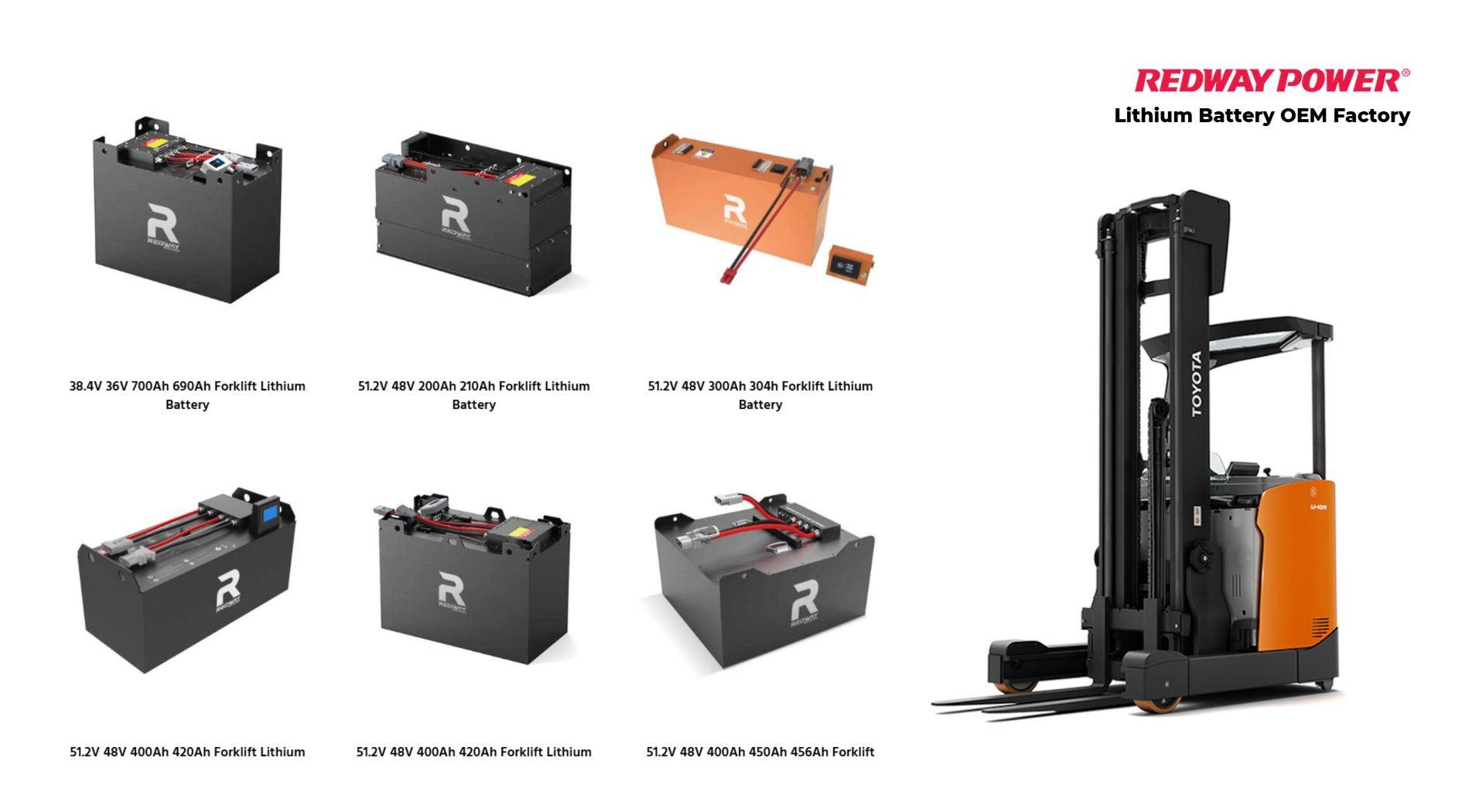
Redway Power’s 36V forklift battery portfolio, including capacities around 240–700Ah and beyond, is designed with these parameters in mind, making them suitable for both standard Hyundai warehouse models and more demanding counterbalance forklifts. By matching Hyundai forklift data sheets with Redway’s technical specifications, fleet managers can dimension batteries that avoid undersizing (risking mid‑shift failures) or oversizing (unnecessary capital cost and weight).
Which Advantages Does Redway Power’s Lithium Solution Offer Over Traditional Options?
Solution introduction: Redway Power for Hyundai 36V fleets
Redway Power specializes in LiFePO4 batteries for industrial equipment, RVs, and energy storage, with a strong focus on customized forklift packs from 24V to 80V. For Hyundai electric forklifts requiring 36V systems, Redway Power provides:
-
Engineered 36V lithium modules with nominal voltages around 38.4V and energy capacities sized for medium‑ and heavy‑duty duty cycles.
-
High cycle life (typically several thousand cycles at substantial depth of discharge), significantly extending replacement intervals compared with lead‑acid.
-
Fast‑charge capability, enabling partial recharges during lunch breaks or shift overlaps, supporting near 24/7 operation with a single pack.
-
Advanced BMS with industrial communication options, enabling OEM integration, fleet monitoring, and predictive maintenance strategies.
-
Mechanical designs (metal shells, IP‑rated housings) suited to the vibration, shock, and environmental stresses common in forklift applications.
With ISO 9001:2015 certified production, multiple factories, and a team of hundreds of technicians, Redway Power positions itself as a global OEM partner capable of supplying Hyundai forklift battery replacements and fleet‑wide retrofit programs. In addition to forklift batteries, their experience in RV and rack-mounted storage systems strengthens their system‑level understanding of energy management across different applications.
How does a structured comparison look in numbers?
Below is a simplified quantitative comparison between a typical 36V lead‑acid battery and a modern 36V lithium solution such as those from Redway Power (values illustrative and based on common industrial ranges):
| Aspect | Traditional 36V Lead‑Acid Battery | 36V Lithium Solution (e.g., Redway Power) |
|---|---|---|
| Typical cycle life (to ~70% SoH) | 1,000–1,500 cycles | 3,000–6,000 cycles |
| Usable depth of discharge | ~50–60% | ~80–90% |
| Charge time to ~100% | 8–10 hours + cooling | 2–3 hours, no cooling |
| Opportunity charging suitability | Limited, can shorten life | Designed for frequent opportunity charging |
| Daily maintenance (watering, etc.) | Regular watering and checks | Near zero, visual inspections only |
| Runtime stability vs SoC | Performance drops at low SoC | Stable performance across SoC range |
| Need for spare packs | Often 1–2 spares per truck | Often 0 spares (single‑pack operations) |
| Energy efficiency (charging) | Lower (more energy lost as heat) | Higher (less energy wasted) |
| Safety concerns | Acid spills, gas emissions | No acid, sealed cells, managed by BMS |
| Total cost of ownership (TCO) | Lower upfront, higher lifetime | Higher upfront, lower lifetime cost |
This type of comparison underpins why many Hyundai fleets are transitioning to lithium suppliers such as Redway Power for 36V systems: the extended cycle life, energy efficiency, and reduced labor typically outweigh higher initial purchase prices over a multi‑year horizon.
How Can You Select the Right 36V Battery Step by Step?
A clear, repeatable process ensures that your chosen 36V battery fits both the Hyundai forklift and your operation:
-
Define operating profile
-
Identify forklift model(s), load ranges, and typical daily operating hours.
-
Determine number of shifts per day and available charging windows (breaks, shift changes).
-
-
Calculate required capacity (Ah)
-
Estimate average current draw from the forklift data sheet or from historical energy consumption estimates (drive plus lift usage).
-
Multiply average current by required runtime and apply a margin (e.g., 20–30%) to account for peaks, aging, and environmental factors.
-
For lithium, you can typically plan on higher usable depth of discharge than for lead-acid.
-
-
Check voltage and physical compatibility
-
Confirm that the required nominal voltage is 36V and that the new battery fits the Hyundai battery compartment (length, width, height, weight).
-
Ensure proper connector type and cable routing, as well as compatibility with counterweight requirements.
-
-
Evaluate battery technology and brand
-
Compare lead‑acid vs lithium from the perspective of cycle life, maintenance, and uptime needs.
-
Prioritize experienced OEM lithium suppliers, such as Redway Power, that provide Hyundai‑compatible designs, custom options, and documented safety certifications.
-
-
Assess charging infrastructure
-
Verify whether existing chargers support 36V lithium charging profiles or need to be upgraded or replaced.
-
Plan for opportunity charging locations (near docks, packing stations, or break rooms) to maximize productivity benefits.
-
-
Quantify total cost of ownership
-
Consider not only battery price but also expected lifespan (cycles), maintenance labor, spare battery requirements, and energy efficiency.
-
Build a simple 5–7 year TCO model to compare options; in many cases, lithium shows 20–40% lower lifetime cost despite higher upfront investment.
-
-
Implement, monitor, and optimize
-
Work with your supplier to commission the new batteries and train operators on charging and handling.
-
Use BMS and forklift data to monitor state of health and refine charging practices over time.
-
Redway Power can support these steps by providing detailed technical data for their 36V Hyundai‑compatible batteries, helping you interpret forklift data sheets, and tailoring capacity to your specific duty cycle.
What Are Four Typical Hyundai Use Cases for 36V Batteries?
Case 1: E‑commerce warehouse with single‑shift operations
-
Problem: A Hyundai 36V electric forklift fleet operating one intense 8‑hour shift per day experiences end‑of‑shift slowdowns and frequent maintenance with lead‑acid batteries.
-
Traditional approach: Maintain two lead‑acid batteries per truck, swapping batteries mid‑shift and scheduling overnight charging and cooling cycles.
-
After adopting 36V lithium batteries from Redway Power: Each truck operates on a single lithium pack per shift, with opportunity charging during lunch and short breaks.
-
Key benefits: Reduced battery inventory, fewer change‑outs, more consistent lift and travel speeds, and lower maintenance overhead.
Case 2: Food distribution center with cold storage
-
Problem: Hyundai forklifts work in chilled or freezer environments where lead-acid batteries suffer from reduced capacity and higher failure rates.
-
Traditional approach: Oversize lead-acid batteries to mitigate cold‑related capacity loss, maintain warming areas, and accept frequent replacements.
-
After adopting 36V lithium batteries from Redway Power: High‑quality LiFePO4 packs with suitable temperature range and BMS protections maintain stable voltage and capacity in low‑temperature operations.
-
Key benefits: Improved runtime in cold environments, lower replacement frequency, and the ability to plan operations without constant worry about temperature‑related derating.
Case 3: Multi‑shift manufacturing plant with 24/7 operations
-
Problem: A heavy‑duty Hyundai forklift fleet runs three shifts per day, requiring continuous availability and minimal unplanned downtime.
-
Traditional approach: Complex battery rooms with charging racks, multiple spares per truck, and dedicated staff to handle charging, watering, and swapping.
-
After adopting a 36V lithium solution from Redway Power: Fast‑charge capable lithium packs allow each truck to run nearly continuously with planned opportunity charges between shifts.
-
Key benefits: Elimination of most spare batteries and large battery rooms, reduced labor devoted to battery handling, improved safety, and more predictable energy costs.
Case 4: Third‑party logistics (3PL) operator with mixed Hyundai models
-
Problem: A 3PL site runs multiple Hyundai forklift models and wants a unified, scalable power solution that can support business growth and varying client volumes.
-
Traditional approach: Different lead-acid batteries and chargers per truck type, with stockpiles of different spare batteries and chargers, making inventory and maintenance complex.
-
After adopting standardized 36V lithium modules from Redway Power: The site consolidates around modular lithium packs sized and configured for various Hyundai models, while leveraging a harmonized charging infrastructure.
-
Key benefits: Simplified battery inventory, faster onboarding of new trucks, easier training, and the ability to scale operations without large incremental battery room investments.
Why Is Now the Right Time to Upgrade Your Hyundai 36V Battery Strategy?
Lithium battery prices have been trending downward over time, while performance (cycle life, safety, and energy density) has continued to improve, shifting the economics decisively in favor of lithium for many Hyundai 36V applications. Simultaneously, labor costs and safety expectations are rising, making the ongoing maintenance burden and risks of lead-acid batteries less acceptable. Regulations and corporate sustainability goals are also pushing operators toward higher‑efficiency, lower‑emission solutions, for which lithium batteries are a natural fit.
Redway Power’s maturity as an OEM supplier—with multiple factories, MES‑controlled production, and a focus on forklifts, RVs, and energy storage—means that Hyundai fleet owners can access industrial‑grade 36V lithium solutions with comprehensive engineering support. Adopting a Redway Power 36V battery not only helps reduce long‑term operating cost but also positions your material handling operations to handle future growth, automation, and data‑driven optimization. Upgrading now allows you to capture these gains sooner, rather than locking in another cycle of lead‑acid replacements and their associated overhead.
What Are the Most Common Questions About 36V Batteries for Hyundai Forklifts?
Is a 36V lithium battery compatible with all Hyundai 36V forklifts?
Compatibility depends on the specific Hyundai model, battery compartment dimensions, connector type, and controller requirements, so technical verification against the forklift data sheet is essential. Many lithium suppliers like Redway Power provide Hyundai‑specific or customizable designs to ensure mechanical and electrical compatibility.
How do I size the Ah capacity for my Hyundai 36V forklift?
You should start from your typical daily runtime and load profile, estimate average current draw, and calculate required capacity with a margin for peaks and aging. Because lithium batteries support higher usable depth of discharge, the required Ah rating is often lower than an equivalent lead‑acid battery for the same runtime.
Can I use my existing lead‑acid charger with a 36V lithium battery?
In some cases, existing chargers can be reused if they support suitable voltage profiles and communication, but many lithium systems require dedicated lithium‑compatible chargers. Coordinating with the battery manufacturer, such as Redway Power, ensures that the charger profile supports safe and efficient operation.
What maintenance does a 36V lithium battery require compared to lead‑acid?
Lithium batteries generally require only periodic visual inspections, cleaning of external terminals, and monitoring via BMS dashboards, without watering or equalization charges. This contrasts sharply with lead-acid systems, which demand regular electrolyte checks, watering, and more frequent terminal maintenance.
How does total cost of ownership compare between 36V lead‑acid and Redway Power lithium solutions?
While lithium batteries have a higher upfront cost, their longer cycle life, reduced maintenance, higher efficiency, and lower need for spares usually result in a lower total cost over 5–7 years. Many operators find that a well‑sized 36V lithium battery from Redway Power pays back its premium within a few years via reduced downtime, labor, and replacement frequency.
Can Redway Power customize a 36V battery for my specific Hyundai model and application?
As an OEM lithium battery manufacturer with extensive forklift experience, Redway Power can typically offer customized configurations, including tailored capacities, dimensions, communication interfaces, and enclosure designs. This allows Hyundai fleet operators to match battery performance closely to actual duty cycles and infrastructure constraints.
Sources
-
https://www.redwaybattery.com/product/36v250ah-lithium-forklift-battery/
-
https://www.redwaypower.com/how-to-choose-the-right-36v-forklift-battery-for-your-hyundai-model/
-
https://www.redwaybattery.com/product-tag/36v-lithium-forklift-battery/
-
https://www.redwaypower.com/best-for-energy-efficiency-redway-36v-240ah-forklift-battery/