Blog
How to Choose the Right 48V Forklift Battery for Hyundai Forklifts


Choosing the right 48V forklift battery can dramatically affect your Hyundai forklift’s uptime, operating costs, and overall productivity. A well-matched battery solution not only powers your equipment efficiently but enhances shift performance, reduces maintenance complexity, and delivers measurable savings over the equipment lifecycle.
In today’s material handling industry, forklift electrification is accelerating rapidly as businesses seek higher energy efficiency and lower total cost of ownership (TCO). According to industry data, more than 60% of newly sold forklifts globally are electric, with lithium-ion batteries accounting for a significant and growing share due to their 8-10 year service life versus 3-5 years for lead-acid alternatives. Lithium technology supports fast charging and enables continuous multi-shift operations without costly battery swaps, directly addressing productivity and cost pressures that fleet operators report. (Industry Research)
How is the Current Forklift Battery Industry Performing and What Pain Points Exist?
The forklift battery market has seen a marked shift toward electric power solutions as operations worldwide optimize for efficiency and sustainability. In 2023, over 2 million new forklifts were sold globally, with around 60 % powered by electric battery systems, indicating strong industry momentum toward electrification. Lithium-ion forklift battery installations in North America have exceeded 150,000 over the past few years, highlighting growing demand for advanced battery technology in logistics and warehousing. (Industry Research)
Despite rapid adoption, persistent pain points remain for equipment operators relying on traditional lead-acid batteries. Lead-acid units typically require 8–10 hours to charge plus cooling time, forcing companies to maintain spare battery inventories and dedicate floor space to battery swap stations. This not only increases capital expenditure but also ties up valuable warehouse real estate and adds labor costs for daily maintenance tasks such as watering and cleaning terminals. (BSLBATT)
For fleets operating multiple shifts, these limitations translate into significant operational inefficiencies. Lead-acid batteries generally deliver 1,200–1,500 charge cycles before performance degrades substantially, often necessitating replacement every 3–5 years. In contrast, lithium-ion alternatives can sustain 3,000–5,000 cycles, enabling service life of 7–10 years or more. The higher upfront price of lithium technology is increasingly outweighed by lower maintenance costs, reduced downtime, and extended battery longevity — factors directly tied to productivity and TCO outcomes. (FinancialContent)
Additionally, traditional battery rooms designed to ventilate hydrogen gas from lead-acid charging add complexity and cost to facility operations. Retrofitting these spaces and managing ventilation requires additional capital investment, while also presenting safety and compliance challenges. (PW Consulting)
What Are the Shortcomings of Traditional Forklift Battery Solutions?
Traditional lead-acid batteries, while initially less expensive, present several operational drawbacks:
- Extended Charging and Downtime
Lead-acid batteries commonly take 8–10 hours to recharge fully and must cool down before reuse, reducing forklift availability and requiring additional battery sets for multi-shift work. (BSLBATT) - High Maintenance Requirements
Weekly watering, terminal cleaning, and periodic equalization charges are labor intensive and increase the total labor cost tied to each forklift battery. (BSLBATT) - Shorter Lifespan with Frequent Replacements
With only 1,200–1,500 cycles before capacity significantly degrades, lead-acid batteries require replacement more often, tying up capital and creating disposal challenges. (Industry Research) - Facility Infrastructure Costs
Dedicated battery rooms with ventilation and acid-neutralizing floor systems are necessary to meet safety standards for lead-acid charging. These spaces are costly to install and maintain. (PW Consulting)
In contrast, modern lithium-ion forklift batteries eliminate many of these drawbacks through faster charging, sealed designs with no watering requirements, and longer operational life, translating into higher uptime and lower indirect costs for forklift fleets. (Value Forklifts)
How Can 48V Lithium Solutions Like Redway Power Improve Forklift Performance?
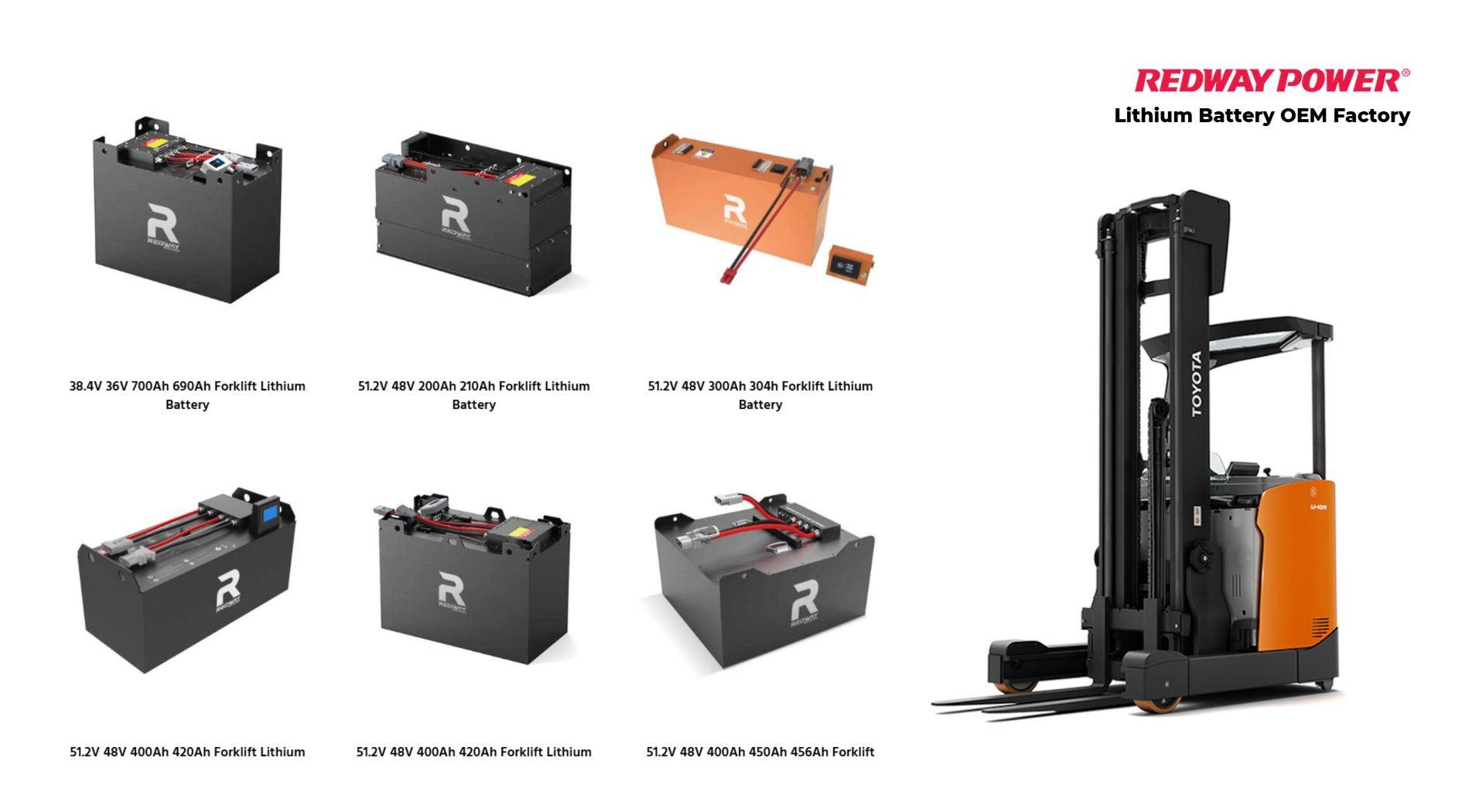
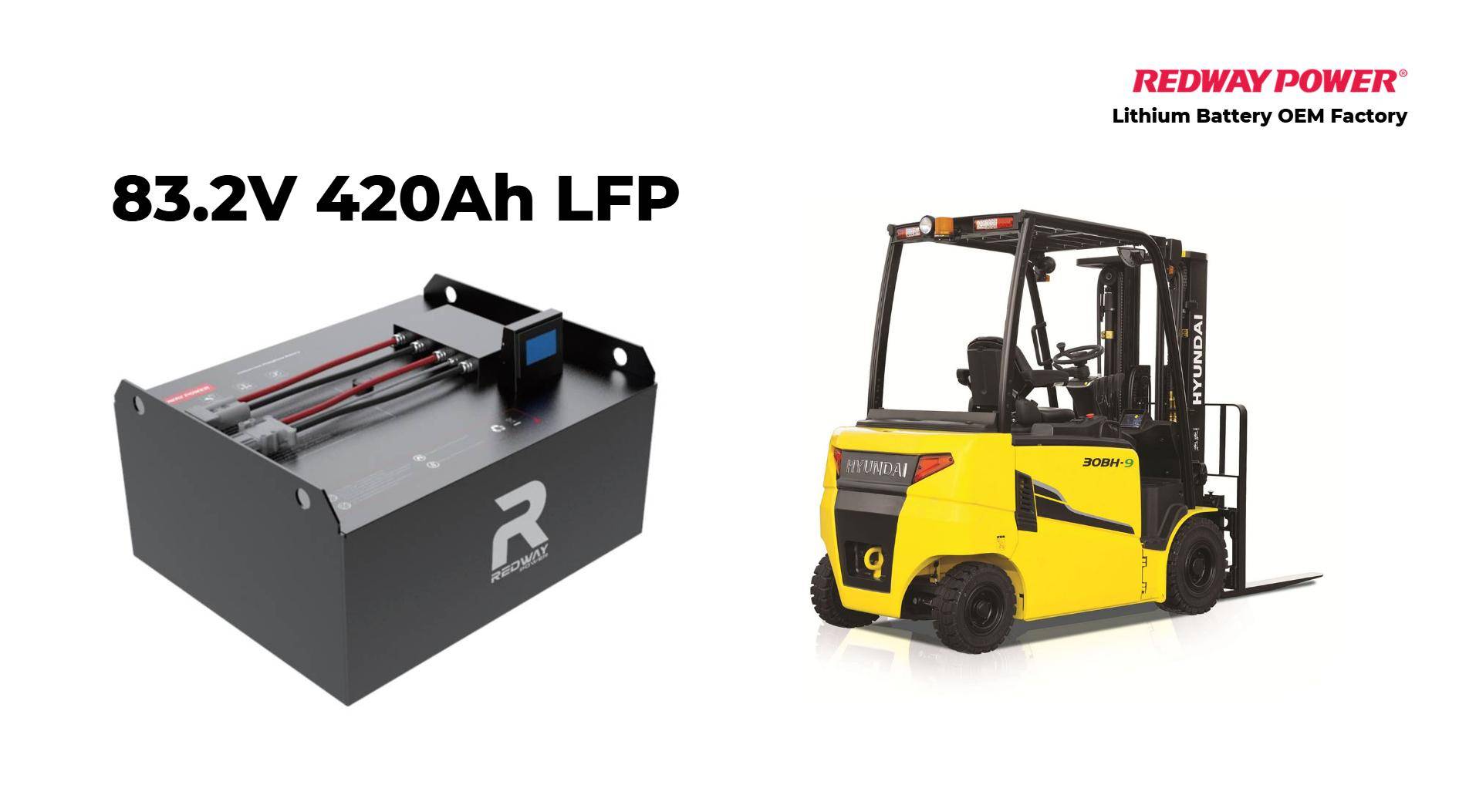
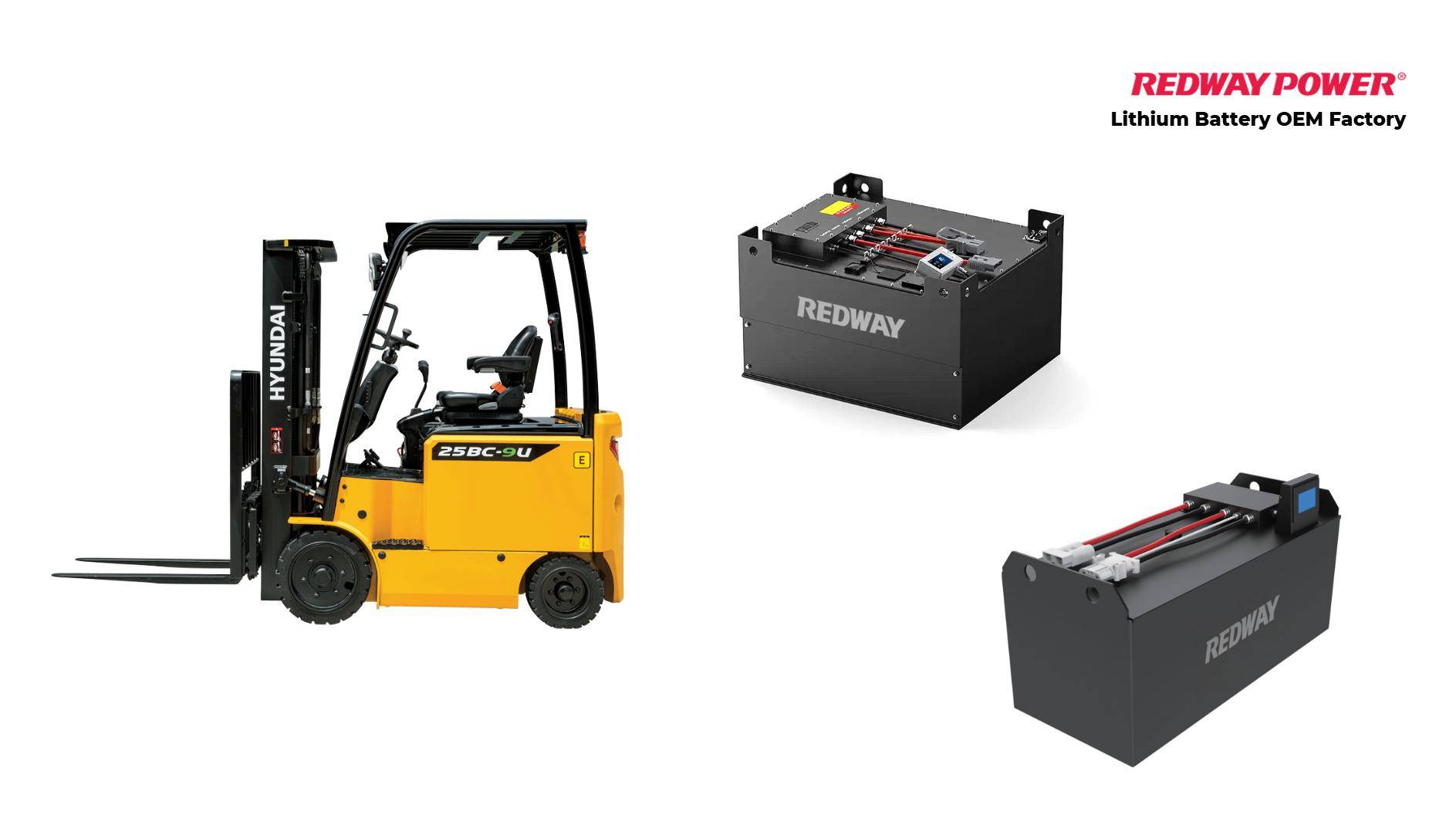
48V lithium-ion batteries, such as those offered by Redway Power, represent a leap forward in forklift energy solutions. These batteries deliver high energy density and fast charging capabilities, enabling continuous operations with minimal downtime. Specifically:
- Faster Charging: 1–2 hour charge times allow opportunity charging during breaks, eliminating extended downtime. (Redway Tech)
- Longer Lifespan: Up to 5,000 charge cycles significantly outlast traditional lead-acid batteries. (Redway Tech)
- Zero Maintenance: Sealed designs with integrated Battery Management Systems (BMS) reduce labor and eliminate watering tasks. (Redway Tech)
- Consistent Performance: Flat discharge curves maintain voltage stability throughout the shift, enhancing productivity. (Redway Battery)
Redway Power’s 48V lithium solutions are engineered specifically for demanding material handling environments, providing Hyundai forklift owners with a battery option that maximizes uptime, reduces operational friction, and lowers total cost of ownership. The company’s experience in OEM lithium battery manufacturing ensures performance reliability and long service life. (Redway Tech)
What Is the Comparison Between Traditional and Modern Battery Solutions?
| Feature | Traditional Lead-Acid | 48V Lithium (Redway Power) |
|---|---|---|
| Charge Time | 8–10 hours + cooling | 1–2 hours |
| Maintenance | Frequent watering & cleaning | None |
| Cycle Life | ~1,200–1,500 | ~3,000–5,000 |
| Energy Efficiency | ~70–80 % | ~95 % |
| Facility Requirements | Ventilated battery room | Standard charging area |
| Total Cost of Ownership | Higher over lifecycle | Lower over lifecycle |
How Do You Implement a 48V Lithium Battery Solution Effectively?
- Assess Forklift Compatibility
Confirm your Hyundai forklift model supports 48V lithium battery systems and check compartment dimensions. - Plan for Charging Infrastructure
Install appropriate chargers compatible with lithium-ion chemistry (fast chargers supporting opportunity charging). - Install Battery Management System (BMS) Tools
Ensure BMS monitoring is active to manage overcharge, deep discharge protection, and thermal control. - Train Operators
Educate staff on best practices for fast charging and battery health preservation. - Monitor Performance KPIs
Track metrics such as uptime, charge cycles, and energy costs to validate ROI.
What Are Typical Use Cases Where 48V Lithium Forklift Batteries Excel?
Scenario 1: Multi-Shift Warehouse
- Problem: Frequent battery swaps interrupt operations.
- Traditional Approach: Maintain multiple lead-acid batteries per forklift.
- Result with Lithium: Single Redway Power 48V battery supports 3 shifts, reducing swap labor and downtime.
- Key Benefit: Continuous operations with lower labor cost.
Scenario 2: Cold Storage Facility
- Problem: Lead-acid batteries lose capacity in low temperatures.
- Traditional Approach: Frequent replacements and reduced performance.
- Result with Lithium: LiFePO4 chemistry maintains stable output, ensuring consistent shift performance.
- Key Benefit: Enhanced reliability in harsh environments.
Scenario 3: High Throughput Logistics Center
- Problem: Charging bottlenecks limit forklift availability.
- Traditional Approach: Dedicated battery charging rooms and additional spare units.
- Result with Lithium: Fast charging reduces queueing, increasing equipment utilization.
- Key Benefit: Higher throughput per shift.
Scenario 4: Cost-Conscious Fleet Upgrade
- Problem: Pressure to reduce operating expenses.
- Traditional Approach: Extend life of aging lead-acid batteries.
- Result with Lithium: Redway Power 48V battery reduces TCO through lower maintenance and longer lifespan.
- Key Benefit: Lower lifecycle cost and predictable planning.
Why Is Now the Right Time to Switch to 48V Lithium Forklift Batteries?
Market trends show increasing adoption of lithium-ion forklift batteries due to efficiency gains, longer lifespans, and shifting regulatory environments that favor low-emission operations. As lithium battery prices have declined significantly over the past decade and government incentives support electrification, the total cost of ownership has shifted decisively in favor of lithium solutions. This makes 48V lithium systems not just a performance upgrade but a strategic investment in future-proof warehouse operations. (FinancialContent)
FAQ
How long do 48V lithium forklift batteries typically last compared to lead-acid?
48V lithium batteries generally achieve 3,000–5,000 cycles (8–10 years) versus lead-acid’s 1,200–1,500 cycles (3–5 years).
What maintenance is required for lithium forklift batteries?
Lithium batteries are virtually maintenance-free, eliminating watering and equalization tasks.
Can lithium batteries be used with existing forklift chargers?
No. Lithium chemistry requires chargers designed for appropriate voltage and charge profiles.
Does switching to lithium improve operational efficiency?
Yes. Faster charging and stable voltage output increase uptime and productivity.
What factors affect forklift battery lifespan?
Operating temperature, charge/discharge patterns, and BMS management influence lifespan.