Blog
How to Choose the Right 80V Forklift Battery for Your Hyundai Forklift

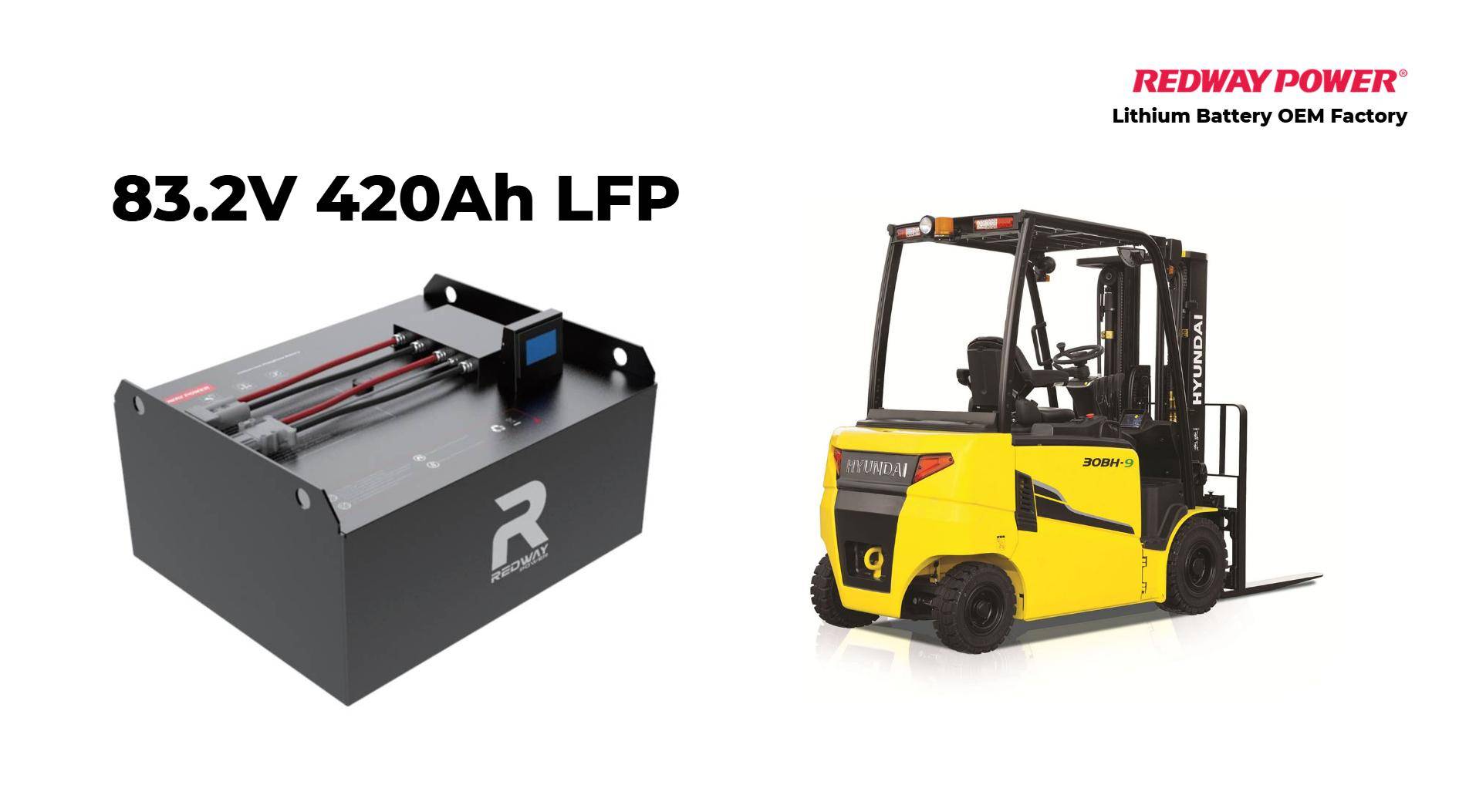
Choosing the right 80V forklift battery for your Hyundai forklift can dramatically impact productivity, cost efficiency, and equipment lifespan. With the rapid shift from traditional lead-acid power to advanced lithium solutions like those from Redway Power, businesses can unlock faster charging, longer service life, and lower total cost of ownership, particularly in high-intensity warehouse and industrial operations.
How Is the Forklift Battery Industry Evolving and What Are the Main Pain Points?
The global forklift battery market is undergoing significant transformation as electrification accelerates. In 2024, lithium-ion technologies accounted for a growing percentage of forklift battery installations, driven by warehouse automation, multi-shift operations, and sustainability priorities. Traditional lead-acid batteries continue to hold a share, but lithium adoption shows rapid growth due to operational advantages. Market forecasts project continued expansion of the lithium-ion forklift battery segment as companies seek to reduce downtime and improve efficiency. (Industry Research)
Despite these trends, operators face notable pain points:
- High replacement costs: Around 41% of fleets report lifecycle replacement costs as a major financial burden.
- Downtime losses: Long charging times of lead-acid units contribute to productivity losses in multi-shift operations.
- Maintenance complexity: Lead-acid systems require regular watering and ventilation, increasing labor and facility costs. (Industry Research)
How Does Traditional Forklift Battery Technology Fall Short?
Traditional lead-acid forklift batteries have served the industry for decades, but they carry inherent limitations, especially for modern logistics demands:
- Charging inefficiency: Lead-acid batteries often require 8–12 hours to charge fully, plus cooldown periods, limiting equipment utilization.
- Shorter life cycles: Standard lead-acid units typically provide around 1,000–1,500 charge cycles.
- High operational overhead: Watering, ventilation, and frequent replacements contribute to higher labor and facility costs over time. (Industry Research)
What Is the Solution for 80V Forklift Power?
Modern 80V lithium forklift batteries, such as those engineered by Redway Power, offer a compelling alternative for fleets requiring high performance, reliability, and lower maintenance:
Core Features and Capabilities
- Fast charging: Li-ion technology enables opportunity charging and shorter charge times, keeping forklifts productive.
- Long lifecycle: 80V lithium batteries deliver significantly more charge cycles than lead-acid, reducing the frequency of replacements.
- Maintenance-free design: No watering, no acid handling, and minimal facility adjustments required.
- Integrated Battery Management Systems (BMS): Real-time monitoring improves safety, lifespan, and performance tracking.
These capabilities make 80V lithium solutions ideal for heavy-duty and continuous operations where uptime is critical, aligning with the needs of Hyundai forklifts in demanding industrial environments. (Vision Batt)
What Are the Key Differences: Traditional vs. Lithium Solution?
| Feature | Lead-Acid Battery | 80V Lithium Battery (e.g., Redway Power) |
|---|---|---|
| Charging Time | 8–12+ hours + cooldown | 1–3 hours (opportunity charging supported) |
| Average Charge Cycles | ~1,000–1,500 | ~3,000–5,000+ |
| Maintenance | High (watering, ventilation) | Low (sealed, BMS) |
| Productivity Impact | Lower due to long downtime | Higher through fast charging |
| Total Cost of Ownership | Higher over lifespan | Lower through fewer replacements |
| Safety | Emissions/gassing; acid handling | Sealed design; reduced risk |
How to Select and Install an 80V Forklift Battery — Step by Step
- Assess Usage Requirements: Determine shift patterns, duty cycles, and expected runtime demands for your Hyundai forklift.
- Evaluate Battery Specifications: Compare battery capacity (kWh), expected cycles, and voltage compatibility with your forklift model.
- Review Charging Infrastructure: Confirm that charging equipment can support fast or opportunity charging.
- Perform Compatibility Checks: Verify physical dimensions, mounting, and electrical standards match your forklift.
- Install Battery and Configure BMS: Connect the battery and integrate the Battery Management System for optimal monitoring.
- Train Operators: Educate staff on charging best practices, safety protocols, and BMS utilization.
- Track Performance Metrics: Monitor efficiency, cycle count, and downtime to optimize fleet operations.
What Are Typical Use Cases for 80V Lithium Forklift Batteries?
Scenario 1: High-Volume Warehouse Operations
Problem: Frequent downtime due to lengthy charging windows.
Traditional Approach: Rotating multiple lead-acid batteries and extensive maintenance shifts.
After Lithium Upgrade: Fast charging during breaks eliminates swaps.
Key Benefit: Higher uptime and smoother order fulfillment.
Scenario 2: Multi-Shift Distribution Center
Problem: Lead-acid batteries cannot support three shifts without swapping.
Traditional Approach: Large battery fleet and swap logistics.
After Lithium Upgrade: Single battery lasts all shifts with opportunity charging.
Key Benefit: Lower battery inventory and labor costs.
Scenario 3: Cold Storage Facility
Problem: Lead-acid performance degrades at low temperatures.
Traditional Approach: Pre-warming and special ventilation systems.
After Lithium Upgrade: Stable power delivery in cold conditions.
Key Benefit: Consistent productivity and reduced energy losses.
Scenario 4: Heavy Industrial Sites
Problem: High duty cycles strain traditional batteries.
Traditional Approach: Frequent replacements; inconsistent power.
After Lithium Upgrade: Long lifecycle and consistent voltage support heavy loads.
Key Benefit: Lower maintenance and extended equipment life.
Why Is Now the Right Time to Transition?
The forklift battery market is shifting toward lithium technologies as businesses pursue operational efficiency, sustainability, and total cost savings. Lithium battery installations are growing as electrification becomes mainstream across logistics, manufacturing, and warehousing sectors. The combination of faster charging, longer lifecycle, and lower maintenance makes solutions like 80V batteries from Redway Power a strategic investment for competitive operators. With market growth projected and technology maturity proven, upgrading now positions your fleet for future efficiency gains. (Industry Research)
Frequently Asked Questions
How long do 80V lithium forklift batteries last compared to lead-acid?
Lithium batteries typically achieve 3,000–5,000+ charge cycles, far exceeding traditional lead-acid lifespans.
What charging infrastructure is required for 80V lithium batteries?
Fast chargers supporting opportunity charging and proper voltage outputs are recommended for maximizing productivity.
Can I retrofit an 80V lithium battery into any Hyundai forklift?
Compatibility must be verified for voltage, connectors, and physical fit before installation.
Are lithium forklift batteries safer than lead-acid systems?
Yes, they reduce gas emissions and eliminate acid handling, enhancing workplace safety.
What are the total cost benefits of lithium batteries over time?
Despite higher upfront costs, lower maintenance, fewer replacements, and reduced downtime often lower overall operating costs.