Blog
How Have Forklift Batteries Evolved from Lead-Acid to LiFePO4 Technology?

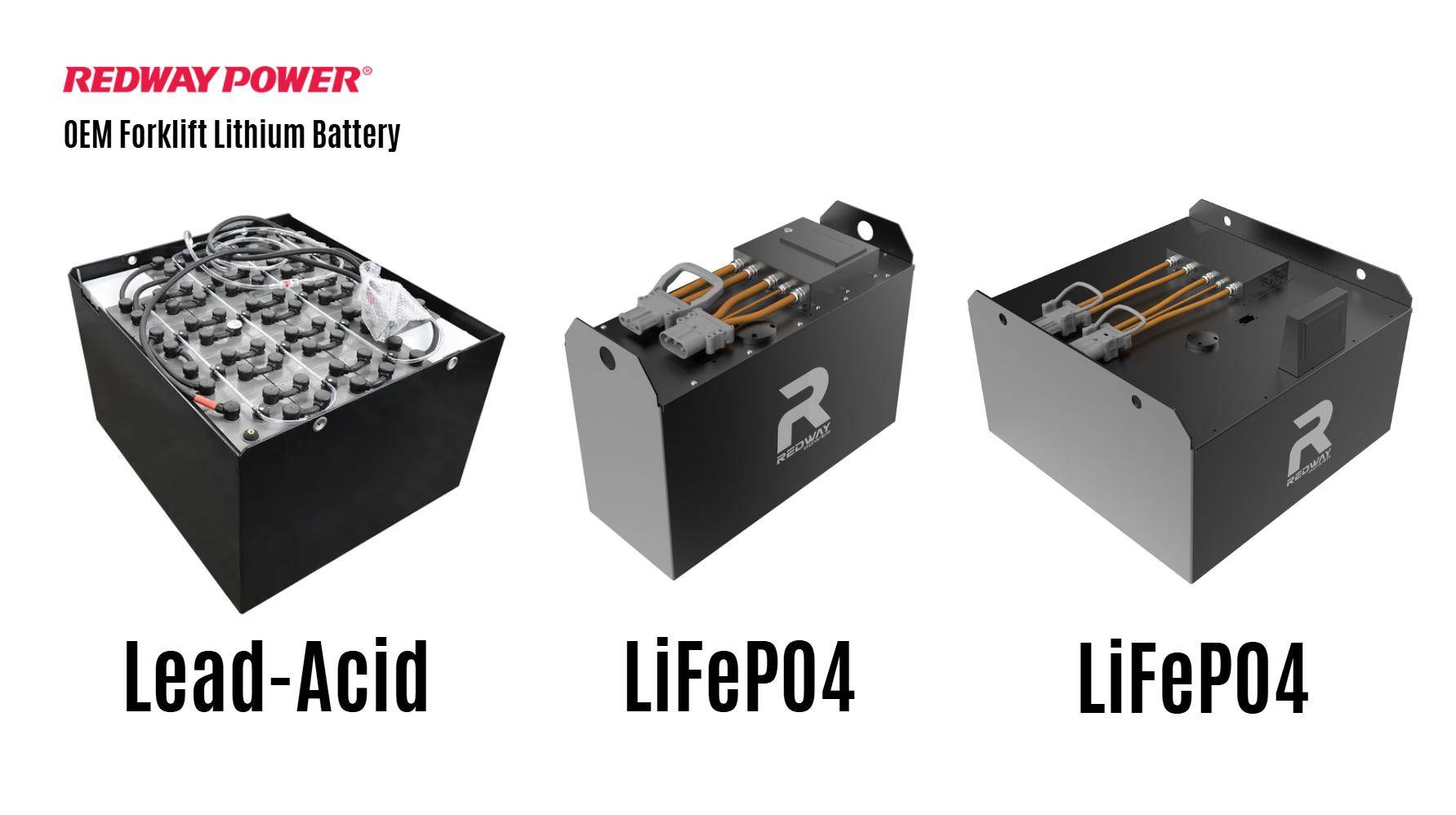
Forklift batteries have transitioned from traditional lead-acid to advanced lithium iron phosphate (LiFePO4) due to higher efficiency, longer lifespan, and reduced maintenance. LiFePO4 batteries offer faster charging, zero emissions, and adaptability to high-demand environments, making them ideal for modern logistics. This shift reflects advancements in energy density, sustainability, and operational cost savings.
What Are the Key Differences Between Lead-Acid and LiFePO4 Forklift Batteries?
Lead-acid batteries use liquid electrolytes and require regular maintenance, while LiFePO4 batteries are sealed, maintenance-free, and use solid-state chemistry. LiFePO4 provides 2-3x longer cycle life, 30-50% faster charging, and 40% higher energy density. Unlike lead-acid, lithium batteries avoid sulfation issues and operate efficiently in extreme temperatures.
Why Are LiFePO4 Batteries More Cost-Effective Long-Term?
Though LiFePO4 batteries have higher upfront costs ($5,000-$15,000 vs. $2,000-$8,000 for lead-acid), they save 50-70% in long-term expenses. Benefits include no watering, reduced downtime, and 8-10-year lifespans (vs. 3-5 years for lead-acid). Lower energy consumption and recyclability further offset initial investments.
For example, warehouses operating three shifts daily save 8-12 hours weekly by eliminating battery swaps. Over a decade, labor cost savings alone can exceed $45,000 per forklift. Additionally, LiFePO4’s depth of discharge (80-90% vs. 50% for lead-acid) means fewer batteries are needed for backup inventory. Companies also avoid acid spill cleanup costs and EPA fines, which average $7,500 per incident in the U.S.
| Cost Factor | Lead-Acid | LiFePO4 |
|---|---|---|
| Lifetime Cycles | 1,500 | 3,000-5,000 |
| Energy Cost/Year | $1,200 | $700 |
| Maintenance/Year | $800 | $50 |
How Do LiFePO4 Batteries Improve Warehouse Efficiency?
LiFePO4 batteries enable opportunity charging (partial charges during breaks), eliminating battery-swapping downtime. Their consistent power output avoids voltage drops during shifts, ensuring peak performance. Lightweight designs reduce forklift wear, while smart BMS integration allows real-time monitoring for predictive maintenance.
Also Read:
What Safety Advantages Do LiFePO4 Forklift Batteries Offer?
LiFePO4 batteries are non-toxic, fire-resistant, and stable under high stress. They lack explosive hydrogen gas emissions (common in lead-acid) and feature thermal runaway prevention. Built-in Battery Management Systems (BMS) prevent overcharging, deep discharging, and short circuits, ensuring OSHA compliance.
How Do LiFePO4 Batteries Support Sustainability Goals?
LiFePO4 batteries are 95% recyclable, use non-hazardous materials, and reduce carbon footprints by 25-30% compared to lead-acid. Their energy efficiency cuts warehouse electricity costs by 20-40%, aligning with ESG initiatives. Some models integrate solar-compatible charging for renewable energy use.
Major manufacturers now offer carbon-neutral battery leasing programs. For every ton of lithium recycled, 12 tons of CO2 emissions are avoided versus mining new materials. California’s CARB regulations incentivize lithium adoption through tax credits covering 15% of upgrade costs. Third-party lifecycle analyses show LiFePO4 batteries achieve ROI on sustainability metrics within 18 months of deployment.
| Environmental Metric | Lead-Acid | LiFePO4 |
|---|---|---|
| Recyclability | 60% | 95% |
| Toxic Materials | Lead, Sulfuric Acid | None |
| Carbon Footprint (10 yrs) | 28 tons CO2 | 9 tons CO2 |
What Innovations Are Shaping the Future of Forklift Batteries?
Emerging trends include AI-driven battery optimization, modular designs for scalable capacity, and hybrid systems combining lithium with hydrogen fuel cells. Solid-state lithium-metal batteries (2025-2030) promise 50% higher energy density, while wireless charging pads could revolutionize fleet management.
“LiFePO4 isn’t just an upgrade—it’s a paradigm shift. Warehouses using these batteries report 20% productivity gains and 60% lower maintenance costs. At Redway, we’ve seen clients reduce energy waste by pairing lithium batteries with IoT-enabled chargers, creating a closed-loop system that aligns with Industry 4.0 standards.”
— Redway Power Solutions Engineer
FAQs
- Can LiFePO4 batteries replace lead-acid in older forklifts?
- Yes, most LiFePO4 batteries come in retrofit kits compatible with legacy forklift models, though voltage adjustments may be needed.
- Do lithium forklift batteries require special chargers?
- Yes, LiFePO4 batteries need chargers with CC-CV (constant current-constant voltage) profiles to avoid damage.
- How cold-tolerant are LiFePO4 forklift batteries?
- They operate at -20°C to 60°C, but charging below 0°C requires heated enclosures to prevent lithium plating.