Blog
How to Install and Maintain Telecom Lithium Battery Systems Effectively?


Telecom lithium battery systems require precise installation, routine voltage checks, temperature monitoring, and firmware updates. Proper grounding, load testing, and thermal management ensure longevity. Regular maintenance prevents capacity fade, while compliance with safety standards mitigates risks. Adopting predictive analytics and remote monitoring enhances reliability for uninterrupted telecom operations.
What Are the Core Components of Telecom Lithium Battery Systems?
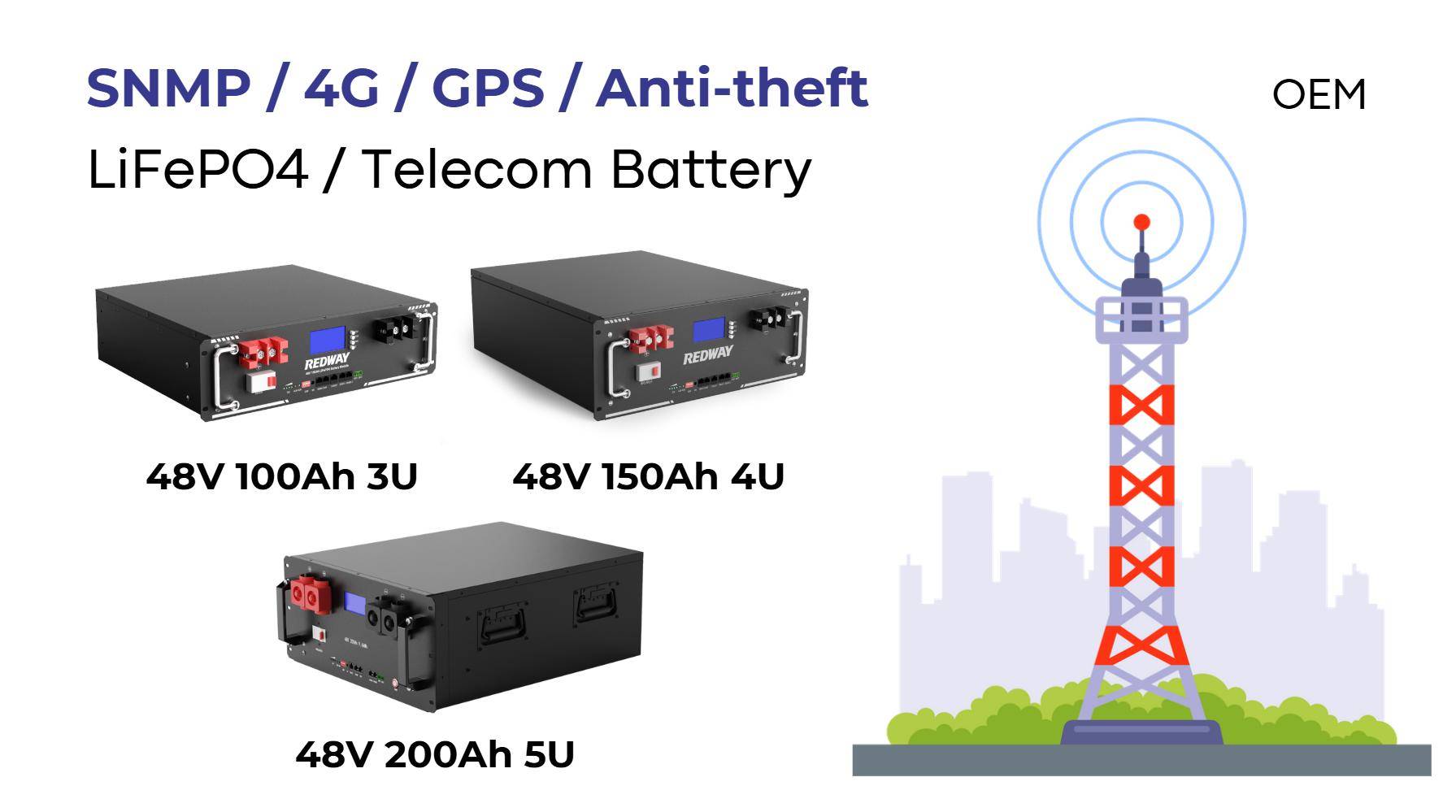
Telecom lithium battery systems consist of lithium-ion cells, battery management systems (BMS), cooling mechanisms, and communication modules. The BMS monitors voltage, temperature, and state of charge, while cooling systems prevent thermal runaway. Communication interfaces enable remote diagnostics, ensuring seamless integration with telecom infrastructure.
How to Ensure Safe Installation of Lithium Batteries in Telecom Sites?
Install lithium batteries in well-ventilated, fire-resistant enclosures with proper spacing. Use UL-certified racks, avoid daisy-chaining, and ensure correct polarity during wiring. Ground all components to prevent electrostatic discharge. Follow IEEE 1625 standards and conduct insulation resistance tests post-installation.
Recent studies by the Telecommunications Industry Association (TIA) highlight that 68% of battery failures stem from improper installation practices. To mitigate risks, use torque-controlled tools for terminal connections (recommended torque: 8–12 Nm) and install arc-fault circuit interrupters (AFCIs) in DC distribution panels. For outdoor sites, deploy NEMA 4-rated enclosures with IP67 sealing to withstand humidity and dust. Always perform a 72-hour soak test at 25°C after installation to validate stability under load. Field technicians should utilize infrared thermography during commissioning to identify hot spots exceeding 5°C above ambient temperature.
| Installation Factor | Best Practice | Tool Requirement |
|---|---|---|
| Terminal Tightening | 8–12 Nm torque | Digital torque wrench |
| Enclosure Rating | NEMA 4/IP67 | Sealant tester |
| Post-Installation Test | 72-hour soak | Load bank analyzer |
Why Is Temperature Control Critical for Lithium Battery Longevity?
Lithium batteries degrade rapidly above 45°C or below -10°C. Thermal runaway risks escalate at high temperatures, while cold conditions reduce ionic conductivity. Install HVAC systems or passive cooling pads and use BMS with real-time thermal tracking to maintain 15–25°C operating ranges.
Data from the Energy Storage Association reveals that every 10°C increase above 25°C accelerates capacity fade by 2×. Phase-change materials (PCMs) like paraffin wax can absorb excess heat during peak loads, while thermoelectric coolers provide precision cooling in compact spaces. For arctic deployments, self-heating battery designs using nickel-foam substrates maintain electrolyte liquidity below -30°C. A 2023 case study in Norway showed that active thermal management extended LFP battery lifespan by 40% in -15°C environments. Always position temperature sensors at cell interconnects and mid-pack locations for accurate gradient mapping.
Know more:
What Are OEM Telecom Lithium Battery Solutions and How Do They Benefit Your Network?
What Are the Key Components of Telecom Battery Systems?
What Makes Telecom Lithium Battery Packs Compatible and High-Performing?
How Can Smart Charging Optimize Telecom Lithium Battery Efficiency?
How Can Retrofitting Telecom Systems with Lithium Batteries Save Costs?
How to Install and Maintain Telecom Lithium Battery Systems Effectively?
Which Maintenance Practices Prevent Premature Battery Failure?
Monthly voltage balancing, quarterly capacity testing, and annual impedance checks are essential. Clean terminals to prevent corrosion, update BMS firmware, and replace cells with >20% capacity deviation. Document cycle counts and avoid deep discharges below 20% state of charge.
How Does BMS Optimization Enhance Telecom Battery Performance?
A robust BMS extends cycle life by preventing overcharge, over-discharge, and cell imbalance. Advanced BMS algorithms predict state-of-health (SoH), enable cell-level diagnostics, and integrate with SCADA systems for load shifting. Opt for BMS with ISO 26262 ASIL-C compliance for fault tolerance.
What Are the Latest Innovations in Lithium Battery Monitoring?
AI-driven predictive analytics tools like Siemens Predictive Battery Analytics detect early degradation. IoT-enabled sensors provide real-time SoH data via Modbus or LTE-M. Hybrid supercapacitor-battery systems and self-healing electrodes are emerging to reduce maintenance needs.
“Modern telecom batteries demand a shift from reactive to predictive maintenance. Integrating digital twins allows operators to simulate stress scenarios and optimize replacement cycles. Our trials show AI-driven maintenance cuts OPEX by 37% while improving uptime.” — Dr. Elena Torres, Head of Energy Systems, GSMA
FAQ
- How often should telecom lithium batteries be replaced?
- Typically every 8–10 years, but conduct annual capacity tests; replace if capacity drops below 80%.
- Can lithium batteries be used alongside legacy VRLA systems?
- Yes, but use hybrid controllers to prevent voltage mismatch and prioritize lithium charging.
- What fire suppression systems suit lithium battery telecom sites?
- Aerosol-based systems like Stat-X or FM-200, avoiding water-based solutions that risk short circuits.